


I have often found that the adrenaline rush of a perfectly executed intellectual takedown is intoxicating. You marshal your facts, corner your opponent, and deliver the linguistic equivalent of a checkmate. It feels magnificent in the moment to watch your airtight logic dismantle someone else’s perspective. The ego absolutely revels in the thrill of domination.
But I inevitably notice a chilling reality when I look across the table. The person sitting there isn’t awestruck by my rhetorical brilliance, nor are they grateful for my corrections. They are crushed, alienated, and quietly drafting a psychological declaration of war.
I believe this is the great paradox of human conflict, a trap we fall into repeatedly. We fight because we desperately want to be understood, validated, or proven right. Yet, the very act of securing that validation through sheer argumentative force guarantees the failure of our actual goal.
I frequently think about the legendary author Dale Carnegie, who famously observed that it is entirely impossible to actually win an argument. He noted a profound mathematical certainty of conflict: if you lose the debate, you lose; but crucially, if you win the debate, you still lose1. It is a system designed exclusively for relational destruction.
Winning an argument fundamentally requires someone else to be defeated. Depending on the magnitude of the conflict, that loss inevitably fractures a part, or the entirety, of the relationship itself. The inherently combative nature of arguing forces a psychological mutation that turns an intimate partner into a vanquished enemy.
The Architecture of a Pyrrhic Victory
The Devastating Toll of a Triumphant Success
In 279 BC, King Pyrrhus of Epirus engaged the Roman army at the brutal Battle of Asculum. He technically won the day, driving the Romans from the field in a dazzling display of tactical genius. But the victory cost him the vast majority of his elite forces and his most trusted commanders.
As he surveyed the spectacular carnage of his own success, Pyrrhus supposedly muttered that one more such victory would utterly ruin him. This historical slaughter gave birth to the enduring concept of a “Pyrrhic victory.” It describes a success that inflicts such a devastating, catastrophic toll on the victor that it is tantamount to a total defeat.
I often realize that every time we aggressively conquer a loved one in a verbal dispute, we are fighting at Asculum. We secure the high ground of being technically correct and plant our flag on the hill of absolute rightness. We feel the fleeting, heady rush of being the smartest person in the room.
But the psychological battlefield we leave behind is littered with the corpses of trust, intimacy, and mutual respect. The cost of planting that flag is the literal destruction of the foundation that keeps the connection alive. You have successfully defended your fragile ego, but you have slaughtered your most vital alliance.
The Dangerous Illusion of the Zero-Sum Game
Healthy relationships are built on an invisible, structural architecture of collaboration and mutual support. I believe the healthiest dynamic is always framed as “partners against a shared problem.” You sit on the same side of the table, metaphorically or literally, attacking an external challenge together.
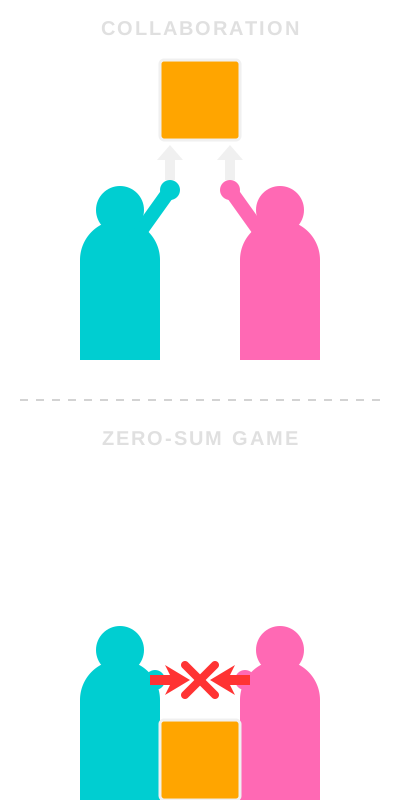
When one partner decides their primary objective is to “win,” this collaborative architecture instantly collapses. They implicitly turn the relationship into a zero-sum game, which is a cruel economic model where one person’s gain requires the other’s proportional loss. The problem is no longer the enemy.
The partner suddenly becomes the enemy. The dynamic violently shifts from two allies against a shared struggle to two bitter opponents positioned against each other. It is a tragic misallocation of emotional resources.
Operating with this combative mindset of winning at all costs leads inevitably to a total breakdown in empathy and understanding. Both individuals become maniacally focused on proving their point rather than listening to the other’s pain. Nobody is actually attempting to understand; they are simply reloading their rhetorical weapons.
The Adversarial Shift and the Apocalypse
Summoning the Four Horsemen of Intimate Conflict
The transition from an ally to an adversary doesn’t just change the tone of a conversation. It completely mutates the psychological weapons we are willing to deploy against someone we supposedly love. This phenomenon is known as the Adversarial Shift, and it is brutally effective.
Renowned relationship researcher Dr. John Gottman spent decades observing couples in conflict to understand why bonds shatter. He identified specific, highly destructive communication styles that predictably lead to relationship collapse when individuals focus purely on winning. He famously coined these behaviors the “Four Horsemen” of the relationship apocalypse.
When an argument becomes a battle for supremacy, these apocalyptic horsemen ride out immediately to destroy the attachment. The person determined to be the “winner” almost always relies on the first two: Contempt and Criticism. They stop attacking the issue at hand and begin a systematic assault on the other person’s character.
The Weaponization of Contempt and Emotional Stonewalling
Contempt is arguably the most lethal of all conversational weapons ever devised by the human ego. It is the outright assertion of moral or intellectual superiority over your partner. You aren’t just saying they have their facts wrong; you are signaling that they are fundamentally defective.
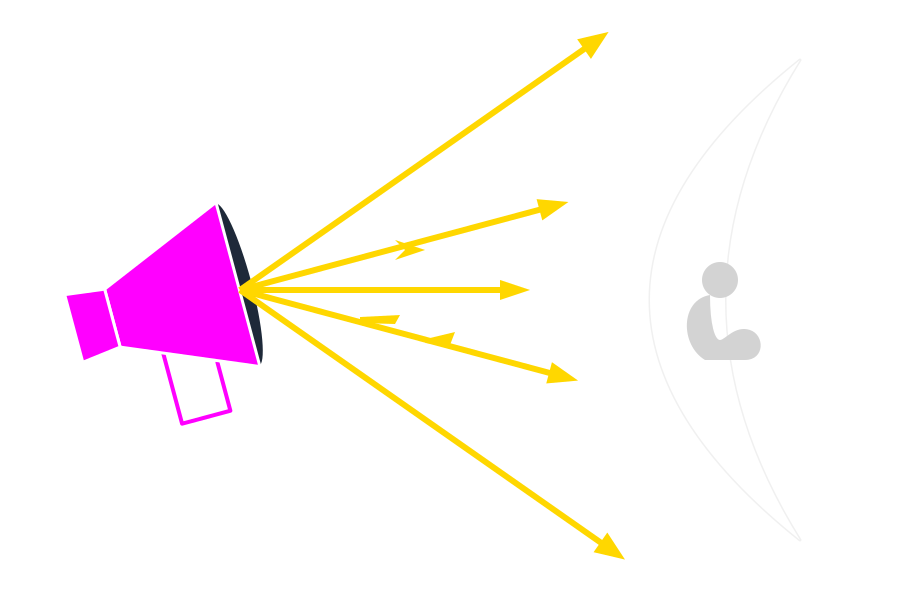
Meanwhile, the designated “loser” of the argument does not simply absorb this punishment without a reaction. They deploy their own defensive horsemen to survive the assault: Defensiveness and Stonewalling. To endure the intellectual barrage of the winner, they build impenetrable emotional fortresses.
They retreat deeply into themselves, cutting off all communication, eye contact, and emotional availability. They shut down completely to protect their fragile psyche from the winner’s relentless, weaponized criticism. This leaves the “victorious” party entirely isolated, speaking to a brick wall of their own making.
The partner’s role has permanently shifted from a trusted confidant to a hostile, invading force. Even if the argument officially ends, the physiological stress and profound emotional alienation remain suspended in the air. The winner sits alone on their intellectual throne, surveying an entirely empty, silent room.
The Victor’s Curse of Interpersonal Guilt
The Biological Distress Signal of a Broken Bond
It is remarkably easy to assume that the person who wins the argument walks away feeling phenomenal. Our culture constantly glorifies the victor, suggesting that dominance is the ultimate key to psychological satisfaction. But the human nervous system is actually wired for deep connection, not just shallow dominance.
Psychological studies on interpersonal guilt reveal it to be a highly specific, deeply visceral distress signal. This internal alarm bell rings violently in our psyche strictly when we believe we have harmed someone we deeply care about. We are biologically programmed to feel immense pain when we damage our own tribe.
“Winning” by verbally dominating a partner creates precisely this type of profound, undeniable emotional harm. You watch their shoulders slump, their eyes avert, and their spirit break under the weight of your logic. Your brain registers this not as a glorious victory, but as a critical injury to your own survival network.

The Incredibly Hollow Aftermath of Being Right
This neurological reality perfectly explains why the aftermath of a “won” argument feels so terribly bleak. It creates a distinctly hollow victory that leaves a bitter taste in the mouth of the conqueror. The intellectual satisfaction of knowing you were factually correct evaporates almost instantly.
It is immediately soured by the crushing, inescapable emotional reality of having wounded the attachment. You proved your brilliant point about the household budget, but you made someone you love feel incredibly small and foolish. The emotional math simply does not add up to a win.
Interpersonal guilt effectively robs the winner of their hard-fought spoils. You cannot genuinely celebrate a victory when the prize is the profound sadness of your favorite person. This guilt is the relationship’s immune system trying to warn you that you are aggressively attacking your own vital organs.
The Loser’s Poison: Envy and Ressentiment
The Silent Smolder of a Bitter Defeat
What happens in the mind of the person who was systematically dismantled and humiliated in the debate? They certainly do not simply accept the new reality, tip their hat to your genius, and move on. They harbor a dark, festering emotional cocktail of deep envy and burning resentment.
Philosophers define envy quite simply as experiencing pain at the good fortune of others2. In the specific context of a lost argument, the “good fortune” is the winner’s perceived intellectual dominance and smug satisfaction. The loser feels acute, burning pain at the victor’s arrogant triumph.
When this psychological pain is unconsciously blamed on the envied person, it alchemizes directly into resentment. This resentment rarely manifests as an immediate, honest, white-hot explosion of anger. Instead, it smolders silently under the surface, leaking out for weeks through passive aggression, snippy comments, or behind-the-back gossip.
The Festering Psychological Reality of Ressentiment
The brilliant 19th-century philosopher Friedrich Nietzsche gave this highly specific, toxic psychological state a name: Ressentiment2. He described it as a unique, mutated form of resentment that blossoms strictly when someone feels utterly powerless and hopelessly inferior. Losing a fierce, dominating argument triggers this exact sensation of helpless inadequacy in the defeated party.
Unlike ordinary anger, which flares up hot and eventually dissipates, ressentiment festers quietly like an untended, infected wound. Because the “loser” lacks the power or the rhetorical skill to express their frustration directly, the bitter emotion turns entirely inward. It breeds a hidden, desperate desire for revenge against the arrogant victor.
The loser becomes utterly obsessed with closing the psychological gap between themselves and the person who defeated them. But since they cannot strive upwards to win the debate on factual grounds, they choose a much darker path. They attempt to pull the winner down, denigrating their success to soothe their own bruised ego2.
The Dangerous Inversion of Deep Moral Values
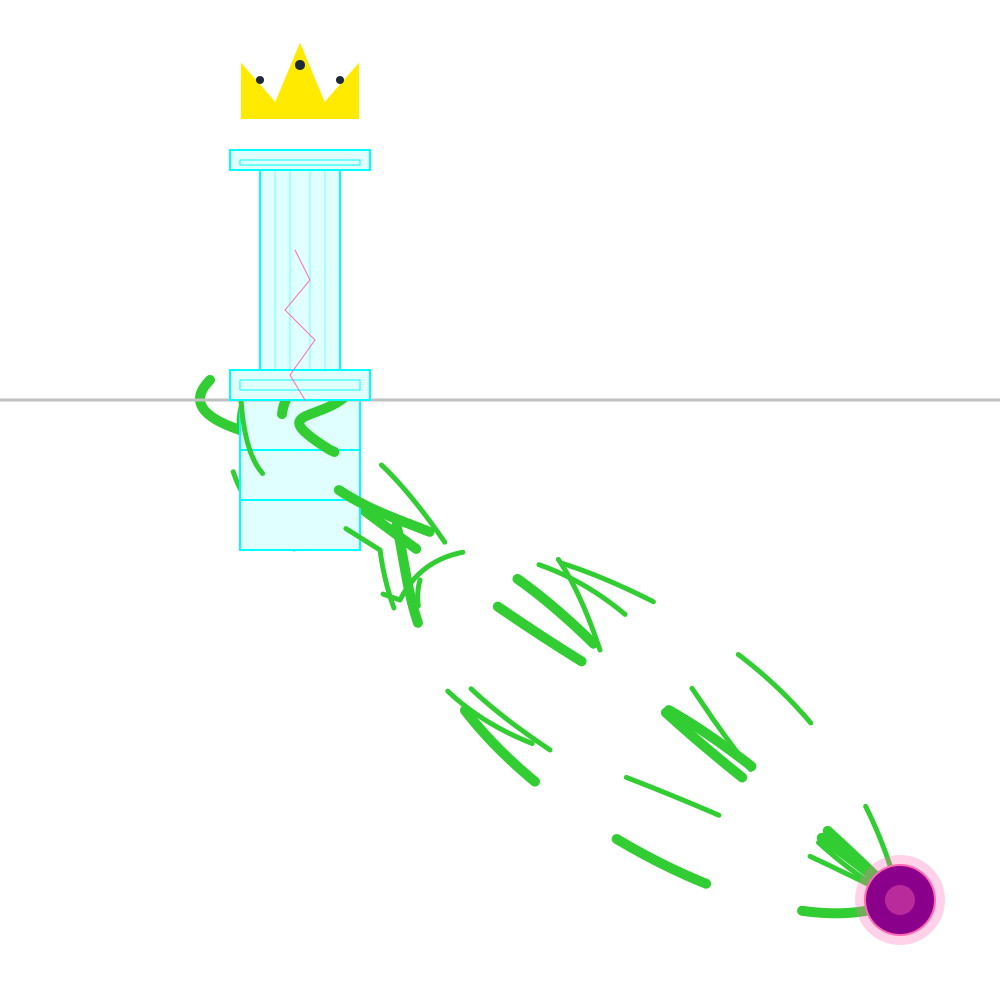
To psychologically survive the deep humiliation of defeat, the loser engages in a drastic, subconscious reframing of reality. Nietzsche famously called this coping mechanism the “inversion of values”. The defeated party must find a way to make themselves feel vastly superior without actually having to win the argument.
They accomplish this illusion by painting the “winner” as fundamentally evil, corrupt, or unusually cruel. They tell themselves that the winner didn’t triumph because they had better facts, but because they are a toxic, aggressive bully who lacks empathy. The loser cleverly recasts their own inability to argue as a sign of their peaceful, virtuous nature.
Through this profound intellectual dishonesty, the loser successfully regains the moral high ground in their own mind. They console themselves by adopting a “slave morality,” genuinely believing the winner is a terrible person who simply used brute force. The argument may be officially over, but a psychological cold war has just begun, guaranteeing future sabotage.
Kierkegaard and the Toxic Whack-a-Mole Dynamic
The philosopher Soren Kierkegaard explored this exact envy-driven dynamic long before the advent of modern clinical psychology. He observed how the passionless masses secretly envy the bold, using societal resentment to ruthlessly hammer down anyone who dares to stick out. He referred to this as the “whack-a-mole” dynamic of leveling, where the crowd dictates that if everyone cannot be great, then no one is allowed to be.
In the intimate microcosm of a romantic relationship or friendship, this leveling behavior is extraordinarily toxic. The resentful loser of the argument will use public opinion, family gossip, or subtle emotional sabotage to effectively “cancel” the winner’s authority. They ensure through a thousand tiny cuts that the victor never actually gets to enjoy the peaceful spoils of their intellectual conquest.
Escaping the Trap of the Ego
Disarming the Traps of the Conversational Battlefield
If winning absolutely guarantees losing, how on earth do we engage in necessary conflict without destroying our vital attachments? I believe the answer lies in fundamentally and radically redefining what a victory actually looks like in practice. The true, lasting triumph in any interpersonal dispute is the preservation of mutual respect1.
We have to consciously, sometimes painfully, dismantle the biological instinct to conquer the person in front of us. This requires actively replacing the arrogant urge to dictate with the quiet discipline of active listening and genuine empathy. Instead of hunting for logical flaws in our partner’s argument, we must hunt for the underlying fear or unmet need driving their rigid position.
This is agonizingly difficult for the fragile human ego to execute. The ego practically screams for submission and demands a clear victor. But the relationship itself requires deep collaboration, prioritizing a relentless search for mutually beneficial solutions over a quick, bloody win.
Moving From Passive Reactivity to Active Responsibility
Disarming an argument requires us to step completely out of the passive, reactive state that fuels so much ressentiment. Both Nietzsche and Kierkegaard passionately believed that ressentiment is deeply rooted in emotional evasion and the pathetic search for a scapegoat. It is always infinitely easier to blame your partner for your own misery than to take full responsibility for the toxic dynamic.
The ultimate antidote to this poison is to take full, active ownership of your life and your emotional reactions. When you feel the intense, blinding desire to intellectually crush someone in a debate, you must pause and interrogate your own motivations. Are you genuinely trying to solve a shared problem, or are you just desperately trying to soothe your own profound insecurities through dominance?
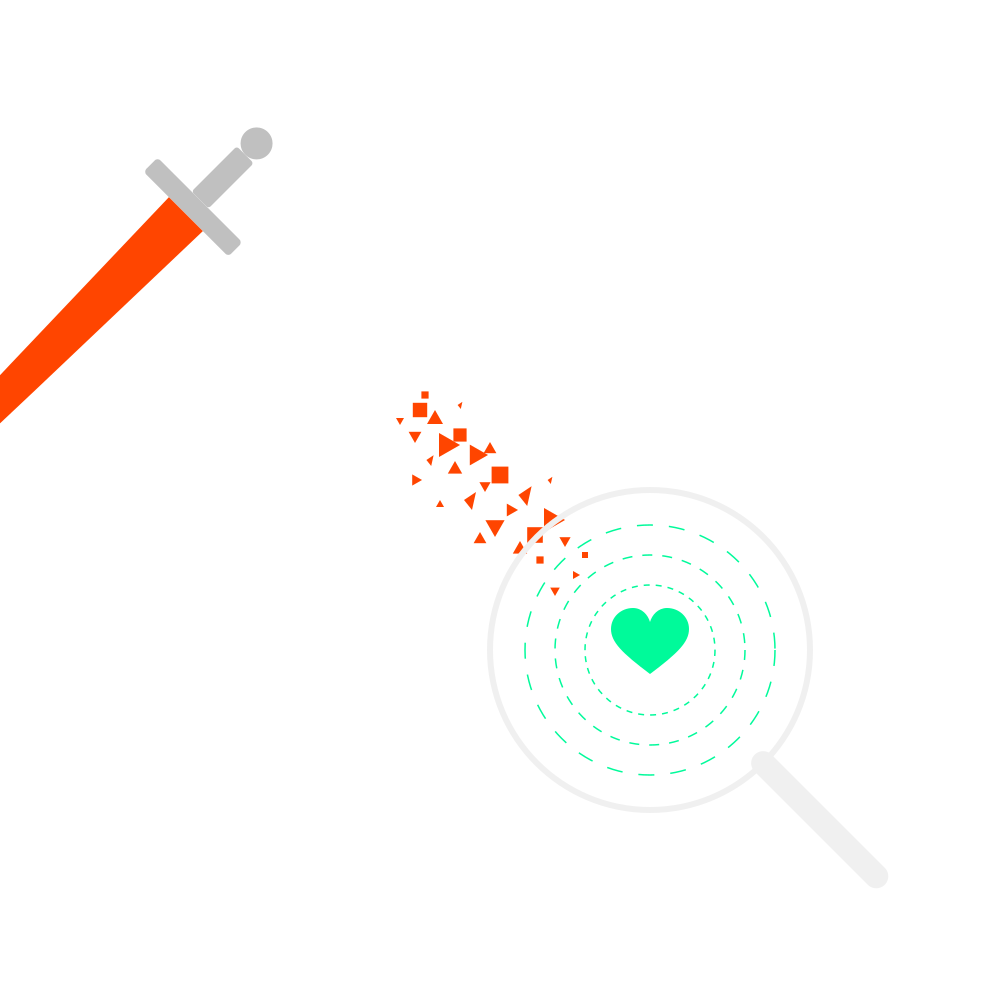
Adopting an active, responsible stance means choosing the harder, quieter path of vulnerability over the loud, incredibly easy path of aggression. You put down the rhetorical sword, not because you are intellectually weak, but because you possess the wisdom to realize the person you are stabbing is tethered to you.
The Courage to Surrender the Crown
The Dangerous Myth of the Righteous Victor
We are unfortunately raised in a culture that absolutely fetishizes debate and predictably applauds the sharp-tongued victor. We watch politicians aggressively dismantle each other on television and frequently mistake their cruelty for competence. We absorb the deeply dangerous myth that being objectively right is the highest possible human virtue.
But I can assure you that absolute rightness is a terrifyingly lonely and cold place to live. It requires a rigid, unyielding adherence to your own perspective at the total expense of everyone else’s humanity. It demands that you treat the complex people you love as mere intellectual sparring partners rather than fragile, emotional beings.
When you prioritize being right over being deeply connected, you win the battle but effectively lose the war. The facts may perfectly align with your brilliant argument, but facts do not hug you when you are terrified of the future. Logic does not hold your hand in the dark when everything else falls apart.
Reclaiming the Lost Architecture of Deep Connection
To build relationships that can actually survive the brutal friction of everyday life, we must unlearn the toxic habit of keeping score. We have to begin viewing conflict not as a courtroom to be won, but as a crucible where deep understanding is forged. The goal is never to convince the other person that they are crazy, but to desperately understand why their reality makes sense to them.
This pursuit requires an immense, almost superhuman level of psychological fortitude. It means sitting with the awful discomfort of an unresolved disagreement without rushing to force a neat, victorious conclusion. It means validating a partner’s messy feelings even when you completely and fundamentally disagree with their interpretation of the facts.
Ultimately, the true strength of a bond is not measured by the complete absence of conflict, but by how safely that conflict is navigated by both parties. The most profound couples do not avoid arguments; they just flatly refuse to turn them into an intellectual bloodsport. They prioritize the structural integrity of the bridge over the fleeting ego trip of being the toll collector.
Conclusion
The next time you find yourself holding the perfect verbal dagger, poised to intellectually eviscerate someone you deeply care about, stop. Look closely at the weapon in your hand, and feel the adrenaline pulsing through your veins. Then, look at the vulnerable person standing right in front of you.
Understand in that critical moment that dropping the argument is not a shameful concession of defeat; it is a profound declaration of devotion. You are not losing your pride by stepping back from the ledge. You are actively, bravely choosing to protect your peace and preserve the bond.
You are recognizing that the intellectual thrill of domination is a cheap, counterfeit currency compared to the deep, abiding wealth of a secure attachment. There is absolutely no shiny trophy waiting for you at the end of a demolished romance. The absolute certainty of being correct will offer you zero warmth when you are sitting completely alone in the wreckage of your own making. In the court of love, the only thing worse than losing the case is winning it.


