


I’ve always been suspicious of people who claim they don’t want things they can’t have. It’s not just cynicism—it’s pattern recognition. The fox in Aesop’s fable doesn’t just walk away from the grapes; it rewrites the rules of desire itself. And I can’t help but wonder: How often do we do the same?
There’s a fine line between wisdom and rationalization. The person who says “money doesn’t buy happiness” might be speaking from genuine insight—or they might be consoling themselves for not having it.
The billionaire who echoes the same sentiment? That’s a different story. One is a coping mechanism; the other is a perspective earned through experience.
This isn’t just about money. It’s about how we construct our entire belief systems around what we can and cannot attain. The question isn’t whether we’re fooling others—it’s whether we’re fooling ourselves.
And the stakes? Nothing less than our autonomy.
The Psychological Mechanism: When Your Mind Protects You from Disappointment
The Hidden Danger of “Sour Grapes”: How Adaptive Preferences Undermine Our Autonomy
Adaptive preference formation is the psychological mechanism where our desires subtly shift to align with what’s attainable. Jon Elster’s analysis reveals this isn’t just about rational choice—it’s about autonomy. When the fox declares grapes sour, it’s not making a conscious value judgment; its brain is rewiring preferences behind the scenes to avoid cognitive dissonance. This “sour grapes” effect isn’t harmless self-deception—it’s a covert process that undermines our ability to decide what truly matters to us 1.
The insidious nature of this mechanism lies in its invisibility. Unlike conscious character planning—where we might deliberately choose to value family over wealth—adaptive preferences form without our awareness.

Elster’s critique highlights how this compromises autonomy: if we’re not even aware of why we’ve changed our desires, can we truly say these preferences reflect our authentic selves? The fox doesn’t hate grapes because it genuinely prefers tart flavors—it hates them because admitting they’re desirable would mean confronting failure.
How Failure Rewires Your Desires
Aesop’s fable perfectly illustrates how failure triggers unconscious preference changes. When the fox can’t reach the grapes, it doesn’t just walk away disappointed—it rewrites its entire value system. This isn’t just about saving face; it’s about psychological survival. The discomfort of wanting something unattainable is so painful that our minds will literally change what we want rather than endure that tension 2.
What makes this particularly dangerous is how it spreads to our social judgments. The fox’s newfound hatred of grapes isn’t just personal—it becomes a lens through which it views others.
Those who do obtain grapes become “fools” or “materialistic.” This is how adaptive preferences create entire worldviews that justify our limitations while condemning those who succeed where we’ve failed.
Conscious Values vs. Unconscious Rationalization
The key distinction lies in awareness. Character planning is an active, deliberate process where we consciously shape our values. We might decide that wealth isn’t worth pursuing because we genuinely value experiences more. Adaptive preferences, by contrast, form behind our backs—we don’t choose them; they choose us.
This difference matters because autonomy requires self-knowledge. If I consciously decide to value simplicity over luxury, that’s an exercise of freedom.
But if my brain unconsciously convinces me that luxury is vulgar because I can’t afford it, that’s not freedom—it’s psychological self-protection. The former builds character; the latter builds cages we don’t even know we’re in.
The Philosophical Danger: Nietzsche’s Warning About Weakness Disguised as Virtue
How Slave Morality Turns Weakness Into Virtue
Nietzsche’s concept of ressentiment cuts to the bone of why we should be suspicious of our own moral judgments, especially when they conveniently align with our limitations. The fox doesn’t just call the grapes sour—it builds an entire moral framework where wanting grapes is vulgar, where the very desire for them is a sign of moral corruption. This isn’t just self-deception; it’s the construction of a worldview that turns powerlessness into a badge of honor. The danger here isn’t just that we’re lying to ourselves—it’s that we’re lying to ourselves so well that we start policing others for the same desires we’ve suppressed.
What makes this so insidious is how it masquerades as virtue. The person who claims they don’t want wealth because they’re “above materialism” might genuinely believe it—but Nietzsche would ask: Could you handle wealth if you had it? True virtue, in his view, isn’t about lacking the capacity for power; it’s about possessing that capacity and choosing restraint.
If you’ve never had the option to be corrupt, your moral high ground is built on sand. The Stoics, often criticized for promoting indifference, actually offer a counterpoint here: their “indifferents” aren’t about denying desire but about mastering it. The Stoic sage isn’t someone who claims money doesn’t matter—they’re someone who could handle money without being ruled by it 3. 4
How Ressentiment Turns Envy into a Moral Crusade
Ressentiment isn’t just quiet envy—it’s envy with a mission. It’s the resentment that doesn’t just fester but creates, building entire moral systems to justify its existence. When someone denounces ambition as “greedy” or success as “shallow,” they’re often not making a philosophical argument; they’re performing emotional alchemy, turning their inability into a universal virtue. The problem isn’t just that this is dishonest—it’s that it’s contagious.
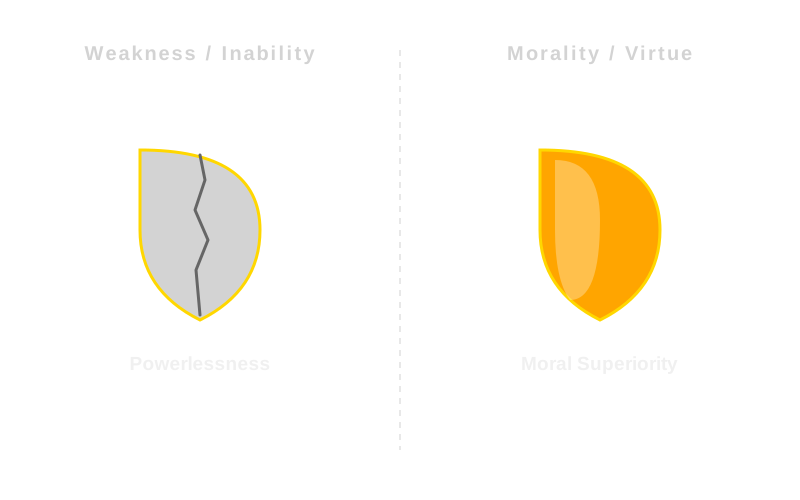
Once you’ve convinced yourself that your limitations are moral superiorities, you start seeing the world through that lens, judging others not by their actions but by how their successes make you feel. The Stoics understood this dynamic well. Their focus on “indifferents” wasn’t about suppressing desire but about preventing desire from becoming a weapon—against others or ourselves.
Envy, jealousy, and resentment thrive on unconditional attachments to externals like wealth or status. By treating these things as “preferred indifferents,” Stoicism doesn’t erase desire; it disarms it.
The goal isn’t to feel nothing but to feel appropriately—to want without being wrecked by wanting. This isn’t indifference to life; it’s a strategy for living without the constant background noise of comparison and lack 3.
True Morality: Power Held in Reserve
Nietzsche’s most provocative claim is that morality isn’t just about what you do—it’s about what you could do but don’t. The person who preaches humility from a position of weakness isn’t virtuous; they’re just lucky. True moral strength requires the capacity for what we might call “evil”—the power to dominate, to take, to exploit—and the will to refrain. This isn’t a celebration of power but a recognition that morality without capacity is just performance.
The Stoics, in their own way, echo this: their ideal isn’t someone who lacks desire but someone who has desires and masters them. The difference between the fox and the sage isn’t that one wants grapes and the other doesn’t; it’s that the sage could reach the grapes but chooses not to—because they’ve decided something else matters more. This is where the “inner citadel” concept becomes crucial.
It’s not about building walls to keep desire out; it’s about building a space where desire can be examined, understood, and directed. The person who claims they don’t want wealth because they’re “spiritual” might be fooling themselves—but the person who acknowledges the pull of wealth and consciously chooses a different path?
That’s autonomy in action. The first is a fox with a script; the second is a human with a choice.
The Legitimate Alternative: Stoicism’s Framework for Critiquing Values
Stoic Indifferents: Preference vs. Apathy
Let’s clear up a persistent misunderstanding: Stoicism isn’t about indifference—it’s about preference. The term ta adiaphora (often translated as “indifferents”) doesn’t mean Stoics don’t care about wealth, health, or reputation. It means these things don’t define virtue or happiness. Wealth is “preferred” because it makes life easier, but it’s “indifferent” to your moral worth.
This isn’t apathy; it’s clarity. Critics like Saint Augustine have accused Stoicism of promoting robotic detachment, but that’s a misreading. The Stoic ideal isn’t Meursault from The Outsider, killing without reason. It’s someone who recognizes that while money is useful, it doesn’t dictate character.
Seneca, despite his wealth, argued that virtue lies in how you use externals, not in possessing them. Epictetus, a former slave, echoed this: your worth isn’t tied to what you own. This alignment across vastly different life circumstances proves Stoicism isn’t about denying desire—it’s about mastering it 3. The real danger isn’t wanting wealth; it’s letting that want control you.
Stoicism doesn’t demand you renounce money—it asks you to see it as a tool, not a goal. This distinction is everything.
Saying “money doesn’t dictate my happiness” is wise; saying “money is inherently bad” is just ressentiment in disguise. The former is autonomy; the latter is self-deception.

Stoicism: A Philosophy for All Walks of Life
Seneca and Epictetus couldn’t have lived more different lives, yet their philosophy aligned. Why? Because Stoicism isn’t about circumstances—it’s about perspective. Seneca’s wealth didn’t make him virtuous, just as Epictetus’s slavery didn’t make him weak.
Both understood that externals are preferred indifferents: useful but not essential. This consistency reveals Stoicism’s power. It’s not a philosophy for the privileged or the oppressed—it’s for anyone who wants to live well.
The Stoic focus on oikeiôsis (human development) emphasizes our social bonds, not isolation. Parental love, friendship, and community aren’t “indifferent”; they’re central. The Stoic sage isn’t a cold statue but someone who engages deeply with life—without being wrecked by its ups and downs.
Money and Character: Stoicism vs. Rationalization
Here’s the litmus test: If you say “money doesn’t determine my character,” you’re practicing Stoicism. If you say “money is evil,” you’re likely rationalizing. The first statement acknowledges wealth’s utility while refusing to let it define you. The second is often a defense mechanism—if you can’t have it, it must be bad.
Stoicism doesn’t demand asceticism; it demands perspective. You can prefer wealth (it’s nice!) without needing it to be happy. This isn’t indifference; it’s freedom.
The fox calls grapes sour because it can’t reach them. The Stoic says, “Grapes are fine, but I don’t need them to thrive.” One is resentment; the other is wisdom.
The Inner Citadel: Your Mind’s Fortress Against Failure
The Inner Citadel: When Failure Becomes a Fortress
Isaiah Berlin’s concept of the “inner citadel” is a chillingly accurate description of how we construct psychological fortresses when reality doesn’t bend to our will. When the path to what we genuinely desire is blocked—whether it’s love, success, or status—we don’t just walk away disappointed. We rebuild our entire value system to make the unattainable seem undesirable, even contemptible. The fox doesn’t just accept that the grapes are out of reach; it rewrites the rules of the game entirely.
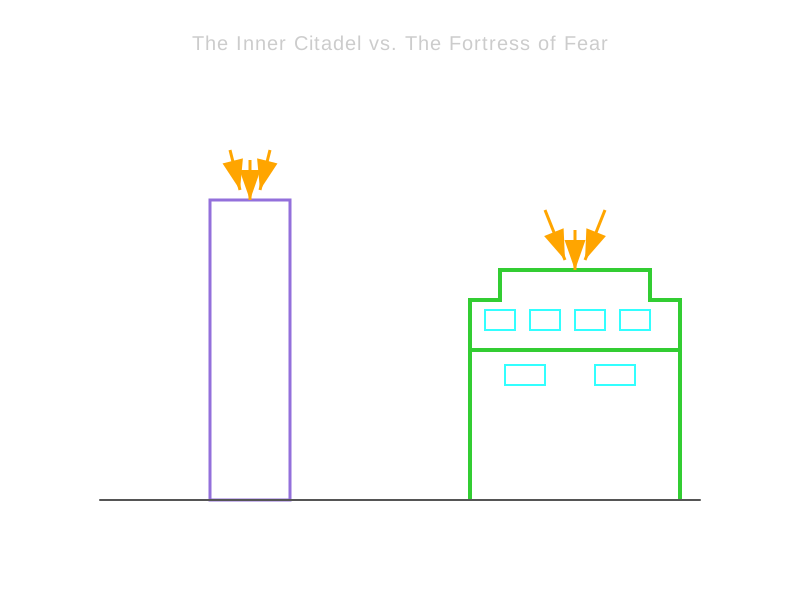
This isn’t just self-deception—it’s a full-scale retreat into a mental fortress where we become both the architect and the prisoner of our own rationalizations 5. What makes this retreat so insidious is how seamlessly it masquerades as wisdom. The person who declares monogamy “archaic” after repeated relationship failures isn’t just coping—they’re constructing a new moral framework where their limitations become virtues.
The job seeker who dismisses corporate careers as “soulless” after being rejected isn’t just venting—they’re building an identity around resistance to the very system they couldn’t conquer. This isn’t growth; it’s a psychological coup where failure is reframed as enlightenment. The inner citadel isn’t a sanctuary—it’s a gilded cage where we confuse our inability to win with a superior way of playing.
Constructive vs. Destructive Self-Reflection
Not all retreats to the inner citadel are created equal. There’s a world of difference between the person who, after failing to lose weight, declares that health standards are oppressive (a defensive fantasy) and the person who, after the same failure, reflects honestly on their relationship with food and exercise (a constructive retreat). The first is a delusion that hardens into dogma; the second is a reckoning that can lead to real change. Berlin’s warning about “compensatory fantasies” isn’t just academic—it’s a roadmap to madness.
The Columbine shooters didn’t just retreat inward; they built an entire vengeful universe in their minds, one that justified their eventual violence 4. The key difference lies in the quality of the retreat. Destructive retreats are marked by bitterness, a need to tear down what others have achieved, and a refusal to engage with reality. Constructive retreats, by contrast, involve painful but honest self-examination.
The Stoic ideal of the inner citadel isn’t about cutting off the wounded leg and pretending you never wanted to walk—it’s about treating the wound while acknowledging that walking might never be the same. One path leads to resentment; the other to resilience.
The fox in Aesop’s fable doesn’t just fail to get the grapes—it burns the vineyard in its mind. The Stoic, however, might plant their own.
The Difference Between Wisdom and Sour Grapes
This framework explains why some people’s rejection of materialism feels like wisdom while others’ feels like sour grapes. The ascetic who renounces wealth after failing to attain it isn’t necessarily virtuous—they might just be afraid to play the game. But the person who, after achieving wealth, decides it doesn’t bring fulfillment? That’s a different story.
The first is a retreat from failure; the second is a choice made from a position of strength. The inner citadel becomes a prison when it’s built from fear, but a fortress of genuine autonomy when it’s built from reflection. The litmus test is simple: Does your belief system expand your freedom or just protect your ego?
The fox’s citadel is a lie it tells itself to avoid pain. The Stoic’s citadel is a truth they’ve earned through struggle.
One is a rationalization; the other is wisdom. The difference isn’t in the retreat itself—it’s in what you build there. 5
Three Practical Tests to Expose Self-Deception
The Reversibility Test: Sour Grapes or Genuine Conviction
Imagine winning the lottery tomorrow. Would you keep your frugal lifestyle, or would you immediately buy a mansion? This is the essence of the reversibility test—a powerful way to distinguish between genuine conviction and sour grapes. If your preferences shift dramatically when constraints are removed, it’s a sign that your previous disdain was likely a defense mechanism.
For example, someone who claims to hate wealth but would splurge on luxury if given the chance is probably rationalizing their limitations. On the other hand, if you use the money to support your existing values—like funding art or charity—without changing your character, your conviction is likely genuine. This test isn’t just about money.

It applies to any unattained value. The person who claims to dislike fame but would jump at the chance to be a celebrity is revealing their true desires.
The reversibility testblog/deep-work#explaining-attention-residue-the-cost-of-distraction) exposes the gap between what we say we want and what we actually want when the barriers are gone. It’s a brutal but effective way to cut through self-deception. 1
Ressentiment vs. Wisdom: The Emotional Tone Test
How you talk about unattained values reveals a lot about your true feelings. Ressentiment is hot and bitter—it’s the anger, envy, and moral superiority that seep into conversations about wealth, fame, or success. If someone speaks about the rich with contempt, calling them “greedy” or “shallow,” it’s often a sign of unresolved desire. Wisdom, by contrast, is cool and detached.
It acknowledges the value of wealth or fame without being ruled by it. The Stoic ideal isn’t indifference but mastery—wanting without being wrecked by wanting. This test isn’t about suppressing emotion but recognizing its source.
The person who dismisses wealth as “evil” is often masking their own longing. The person who says, “Money is useful, but it doesn’t define me,” is speaking from a place of genuine conviction. The emotional tone test helps us see the difference between wisdom and rationalization.
The Consistency Test: Exposing Hidden Status Motivations
Genuine values are consistent. If someone claims to hate fame but obsessively checks their social media likes, they’re revealing a deeper truth—they crave status but only denounce the type they can’t reach. This inconsistency is a red flag. It shows that their rejection of fame isn’t a principled stance but a way to protect their ego.
The consistency test asks: Do your actions align with your words? If you claim to value simplicity but chase luxury in other areas, your conviction is likely a facade. This test applies to all areas of life.
The person who dismisses corporate careers as “soulless” but obsesses over promotions is exposing their true desires. Consistency isn’t about perfection—it’s about honesty.
If your values hold across different domains, they’re likely genuine. If they don’t, you might be fooling yourself.
The Reality Check: What Science Says About Money and Happiness
The Happiness Plateau: How Much Money Is Enough
Here’s where the rubber meets the road. If you’ve ever rolled your eyes at someone saying “money doesn’t buy happiness,” Kahneman and Deaton’s research gives you empirical ammunition. Their landmark study found that while money does improve life satisfaction, its impact on emotional well-being plateaus around $75,000 annually (though recent updates suggest it continues to rise, just with diminishing returns).
Beyond that threshold, more money doesn’t make you feel better day-to-day—it just lets you buy fancier problems. This isn’t just academic trivia; it’s a reality check.
The wealthy aren’t necessarily happier—they’re just richer. And that’s a fact, not a rationalization.

The Money Mirage: Finding Purpose After Wealth
There’s a cruel irony in wealth: once you’ve secured survival, the struggle for meaning begins. The “money mirage” is real—people who’ve achieved financial freedom often find themselves adrift, chasing purpose instead of paychecks. This isn’t just anecdotal; it’s a documented phenomenon.
The rich aren’t immune to existential crises; they’re just better at hiding them behind designer handbags and private jets. So when someone says “money isn’t everything,” they might not be rationalizing—they might be stating a fact.
The key is whether their critique is rooted in evidence (like diminishing returns) or resentment (like “rich people are evil”). One is wisdom; the other is sour grapes.
The Difference Between Wisdom and Rationalization
This is where the distinction between wisdom and rationalization sharpens. If your belief that “money isn’t everything” is grounded in empirical evidence—like the saturation point of happiness or the purpose vacuum of wealth—then it’s substantively rational, not just a coping mechanism. Elster’s concept of “substantive rationality” applies here: beliefs must be evidence-based, not just emotionally convenient. The rich who downplay their wealth to avoid envy?
That’s strategic humility, not self-deception. The person who denounces wealth because they can’t attain it?
That’s the fox calling grapes sour. The difference isn’t in the belief itself—it’s in the foundation.
Modern Manifestations: Female Competition and Social Media Dynamics
Boyfriend Cringe: Sour Grapes or Survival?
There’s a curious trend emerging in online spaces where young women dismiss relationships as “cringe” or “uncool.” This isn’t just a cultural shift—it’s a psychological tell. When dating prospects dwindle, the unattainable becomes undesirable. The “boyfriend cringe” phenomenon is adaptive preference formation in real time.
Women aren’t just rejecting relationships; they’re rewriting the script to make singledom the superior choice. But here’s the catch: this isn’t empowerment—it’s a survival strategy. When the mating pool shrinks, the fox doesn’t just walk away from the grapes; it convinces itself the grapes were rotten all along. The danger?
This isn’t just personal—it’s contagious. Once the narrative takes hold, it spreads like wildfire, turning genuine desire into performative disdain. The question isn’t whether these women truly don’t want relationships; it’s whether they’d still feel the same if the dating landscape suddenly shifted in their favor.
My bet? The grapes would taste sweet again.
The Bless Her Heart Effect: Hidden Competition in Female Friendships
Female intrasexual competition isn’t just about overt rivalry—it’s about the bless her heart effect, where criticism is wrapped in the language of care. A friend doesn’t say, “Your boyfriend’s a loser”; she says, “I’m just worried he’s not treating you right.” The concern is performative, the goal strategic: reduce competition for scarce high-value mates. This isn’t just gossip—it’s psychological warfare.
The tactic mirrors what Rob Henderson observed at Yale: students publicly denouncing investment banking as “capitalist oppression” while privately attending Goldman Sachs recruitment sessions. The parallel is stark. Women who can’t secure desirable partners don’t just exit the game—they rewrite the rules, framing their limitations as moral superiority.
The bless her heart effect isn’t kindness; it’s a Trojan horse for envy. The fox doesn’t just call the grapes sour; it warns others the grapes might be poisoned 5.
The Hidden Cost of “Luxury Beliefs”
Luxury beliefs are the ultimate sour grapes. When elites advocate for values that impose no personal cost—like “monogamy is oppressive” or “wealth is vulgar”—they’re not making moral arguments; they’re signaling status. The irony? These beliefs only work if others don’t adopt them.
If everyone rejected relationships, the mating pool wouldn’t just shrink—it’d collapse. The same goes for wealth: if the rich convinced everyone money was evil, who’d be left to admire their yachts? This isn’t virtue; it’s a power play.
The fox doesn’t just call the grapes sour—it campaigns to make everyone else believe it too. The difference between genuine conviction and performative luxury beliefs?
One survives scrutiny; the other crumbles when the stakes are real. The next time someone preaches the virtues of singledom or poverty, ask: Would they still say that if the grapes were suddenly within reach?. 2
Conclusion
So here we are, at the end of this winding path through fox fables, Stoic citadels, and the tangled psychology of desire. The core question—How do we know when we’re being wise versus when we’re just fooling ourselves?—doesn’t have a neat answer. But it does have a compass.
The difference between genuine conviction and sour grapes isn’t just about what you say you want; it’s about how you want it. The fox doesn’t just walk away from the grapes—it rewrites the rules of the game to make itself the winner. The Stoic, on the other hand, acknowledges the grapes’ sweetness but chooses something else anyway. One is a retreat; the other is a choice.
And that’s the heart of it: autonomy isn’t about suppressing desire but about mastering it. It’s not about pretending you don’t want wealth, love, or success—it’s about wanting them without letting them dictate your worth. The billionaire who says money doesn’t buy happiness might be speaking from experience, but the person who says the same from a studio apartment? Well, let’s just say the reversibility test exists for a reason.
So what’s the takeaway? Be suspicious of your own disdain. Ask yourself: If I had this thing I claim not to want, would I still feel the same? If the answer is no, you might be building a citadel of rationalization. If the answer is yes, congratulations—you’ve earned your wisdom.
And if you’re still unsure? Maybe that’s the point. The Stoics didn’t promise certainty; they promised clarity.
The fox didn’t get the grapes, but the sage? They didn’t need them to thrive.


