


I’ve spent years chasing the next big thing—the promotion, the dream house, the perfect relationship—only to realize that the moment I achieved it, the satisfaction evaporated. The thrill of the chase was always more intoxicating than the arrival itself.
It’s like dopamine, the chemical we’ve been told is the key to happiness, is actually the culprit behind our endless dissatisfaction. It’s not about pleasure; it’s about wanting. And wanting, by definition, means never being satisfied.
This isn’t just a personal failing; it’s a biological inevitability. The rat that starves with food inches away isn’t lazy—it’s lacking the dopamine to motivate it. We’re the same. We’re wired to chase, not to savor.
But what if we flipped the script? What if, instead of chasing the next dopamine hit, we learned to appreciate the climb?
The joy isn’t in the summit—it’s in the struggle, the sweat, the small victories along the way. The rat doesn’t need to starve; it needs to learn that the journey is the reward. And so do we.
The Illusion of Arrival: Why Achievement Isn’t Enough
Dopamine: The Science of Wanting vs. Liking
Dopamine isn’t the pleasure chemical we’ve been led to believe. It’s the chemical of wanting—the relentless drive that pushes us forward, the itch that demands scratching. As Jordan Peterson explains, dopamine is the force behind our pursuit of goals, not the satisfaction we feel upon achieving them. It’s the reason a rat, when deprived of dopamine receptors, will starve to death even with food inches away—it lacks the motivation to reach out and take it.
This isn’t just a quirk of rodent biology; it’s a fundamental truth about human nature. We’re wired to chase, not to savor. But here’s the catch: dopamine thrives on the gap between where we are and where we want to be. Close that gap, and the chemical reward vanishes.
This is the “arrival fallacy” in action—the belief that reaching a goal will bring lasting fulfillment, only to find that the satisfaction is fleeting. The house you once dreamed of becomes ordinary. The promotion you worked years for feels hollow within months. Dopamine doesn’t care about your happiness; it cares about your movement.
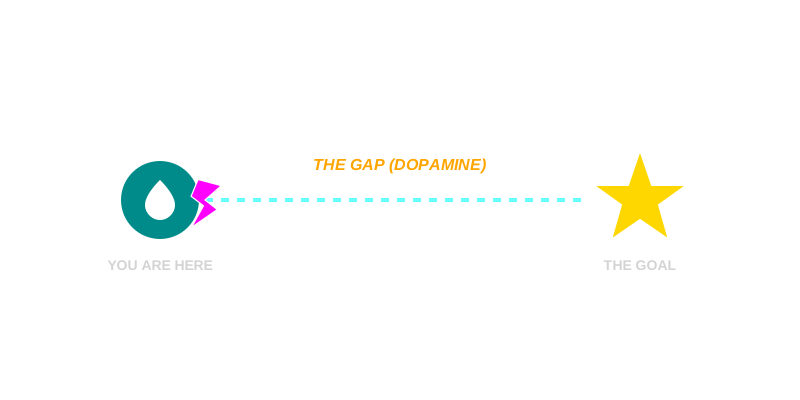
It’s why, as Peterson notes, the highest goals yield the greatest dopamine kicks—but only if you’re making progress. Stagnation is the enemy. This explains why so many of us are trapped in a cycle of achievement and dissatisfaction. We mistake the thrill of the chase for happiness itself.
But what if we flipped the script? What if, instead of chasing the next dopamine hit, we learned to appreciate the climb?
The joy isn’t in the summit—it’s in the struggle, the sweat, the small victories along the way. The rat doesn’t need to starve; it needs to learn that the journey is the reward. 1 2 3
Why Material Success Never Satisfies
We’ve all been there: the new car smell fades, the thrill of the promotion wears off, the dream house becomes just another place to clean. Material achievements are like mirages—they promise fulfillment but deliver only temporary relief. As Ryan Holiday puts it, “Problems never stop; they merely get exchanged and/or upgraded.” That bigger house?
It comes with bigger mortgage payments, more maintenance, new neighbors to impress. The cycle never ends because dopamine ensures we’re always looking for the next fix. This isn’t just anecdotal; it’s neuroscience. Dopamine’s role in goal pursuit means that satisfaction is always conditional.
The moment you achieve something, the brain resets, and the gap reopens. The house that was once your dream becomes the baseline, and suddenly, the one down the street looks better. It’s not that you’re ungrateful—it’s that your brain is wired to keep you striving. The arrival fallacy isn’t a personal failing; it’s a biological inevitability.
But here’s the twist: the people who thrive aren’t the ones who avoid problems—they’re the ones who enjoy solving them. The gym rat loves the grind. The artist embraces the struggle.
The corporate climber thrives on the politics. Happiness isn’t the absence of problems; it’s the engagement with them.
The secret isn’t to escape the cycle but to find joy in the climb itself. The rat doesn’t need to stop wanting; it needs to want the right things. 1 3 4
The Joy of Embracing Life’s Ongoing Challenges
Life isn’t a checklist where you tick off problems and reach a state of perpetual bliss. It’s a never-ending spiral of challenges, each solved only to reveal the next. As Mark Manson writes, “Happiness comes from solving problems.” The keyword is solving—not avoiding, not ignoring, but actively engaging.
The couple who schedules date nights doesn’t eliminate relationship problems; they trade them for new ones (like figuring out what to do every Wednesday). The entrepreneur who builds a business doesn’t escape stress; they upgrade it. This is where the self-help industry gets it wrong. It sells the illusion of a problem-free existence, but the truth is far messier.

Radical acceptance isn’t about being okay with everything; it’s about choosing which struggles to embrace. The meditator in the cave isn’t happy because they’ve transcended desire—they’re happy because they’ve found meaning in the practice itself. The joy isn’t in the destination; it’s in the doing. So what’s the takeaway?
Stop chasing the mirage. Instead of asking, “What will make me happy?” ask, “What problems do I enjoy solving?” The answer might surprise you.
The rat doesn’t need to starve; it needs to learn to love the chase. And so do we. 2
Process Over Outcome: Shifting Your Focus for Lasting Fulfillment
Life Is About the Journey, Not the Destination
We spend our lives chasing milestones—graduations, promotions, weddings, retirements—only to realize that the moment we reach them, the satisfaction evaporates. The dopamine hit fades, and we’re left asking, What’s next? This isn’t a personal failing; it’s the human condition. As Sam Harris points out, the moment you achieve something, it begins to recede because new goals immediately appear on the horizon.
The promotion you worked years for becomes the baseline, and suddenly, the corner office feels like just another step. The problem isn’t the goal—it’s the illusion that arrival equals fulfillment. The truth is, most of life is spent in the process, not the achievement. The months of training for a marathon, the late nights writing a book, the daily grind of parenting—these are the moments that define us, not the fleeting high of crossing the finish line or seeing your name on a bestseller list.
Ryan Holiday admits that even after hitting #1 on the New York Times list, the real joy wasn’t in the accolade but in the daily act of writing, the struggle of solving problems and making progress. The swim he took before checking the news—that was the reward. The achievement was just the byproduct. This is where the self-help industry gets it wrong.
It sells the fantasy of a problem-free existence, but happiness isn’t the absence of struggle—it’s the engagement with it. The couple who schedules date nights doesn’t eliminate relationship problems; they trade them for new ones. The entrepreneur who builds a business doesn’t escape stress; they upgrade it.
The key isn’t to avoid the chase but to learn to love the climb. The rat doesn’t need to stop wanting; it needs to want the right things. And so do we. 5
Why Struggle Is Essential for Happiness
We’ve been sold a lie: that happiness is the absence of struggle, the elimination of all lack. But as Jordan Peterson notes, if we were to make the world sufficiently perfect, the only desired lack would be for the desire of lack itself. This is the paradox of human nature—we need challenges, not just comfort. The gym rat doesn’t love the results; they love the grind.
The artist doesn’t crave the finished painting; they crave the act of creation. The corporate climber thrives on the politics, not the promotion. This is what Sam Harris calls “optimal deprivation”—the idea that struggle isn’t just necessary but desirable. The investor who finally takes that dream vacation finds himself thinking, Wouldn’t it be great to come back here next year?
The moment of arrival is already tainted by the next pursuit. The happiness isn’t in the destination; it’s in the journey. And the journey isn’t just the path to the goal—it’s the goal itself. The workout is the perfect metaphor.
Lifting weights to failure feels like a medical emergency—your muscles scream, your lungs burn, your body begs you to stop. But because you’ve chosen it, because you understand the purpose, it becomes exhilarating. You’re not avoiding pain; you’re embracing it.
The same logic applies to life. The problems never stop; they just improve. The key is to find joy in the struggle, not the resolution.
Workout as Metaphor: Finding Flow in Life
The gym isn’t just a place to build muscle; it’s a laboratory for life. The discomfort of a hard workout mirrors the discomfort of meaningful pursuits—writing a book, building a business, raising a family. The difference is that in the gym, you choose the pain. You seek it out because you know it’s the path to growth.
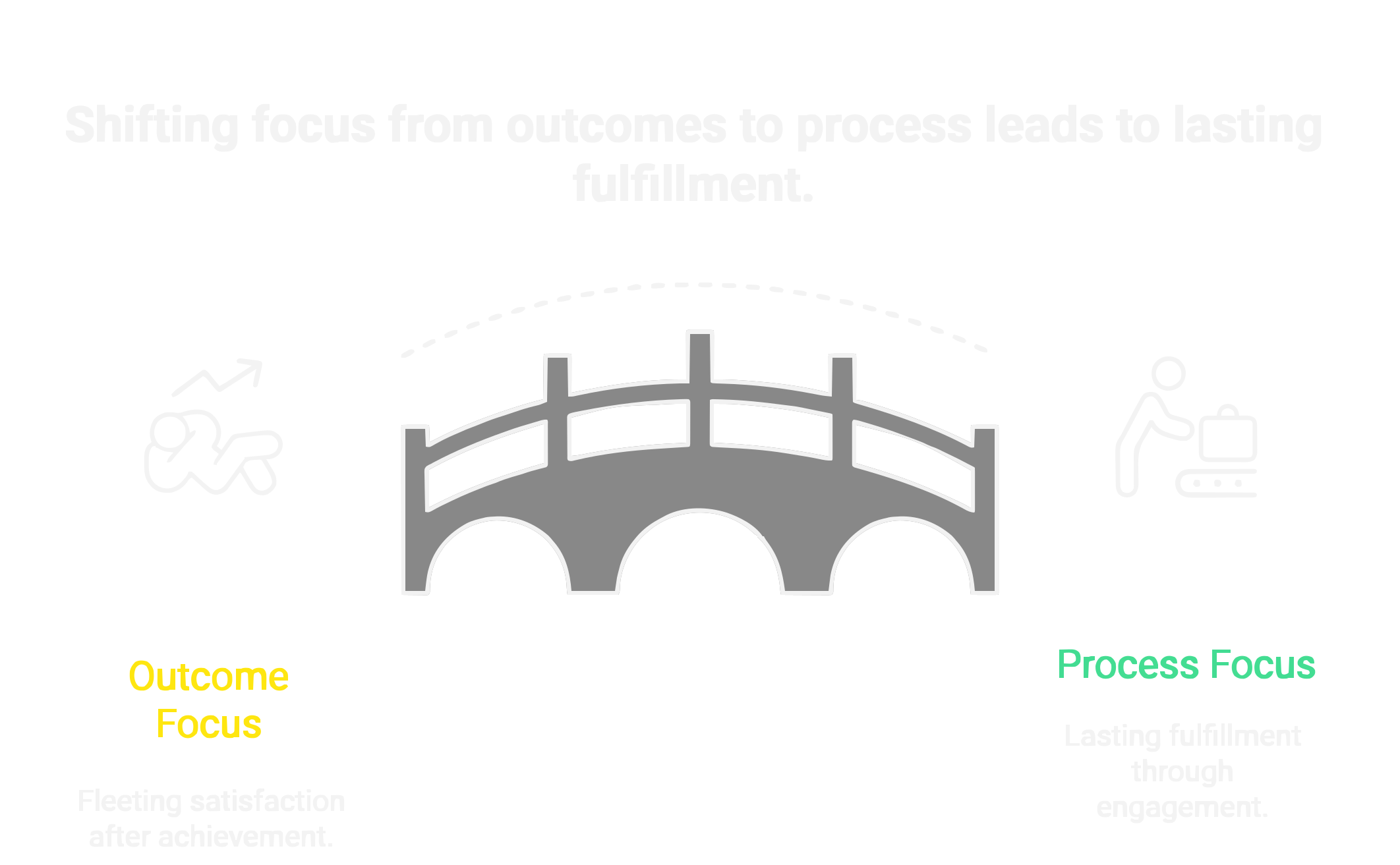
The same principle applies to everything else. The entrepreneur doesn’t love the stress of payroll; they love the challenge of solving it. The parent doesn’t love the sleepless nights; they love the bond it creates. This is the essence of flow—the state where challenge meets skill, where the struggle itself becomes the reward.
The writer lost in their manuscript, the athlete in the zone, the meditator in deep practice—they’re not chasing happiness; they’re in it. The happiness isn’t the result; it’s the process.
The rat doesn’t need to starve; it needs to learn to love the chase. And so do we. 5
Meditation’s Role: Reversing the Causality of Happiness
Finding Peace in the Present Moment
We’re all chasing something—the promotion, the dream house, the perfect relationship—but what happens when we catch it? The thrill fades, and we’re left wondering, Is this it? Ryan Holiday’s story about hitting #1 on the New York Times bestseller list is a perfect example. He woke up, checked his phone, and realized the news—whether good or bad—was just noise.
The real reward was the swim he took before checking, the moment of presence he chose over the dopamine hit of achievement. That’s the paradox: the things we think will make us happy often distract us from the happiness already available in the present. Dopamine, as we’ve established, is the chemical of wanting, not liking. It thrives on the gap between where we are and where we want to be.
But what if we could short-circuit that loop? What if, instead of waiting for the next milestone to feel fulfilled, we could find satisfaction in the process itself? Parenting offers a clue. Unlike career goals or material success, raising kids doesn’t come with an “arrival fallacy.”
You don’t think, If only I had one more kid, then I’d be happy. Instead, you look back and wish you’d savored the phases more. The joy isn’t in the destination; it’s in the daily mess of bedtime stories and skinned knees. The same logic applies to everything else.
The entrepreneur doesn’t love the stress of payroll; they love the challenge of solving it. The parent doesn’t love the sleepless nights; they love the bond it creates. The problem is that most of us are stuck in a cycle of denial or victimhood. We either pretend our problems don’t exist or blame others for them, seeking quick highs to escape reality.
But happiness isn’t the absence of struggle; it’s the engagement with it. The key is to find the problems you enjoy having and solving. Sometimes, those problems are simple—like enjoying a good meal or traveling to a new place.
Other times, they’re abstract and complicated—like fixing a relationship or finding a career you feel good about. The concept is the same: solve problems, be happy. But to do that, you have to stop chasing the mirage of arrival and start embracing the present.
How to Harness Your Natural Obsessions for Success
We live in a world of endless distractions, where our attention is constantly pulled in a million directions. But attention is a finite resource, and how we allocate it determines the quality of our lives. The most successful people aren’t those who avoid struggle but those who harness their natural inclinations for productivity. As Jordan Peterson notes, we all have our “thing”—the obsession that drives us.
For some, it’s money; for others, it’s fitness or art. The key is to recognize that obsession and channel it into something meaningful. But here’s the catch: the pain is inevitable. You can’t have a pain-free life.
The question isn’t What do you want to enjoy? but What pain do you want to sustain? The gym rat loves the grind, not the results. The artist craves the act of creation, not the finished painting. The corporate climber thrives on the politics, not the promotion.
The same principle applies to everything else. The entrepreneur doesn’t love the stress of payroll; they love the challenge of solving it. The parent doesn’t love the sleepless nights; they love the bond it creates. The path to happiness isn’t about avoiding struggle; it’s about choosing the right struggles.
The problems never stop; they just improve. The key is to find joy in the struggle, not the resolution.
The rat doesn’t need to starve; it needs to learn to love the chase. And so do we.
How to Find Peace Amid Life’s Challenges
Meditation isn’t about escaping reality; it’s about engaging with it more fully. As Sam Harris explains, meditation reverses the causality of happiness. Instead of waiting for the next good thing to happen, you learn to be fulfilled before anything happens. Your happiness is no longer predicated on external circumstances.
You can be in the presence of the next good or bad thing already being fulfilled and at peace. This isn’t just a philosophical idea; it’s a practical tool. The gym isn’t just a place to build muscle; it’s a laboratory for life. The discomfort of a hard workout mirrors the discomfort of meaningful pursuits—writing a book, building a business, raising a family.
The difference is that in the gym, you choose the pain. You seek it out because you know it’s the path to growth. The same principle applies to everything else. The entrepreneur doesn’t love the stress of payroll; they love the challenge of solving it.
The parent doesn’t love the sleepless nights; they love the bond it creates. The key is to find your point of rest in the midst of any struggle.
The rat doesn’t need to starve; it needs to learn to love the chase. And so do we.
Wisdom vs. Intelligence: Making Better Decisions
Emotions: Use Feedback, Not Commands
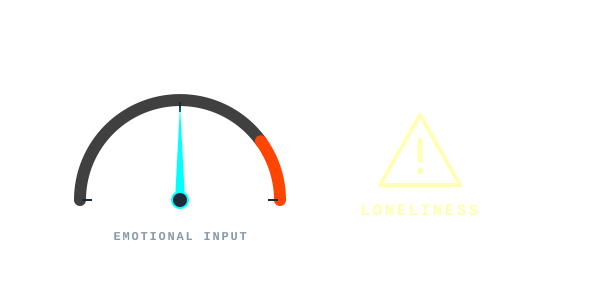
We’ve been conditioned to treat emotions like absolute truths—commandments carved in stone. If we feel it, it must be real, right? But here’s the uncomfortable truth: emotions are just feedback mechanisms, not divine decrees. They’re the brain’s way of nudging us toward action or away from danger, like a car’s dashboard warning light.
Ignore them, and you risk breakdown. Obey them blindly, and you’ll end up driving in circles. Take sadness, for example. It’s not a sign that life is hopeless; it’s a signal that something’s missing or unresolved.
The pain of loneliness isn’t a sentence—it’s a call to connect. But here’s where most people go wrong: they either repress emotions entirely or let them dictate every decision. Repression turns problems into landmines. Over-identification turns life into a rollercoaster of impulsive choices—like quitting your job because you’re feeling unfulfilled, only to realize you’ve traded one set of problems for another.
The key? Treat emotions like data, not directives. Question them. Interrogate them.
Ask: Is this sadness pointing me toward something I need to fix, or is it just the residue of a bad day? The goal isn’t to ignore feelings but to use them as clues, not crutches. Because if you wait for emotions to align perfectly before making a move, you’ll be waiting forever. Life isn’t about feeling good all the time—it’s about solving problems, and problems don’t care about your mood. 4 1
Choose Your Struggle: Finding Fulfillment
The hedonic treadmill is a brutal joke: no matter how fast you run, you end up in the same place. That promotion? Six months later, it’s just the new normal. The dream house?
Now you’re stressing over the mortgage. The perfect relationship? Congrats, you’ve just unlocked a new tier of arguments. The problem isn’t the struggle—it’s the illusion that struggle has an expiration date.
Here’s the hard truth: You will always have problems. The question isn’t How do I eliminate them? but Which ones do I want? The gym rat doesn’t love the soreness; they love the growth it represents. The entrepreneur doesn’t crave the stress; they crave the challenge.
The parent doesn’t adore sleepless nights; they adore the bond. The difference is in the choice. You can’t avoid pain, but you can pick the flavor. This is where wisdom trumps intelligence.
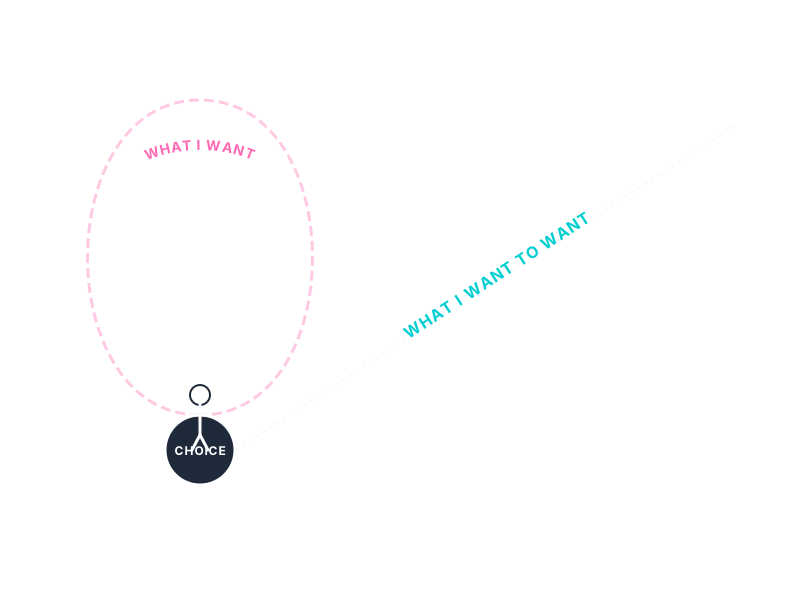
Intelligence asks, How do I get what I want? Wisdom asks, What do I want to want? Because the things that feel good today—endless scrolling, impulsive purchases, avoidance—often lead to regret tomorrow. The things that feel hard today—discipline, uncomfortable conversations, delayed gratification—often lead to fulfillment. The rat doesn’t need to stop wanting; it needs to want the right things. And so do you. 2
Find Fulfillment in the Process, Not the Outcome
The myth of the “big win” is a dopamine trap. We fixate on the finish line—the book deal, the corner office, the six-pack abs—only to realize the real magic was in the daily grind. Ryan Holiday’s confession about hitting #1 on the New York Times list is telling: the thrill lasted minutes. The real joy?
The early mornings at his desk, wrestling with ideas, making incremental progress. That’s where the fulfillment lives. Process-oriented goals work because they provide constant feedback. Every workout, every page written, every problem solved is a small win—a dopamine hit that doesn’t vanish the moment you achieve it.
It’s the difference between chasing a mirage and building a road. The former leaves you thirsty; the latter gives you somewhere to stand. The monks aren’t wrong when they say happiness comes from wanting less. But neither are the strivers who find joy in the pursuit.
The sweet spot is in the overlap: Want what you already have—the process itself. The podcast host who loves the daily creation, not the download numbers. The athlete who loves the training, not just the trophy.
The parent who savors the messy, exhausting, beautiful act of raising a human. The goal isn’t to stop wanting; it’s to want the right things—for the right reasons.
Conclusion
So here we are, at the end of this exploration, and yet—no grand finale, no mic drop moment. Just the quiet realization that the chase itself was the point all along. We’ve spent our lives treating happiness like a destination, only to find that the real magic lies in how we travel.
Dopamine isn’t the villain here; it’s the engine. The trick isn’t to shut it down but to steer it. The rat doesn’t need to stop wanting—it needs to want the right things. And so do we.
The gym rat loves the grind, not the mirror. The artist craves the brushstrokes, not the gallery. The parent? They’d take the sleepless nights over the silence any day, because the struggle is where the love lives.
This isn’t about settling for less; it’s about wanting better. Not the fleeting high of achievement, but the deep satisfaction of engagement. The joy isn’t in having solved the problem—it’s in the solving.
(And let’s be honest, the problems never really end. They just get more interesting.)
So what now? Maybe the question isn’t How do I get happy? but What struggle do I want to wake up to tomorrow? Because the rat that learns to love the chase? That’s the one that never starves.
The summit is a myth. The climb is the only thing that’s real.
Footnotes
-
The Savings Expert: Passive Income Is A Scam! Post-Traumatic Broke Syndrome Is Controlling Millions! ↩ ↩2 ↩3
-
Using Meditation to Focus, View Consciousness & Expand Your Mind | Dr. Sam Harris ↩ ↩2 ↩3
-
How to Break Out of Old Psychological Patterns - Jordan Peterson ↩ ↩2
-
Manson, Mark, Author. The Subtle Art of Not Giving a Fuck: A Counterintuitive Approach to Living a Good Life . New York, NY: HarperOne, 2016. ↩ ↩2


