


I’ve spent years chasing the next thing—better job, bigger house, deeper love—only to find each victory hollow, each joy fleeting. It’s not that these things don’t matter; it’s that the moment I grasp them, they slip through my fingers like sand.
The Buddha called this dukkha, not just suffering, but the gnawing sense that life should be different. And here’s the kicker: it’s not life that’s insufficient. It’s the craving itself that’s the cage.
I used to think freedom meant getting what I want. But Rousseau’s words hit me like a punch to the gut: the mere impulse of appetite is slavery.
Every time I act from desire—whether it’s lust, ambition, or even the need for approval—I’m not choosing. I’m reacting. And reaction isn’t freedom; it’s a chain.
The Buddha saw this 2,500 years ago. The five hindrances—sensual desire, ill will, sloth, restlessness, doubt—aren’t just bad habits. They’re the bars of the cage. Each one is a flavor of craving, a way we surrender our autonomy to the whims of want.
The hedonic treadmill isn’t just a psychological quirk; it’s the human condition. We chase, we obtain, we adapt, and then we chase again. The goalpost doesn’t just move—it vanishes the moment we reach it.
But here’s the radical truth: the cage isn’t locked. The door was never even closed. The moment we see desire for what it is—a temporary fix for a permanent ache—we step off the treadmill.
Not by force, but by realization. The freedom isn’t in the having; it’s in the not needing.
This isn’t about suppression. It’s about waking up. The Buddha’s path, Rousseau’s warning, Kant’s autonomy—they all point to the same insight: true freedom isn’t about getting what you want. It’s about wanting what you have.
And in that shift, the cage dissolves. The door was always open. We just had to stop turning the key of craving.
The Universal Human Plight: Life Should Be Different
Why Craving Causes Suffering
The Buddha’s first noble truth is often misunderstood as a declaration that life is nothing but suffering. But that’s not quite right. Life isn’t only misery—there’s joy, love, and beauty—but even our happiest moments are shadowed by impermanence. That’s the real sting.
We cling to pleasure, to people, to achievements, only to watch them slip through our fingers like sand. The Buddha didn’t deny happiness; he pointed out its fragility. And that fragility, that dukkha, isn’t just about pain—it’s about the unsatisfactoriness of existence itself. Even when we get what we want, it never quite delivers the lasting fulfillment we crave.
The second noble truth cuts deeper: the cause of this suffering is tanha, or craving. It’s not just about wanting more—it’s about the relentless, gnawing sense that things should be different. We want more money, less stress, a better relationship, a different past. We want the moment to last forever or to end immediately.
This craving isn’t just a bad habit; it’s the root of our psychological bondage. The Buddha’s insight is radical: suffering isn’t just an unfortunate side effect of life—it’s a self-inflicted wound, a cage we build with our own desires. The more we crave, the tighter the bars become. What’s fascinating is how this aligns with modern psychology.
The hedonic treadmill—our tendency to return to a baseline level of happiness despite life changes—is essentially tanha in action. We chase promotions, relationships, or material goods, thinking they’ll finally satisfy us, only to find ourselves back at square one, craving the next thing. The Buddha saw this cycle 2,500 years ago.
The solution? Not to suppress desire, but to see it clearly—to recognize that the very act of craving is what keeps us trapped. 1 2
Why Happiness Always Feels Just Out of Reach
We’ve all been there: the thrill of a new purchase, the high of a promotion, the warmth of a new relationship—only for the shine to wear off. That’s the hedonic treadmill in motion. Psychologists call it adaptation; the Buddha called it dukkha. The problem isn’t that happiness is fleeting—it’s that we mistake the pursuit of happiness for happiness itself.
We think, If I just get this, I’ll be content, but the moment we get it, the goalpost shifts. The mind is a factory of dissatisfaction, always producing new wants. This isn’t just a personal failing—it’s wired into our biology. Evolution rewards striving, not satisfaction.

Our ancestors who were content with what they had didn’t survive; the ones who always wanted more did. But in the modern world, where survival isn’t the issue, this same wiring leaves us in a perpetual state of lack. We’re like hamsters on a wheel, running faster and faster but never actually moving forward. The Buddha’s diagnosis?
We’re not just running on a treadmill—we’re the ones who built it. The way out isn’t to stop running entirely—desire isn’t the enemy, but its blindness is.
The Buddha’s path isn’t about renunciation in the sense of deprivation; it’s about seeing desire for what it is: a temporary fix for a permanent ache. The real freedom comes when we step off the treadmill not by force, but by realizing we don’t need to be on it in the first place.
The Root of Discontent: Believing “I’m Not Enough”
At the heart of tanha is a fundamental lie: I am not enough. Life is not enough. This is the illusion that fuels the hedonic treadmill. We believe that if we just had more—more money, more love, more success—we’d finally feel whole.
But the Buddha saw through this. The problem isn’t that we lack things; it’s that we believe we should have them. This belief is the real cage. The five hindrances in Buddhist teaching—sensual desire, ill will, sloth, restlessness, and doubt—are all symptoms of this same delusion.
Sensual desire tells us we need more pleasure; ill will tells us others are to blame for our lack; sloth tells us we’re too weak to change; restlessness tells us we’re missing out; doubt tells us we’ll never be enough. Each one is a different flavor of the same poison: the idea that reality is insufficient. The antidote isn’t to suppress these thoughts but to see them clearly.
When we observe craving without acting on it, we break the spell. The Buddha’s path isn’t about becoming a passionless zombie—it’s about becoming fully alive to the present moment, without the distortion of tanha.
It’s about realizing that the cage of desire isn’t locked from the outside. The door was never even closed.
Desire as Slavery: How Wanting Robs Us of Freedom
Rousseau: Appetite as a Form of Slavery
Rousseau’s words cut to the bone: the mere impulse of appetite is slavery. This isn’t just philosophical posturing—it’s a diagnosis of the human condition. When we act purely from desire, we’re not free; we’re puppets. The Buddha would nod in agreement.
The five hindrances—sensual desire, ill will, sloth, restlessness, and doubt—are the chains that bind us. Each one is a flavor of craving, a different way we surrender our autonomy. Sensual desire, for instance, isn’t just about wanting pleasure—it’s about being controlled by it. The Buddha compared it to licking honey from a razor’s edge.
The sweetness is fleeting; the cut is inevitable. Rousseau’s insight aligns perfectly: when we’re driven by appetite, we’re not choosing—we’re reacting. And reaction isn’t freedom; it’s servitude. The mind clouded by craving is like boiling water—turbulent, unclear, incapable of true discernment.
The antidote? Mindfulness. Observing the craving without acting on it. That’s where the first taste of liberation lies.
But here’s the kicker: Rousseau isn’t just talking about sensual cravings. He’s talking about the deeper slavery—the belief that we need something external to be complete. That’s the real cage.
The Buddha’s path isn’t about suppressing desire but seeing it for what it is: a temporary fix for a permanent ache. Rousseau’s maxim is a wake-up call: if you’re acting from appetite alone, you’re not free—you’re enslaved.
Autonomy vs. Heteronomy: Kant’s Key Distinction
Kant’s philosophy is often dense, but his distinction between autonomy and heteronomy is crystal clear. Autonomy is self-governance—acting from reason, not impulse. Heteronomy is the opposite: being governed by external forces, like desires or societal pressures. When we act purely from desire, we’re not free; we’re following a script written by our cravings.
The Buddha would agree. The eightfold path isn’t just a moral checklist—it’s a training ground for autonomy. Right intention, right action, right livelihood—these aren’t just rules; they’re tools for breaking free from the tyranny of desire. Kant’s idea of the categorical imperative—acting from duty rather than inclination—echoes the Buddhist concept of nishkama karma, or desireless action.
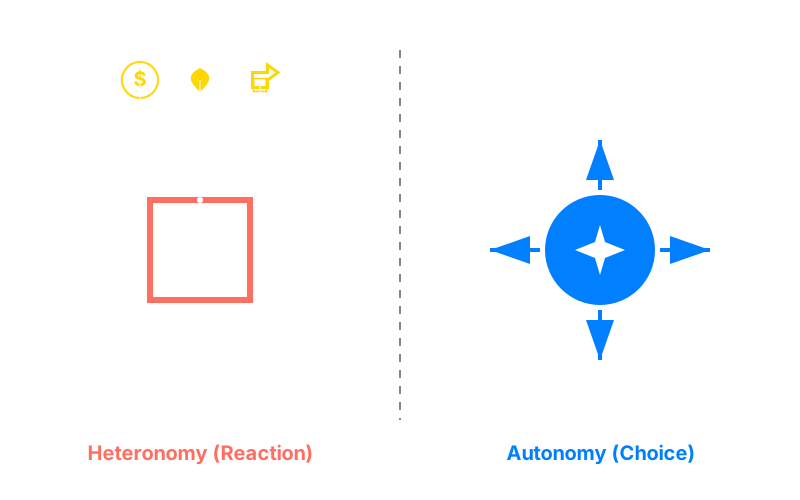
It’s not about suppressing desire but transcending it. Kant’s critique of heteronomy is a call to wake up. If you’re acting because you want something—pleasure, approval, success—you’re not free.
You’re a slave to your desires. True freedom comes when you act not because you want to, but because it’s the right thing to do. That’s the heart of both Kant’s philosophy and the Buddha’s teachings.
The Psychology of Human Bondage
Spinoza’s Ethics is a masterclass in understanding human bondage. He argues that when we’re governed by passions—emotions like desire, anger, or fear—we’re not free. We’re at the mercy of forces we don’t control. The Buddha would call these the five hindrances: sensual desire, ill will, sloth, restlessness, and doubt.
Each one is a passion that clouds the mind and binds us to suffering. Spinoza’s solution? Understanding. The more we understand our emotions, the less power they have over us.
The Buddha’s path is similar: mindfulness. Observing our cravings without acting on them. That’s how we break free. Spinoza’s idea of amor fati—loving one’s fate—isn’t far from the Buddhist concept of equanimity.
It’s about accepting reality as it is, not as we wish it to be. The real slavery isn’t just the craving itself—it’s the belief that we need something external to be happy. Spinoza and the Buddha both saw through this illusion.
Freedom isn’t about getting what you want; it’s about wanting what you have. That’s the key to breaking the chains of desire.
How Desire Enslaves and Desireless Action Frees
The Bhagavad Gita’s concept of nishkama karma—desireless action—is a radical idea. It’s not about inaction; it’s about acting without attachment to the outcome. When we act from desire, we’re not free—we’re enslaved by the hope of reward or the fear of failure. The Gita’s lesson is clear: true freedom comes when we act not for personal gain, but because it’s the right thing to do.
The Buddha’s eightfold path is a practical guide to this freedom. Right action, right livelihood, right effort—these aren’t just moral principles; they’re tools for breaking free from the cage of desire. When we act from duty rather than craving, we reclaim our autonomy.
That’s the heart of both the Gita and the Buddha’s teachings. The sacrifice of freedom isn’t just about giving up desires—it’s about seeing through the illusion that they bring happiness.
The real freedom is in the present moment, unclouded by craving. That’s the liberation both the Gita and the Buddha point to.
The Path of Desireless Action: Nishkama Karma
Krishna’s Wisdom: Act with Detachment and Freedom
Imagine Arjuna on the battlefield of Kurukshetra, paralyzed by doubt. Krishna’s words cut through his confusion like a blade: You have the right to perform your duty, but never to the fruits of your work. This isn’t just battlefield advice—it’s a blueprint for liberation. Krishna isn’t telling Arjuna to stop acting.
He’s telling him to stop clinging. The moment we act for a result—approval, success, security—we chain ourselves to the outcome. The Buddha would nod in agreement. The five hindrances—sensual desire, ill will, sloth, restlessness, doubt—are all forms of this clinging.
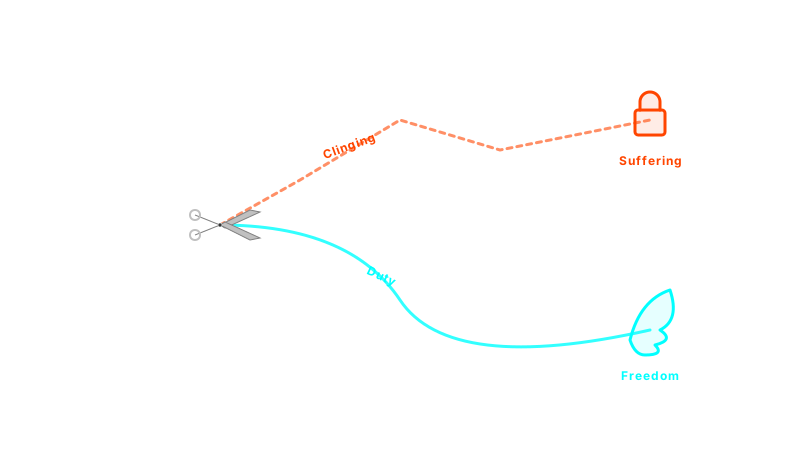
Each one is a way we surrender our freedom to the future. Nishkama karma isn’t passivity. It’s action infused with devotion, not hunger for fame.
Think of a musician lost in the music, not the applause. That’s the essence of Krishna’s teaching.
The moment we detach from the result, we reclaim our autonomy. The cage of desire isn’t locked from the outside—it’s a prison we build with our own expectations.
Nishkama Karma: Duty Without Desire
Here’s the paradox: nishkama karma isn’t about doing nothing. It’s about doing everything—but without the mental baggage. Aditya’s story illustrates this beautifully. He didn’t retreat from life; he engaged more deeply, but without the weight of personal gain.
The Buddha’s eightfold path aligns perfectly. Right action isn’t about moral perfectionism; it’s about acting from clarity, not craving. When we perform our duty—whether it’s work, relationships, or creative pursuits—without the need for a specific outcome, we step off the hedonic treadmill.
This isn’t suppression. It’s freedom.
The mind unclouded by desire is like still water—clear, reflective, alive to the present. The five hindrances dissolve not through force, but through seeing them for what they are: temporary distortions.
Action Without Attachment: The Path to True Freedom
Adi Shankaracharya’s insight is profound: the true doer isn’t the ego, but the eternal Self. When we act without selfish desire, we dissolve the illusion of the separate “doer.” Swami Vivekananda took this further—selfless service isn’t just moral; it’s transformative. It’s energy unleashed, untainted by the need for reward.
Sri Aurobindo’s vision completes the picture. Every action becomes a step in consciousness’s evolution. The painter’s stroke, the teacher’s lesson, the friend’s kindness—when done without ego, they’re not just actions; they’re offerings. This is the heart of nishkama karma.
It’s not about renunciation; it’s about reorientation. The freedom isn’t in the absence of action, but in the absence of attachment to action.
The cage of desire was never locked. The door was always open.
The Stoic Prescription: Freedom Through the Removal of Desire
Find Freedom by Removing Desires: The Stoic Path
Epictetus’s words are a gut punch to our modern sensibilities. We’re taught to chase desires—to want more, to strive harder, to never settle. But Epictetus flips the script: freedom isn’t about getting what you want; it’s about not wanting at all. This isn’t just Stoic asceticism; it’s a radical redefinition of liberty.
The Buddha would agree. The five hindrances—sensual desire, ill will, sloth, restlessness, doubt—are all forms of craving. Each one is a chain that binds us to suffering. Sensual desire, for instance, isn’t just about wanting pleasure; it’s about being controlled by it.
The Buddha compared it to licking honey from a razor’s edge—the sweetness is fleeting, the cut inevitable. Epictetus’s formula is a call to wake up. If you’re acting from desire, you’re not free; you’re a slave to your cravings.
The Buddha’s path isn’t about suppressing desire but seeing it clearly—to recognize that the very act of craving is what keeps us trapped. The Mahayana virtues—generosity, ethics, patience, effort, concentration, wisdom—are tools for this liberation.
They’re not just moral ideals; they’re practical guidelines for breaking free from the cage of desire. When we cultivate these virtues, we’re not just becoming better people; we’re becoming free.
How to Overcome the Five Hindrances with Mindfulness
The five hindrances are like Mara’s armies—inner obstacles that attack our peace of mind. Sensual desire, ill will, sloth, restlessness, doubt—they’re all forms of craving that cloud the mind and obstruct clarity. The Buddha compared sensual desire to a bead of honey on the blade of a knife. The sweetness is tempting, but the cost is suffering.
Ill will is another form of craving—the desire to see others suffer. Even justified anger hinders mental clarity and meditative progress. The Buddha compared a mind filled with ill will to boiling water—turbulent, unclear, incapable of true discernment. The antidote?
Mindfulness. Observing cravings without judgment and letting them pass naturally. This isn’t suppression; it’s freedom.
When we master the internal—when we eliminate the desire for the external—we become invincible. The Mahayana virtues—generosity, ethics, patience, effort, concentration, wisdom—are the tools for this mastery.
They’re not just moral ideals; they’re practical guidelines for breaking free from the cage of desire. When we cultivate these virtues, we’re not just becoming better people; we’re becoming free.
The Ultimate Goal: Nirvana as the Extinguishing of Craving
How to Achieve Nirvana by Extinguishing Desire, Hate, and Delusion
Nirvana isn’t some mystical state reserved for ascetics on mountaintops—it’s the extinguishing of the fires that burn us alive. The Buddha’s metaphor is brutal and precise: desire, hate, and delusion are flames licking at our peace. The word nirvana itself means “blown out,” like a candle snuffed by a sudden gust. But this isn’t annihilation; it’s the end of suffering’s relentless cycle.

The early texts don’t waste time philosophizing about what nirvana is—they focus on what it isn’t: no birth, no death, no craving, no ignorance. It’s the absence of the very things that keep us trapped in samsara’s hamster wheel. The three poisons—desire, hate, and delusion—are the arsonists. Desire isn’t just wanting a new car; it’s the gnawing sense that this moment isn’t enough.
Hate isn’t just anger; it’s the refusal to accept reality as it is. Delusion isn’t just confusion; it’s the lie that happiness comes from more, different, better. The Buddha’s Fire Sermon doesn’t mince words: all is burning. Even our pleasures are laced with suffering because they’re impermanent.
The antidotes? Generosity to counter greed, loving-kindness to dissolve hate, wisdom to cut through delusion. But here’s the kicker: nirvana isn’t about adding these virtues—it’s about removing the poisons. It’s not a construction project; it’s a demolition.
The Buddha’s genius lies in his refusal to romanticize nirvana. He doesn’t describe it as a blissful heaven or a transcendental high. It’s unconditioned—beyond the dualities of pleasure and pain, gain and loss.
The early texts avoid speculation because nirvana isn’t something to understand—it’s something to realize. The moment we stop feeding the flames, they die. The cage of desire wasn’t locked; we were just too busy stoking the fire to notice the door was open.
Breaking Free from the Cycle of Samsara
Samsara isn’t just a cosmic concept—it’s the daily grind of wanting, getting, losing, repeating. The wheel of existence isn’t some abstract diagram; it’s the pattern of our lives. We’re born, we crave, we suffer, we die, and—if the Buddha’s right—we do it all over again. The six realms?
They’re not just mythological layers; they’re states of mind. Even in the human realm, we oscillate between heaven (joy) and hell (despair) in a single day. The demon at the wheel’s center? That’s us—our ignorance, our craving, our hatred.
Enlightenment isn’t a lightning bolt of cosmic knowledge. It’s the moment we see the wheel for what it is: a self-perpetuating machine fueled by our own desires. The Buddha’s awakening wasn’t about gaining something; it was about losing the illusions that kept the wheel spinning. The four noble truths aren’t just philosophy—they’re a diagnostic tool.
Suffering exists. It has a cause (craving). It can end. Here’s how.
The eightfold path isn’t a ladder to climb; it’s a way to stop climbing. Right view, right intention, right speech—these aren’t moral hoops to jump through. They’re ways to disengage from the engine of samsara. When we act without attachment, we throw sand in the gears.
When we cultivate wisdom, we see the wheel for the illusion it is. The Buddha hesitated to teach this because it’s hard. We’re addicted to the wheel. Even our spiritual seeking can become another turn of the cycle—I need enlightenment to be happy.
But nirvana isn’t another stop on the wheel; it’s the end of the ride. The moment we stop feeding the engine, the wheel slows.
The moment we see through the illusion, the cage disappears. The door was never locked—we just had to stop turning the crank. 1
The Paradox of Freedom: Practical Applications in Modern Life
Living Examples of Desireless Action
The teacher who pours into students without seeking recognition, the friend who listens without expectation of return, the artisan who crafts with devotion rather than for profit—these are modern embodiments of nishkama karma. Their actions aren’t empty gestures; they’re radical acts of freedom. The teacher’s lesson isn’t just about the subject—it’s about the absence of ego in the act of teaching. The friend’s presence isn’t transactional; it’s a gift without strings.
The artisan’s work isn’t about the paycheck; it’s about the integrity of the craft itself. These examples aren’t about grand renunciation. They’re about reorienting the heart. The Buddha’s six virtues—generosity, morality, patience, effort, concentration, wisdom—aren’t abstract ideals; they’re the DNA of these everyday heroes.
Generosity counters the craving for more; morality stabilizes the mind; patience dissolves the urge to react. When we see these virtues in action, we’re witnessing the eightfold path in motion.
Right action isn’t a moral checklist—it’s the teacher’s late-night grading, the friend’s silent support, the artisan’s meticulous care. The cage of desire isn’t broken by force; it’s dissolved by the quiet power of presence. 2
How Desireless Action Transforms Communities
Aditya’s story isn’t just a fable—it’s a mirror. His transformation from a restless seeker to a pillar of his community isn’t about achieving some lofty spiritual state; it’s about the slow, unglamorous work of showing up. The Gita’s wisdom isn’t reserved for ancient warriors; it’s for the modern soul tangled in the web of wanting. The river Aditya sits by isn’t just a metaphor—it’s the flow of life itself, indifferent to our cravings.
His realization that the journey is endless isn’t a defeat; it’s the liberation. The eightfold path isn’t a destination; it’s the way we walk. The virtues Aditya embodies—generosity in service, morality in action, patience in struggle—aren’t just personal achievements. They’re the threads that weave a community together.
The cage of desire isn’t just a personal prison; it’s a collective one. When one person steps into nishkama karma, the whole fabric of society shifts.
The Buddha’s insight wasn’t just for monks; it’s for the teacher, the friend, the artisan, the seeker. The door was never locked—we just had to stop turning the key of craving.
Focus on the Process, Not the Outcome
The modern obsession with outcomes—productivity hacks, life hacks, the next big thing—is just tanha in a business suit. The Buddha’s path isn’t about optimizing for results; it’s about dissolving the illusion that results bring peace. When the teacher focuses on the student rather than the test score, the quality of the teaching deepens. When the artisan loses themselves in the craft rather than the sale, the work becomes art.
This isn’t about lowering standards; it’s about raising the quality of presence. The eightfold path’s right effort isn’t about grinding harder; it’s about aligning action with intention. Right concentration isn’t about hyper-focus; it’s about the clarity that comes when the mind isn’t clouded by craving.
The virtues—generosity, morality, patience—aren’t just moral ideals; they’re the antidotes to the anxiety of not enough. The cage of desire isn’t broken by achieving more; it’s dissolved by wanting less. The door was always open—we just had to stop pushing against it. 1
Conclusion
So here we are, at the end of this winding path through desire’s labyrinth. We’ve traced the same insight through the Buddha’s dukkha, Rousseau’s slavery of appetite, Kant’s autonomy, and Epictetus’s Stoic freedom. The message is startlingly consistent: the cage isn’t out there—it’s in the hunger itself. The more we chase, the tighter the bars become.
But here’s the twist: the cage was never locked. The door swings open the moment we stop rattling it.
Think of it like this: you’ve spent your life turning a key in a lock that doesn’t exist. The hedonic treadmill isn’t a prison sentence—it’s a habit. And habits, no matter how ingrained, can be broken.
Not by force, but by seeing them clearly. The Buddha’s mindfulness, Krishna’s nishkama karma, Epictetus’s removal of desire—they’re all invitations to the same realization: you don’t need to escape the cage. You just need to stop believing in it.
This isn’t about becoming a passionless statue. It’s about becoming fully alive—present, unshackled, awake.
The teacher who grades papers at midnight without resentment, the friend who listens without waiting for their turn to speak, the artist who paints for the joy of the stroke—they’re not saints. They’re free. And their freedom isn’t a distant peak to scale; it’s the ground beneath their feet.
So what now? Maybe the question isn’t how do I get free? but what am I still holding onto? The Buddha’s fire sermon doesn’t promise a blissful heaven—it promises the end of burning. And that’s enough.
Because in the stillness after the flames die down, there’s no lack, no craving, no cage. Just this moment. Just this breath.
The door was always open. We just had to stop turning the key.


