


I’ve spent hours wrestling with IKEA furniture, swearing under my breath as I decipher cryptic instructions, only to step back and admire my wobbly creation with irrational pride. There’s something almost sacred about that moment—the way my brain insists this bookshelf, this masterpiece of slightly crooked shelves, is worth more than any pre-assembled version. But here’s the thing: I’m not alone in this delusion.
We all do it. We overvalue the things we’ve had a hand in creating, whether it’s a lopsided origami frog, a meal kit dinner, or even our own children. And it’s not just about the final product—it’s about the effort, the struggle, the meaning we’ve poured into it. This isn’t just a quirk of human psychology; it’s a fundamental truth about how we construct value and purpose in our lives.
But why? What is it about our labor that makes us love what we build, even when it’s objectively mediocre? And more importantly, what does this say about how we find meaning in a world that often feels indifferent to our efforts? Let’s dig into the psychology—and the philosophy—behind why we fall in love with our own creations.
The IKEA Effect: When Labor Leads to Love
What Is the IKEA Effect?
The IKEA effect is a fascinating quirk of human psychology where we place a higher value on things we’ve helped create, even if they’re objectively mediocre. Named after the Swedish furniture giant, this bias reveals how labor—whether assembling a bookshelf or folding origami—can distort our perception of value. Studies show that participants in experiments valued their self-made creations as highly as expert-made versions, despite clear quality differences. It’s not just about ownership; it’s about the effort invested, which tricks our brains into believing our creations are worth more than they are.
This effect even persists when the labor is frustrating, like wrestling with an Allen key for hours. The IKEA effect isn’t just a fun psychological observation—it’s a powerful force shaping consumer behavior, business models, and even our self-assessment of work.1 What’s particularly striking is how this bias operates independently of enjoyment.
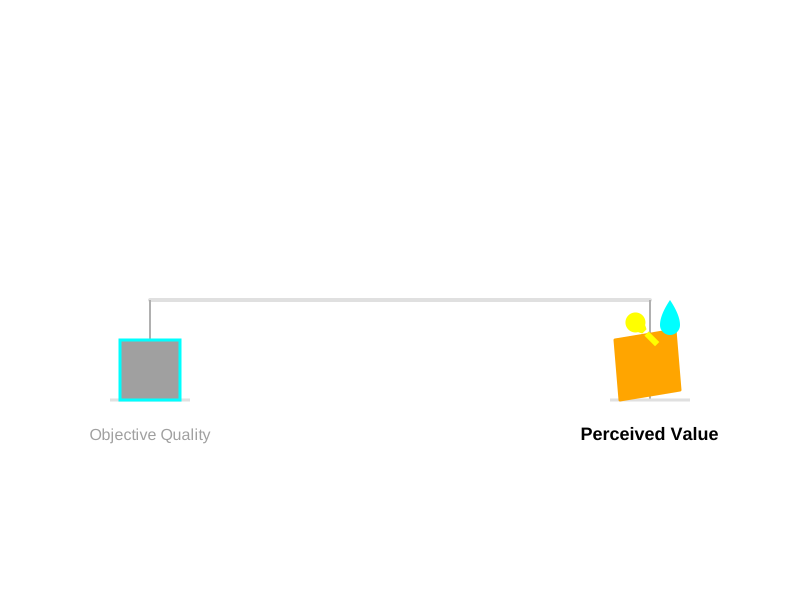
Whether you’re gleefully crafting a LEGO set or grudgingly assembling flat-pack furniture, the act of creation itself inflates perceived value. This challenges traditional economic assumptions about rational decision-making, proving that our emotional investment in labor can override objective judgment. The IKEA effect also intersects with cognitive dissonance theory—when we’ve put effort into something, admitting it’s subpar creates mental discomfort, so we convince ourselves it’s great instead.2
How the IKEA Effect Influences Our Perceived Value of Self-Made Items
The seminal 2012 study by Norton, Mochon, and Ariely demonstrated this effect through clever experiments with origami, LEGO sets, and IKEA boxes. Participants who built these items consistently valued their creations more highly than identical ones made by others—sometimes even equating their amateur origami frogs with expert-crafted versions. The researchers found that labor alone, regardless of skill or enjoyment, was sufficient to boost perceived value. This challenges the notion that we only value things we enjoy making; even tedious assembly tasks create emotional attachment.
The study’s most surprising finding? People expected others to share their inflated valuations. This overconfidence in self-made creations reveals how deeply the IKEA effect distorts our judgment.
The researchers also noted historical precedents, like Betty Crocker’s 1950s cake mix strategy—adding an egg requirement made housewives feel more invested in the baking process, increasing adoption. This shows how businesses have intuitively leveraged the IKEA effect long before psychologists named it.
Why Frustrating Assembly Tasks Increase Perceived Value
Here’s the paradox: the more frustrating the assembly, the more we might value the result. The IKEA effect persists even when the labor isn’t enjoyable, suggesting our brains equate effort with worth regardless of the experience. This explains why we might cherish that wobbly bookshelf we struggled to assemble more than a perfectly crafted one we bought pre-made. The psychological payoff comes from overcoming the challenge, not the quality of the result.1
This has profound implications for consumer behavior. Businesses from Build-a-Bear to meal kit services capitalize on this by making customers active participants in creation. The more effort required, the more we’ll justify the cost—even when we’re essentially paying for the privilege of doing their work. It’s a brilliant psychological hack: we feel accomplished, they save on labor costs, and everyone walks away satisfied (or at least convinced they got a good deal).
IKEA Effect Examples: Meal Kits and Build-a-Bear
Meal kit services perfectly illustrate the IKEA effect in action. Despite costing more than buying groceries, companies like HelloFresh thrive because customers value the meals they’ve prepared themselves. The labor of chopping vegetables and following recipes creates a sense of accomplishment that pre-made meals can’t match. Similarly, Build-a-Bear’s entire business model relies on customers paying premium prices to stuff their own teddy bears—a task that’s essentially factory work disguised as a fun experience.
These examples show how the IKEA effect creates a win-win for businesses: they reduce labor costs while customers feel they’re getting more value. The effect is so powerful that we’ll often overlook objective drawbacks—like meal kits being more expensive than groceries or Build-a-Bear’s final products being comparable to cheaper store-bought stuffed animals. Our emotional investment in the creation process blinds us to these realities, making the IKEA effect one of the most potent tools in modern marketing.
The Psychology Behind Our Investment
Effort Justification: Why We Overvalue Hard Work
There’s something deeply uncomfortable about the idea that we’ve wasted our time. When we invest effort into something—whether it’s assembling a wobbly bookshelf or enduring an embarrassing initiation ritual—our brains scramble to convince us it was worth it. This is effort justification, a flavor of cognitive dissonance that explains why we overvalue the fruits of our labor. Leon Festinger’s theory suggests that when our actions contradict our self-image as rational beings, we twist our perceptions to restore balance.
If we’ve spent hours struggling with IKEA instructions, admitting the result is mediocre would mean admitting we’re suckers. So instead, we decide our bookshelf is a masterpiece. This isn’t just about furniture.
In a 1959 study, students who endured humiliating initiation rituals to join a discussion group later rated the group as more interesting and its members as more intelligent. The more painful the process, the more they needed to believe the outcome was exceptional.
It’s the same psychological trick that makes hazing rituals effective—enduring discomfort binds us to the group because we’ve convinced ourselves the suffering had meaning. The IKEA effect is just this principle applied to consumer behavior: we don’t just buy products, we buy the story that our effort made them special.
The Psychology of Accomplishment: How Completing Tasks Fulfills Our Need for Competence
We’re not just rationalizing our effort—we’re proving something to ourselves. Albert Bandura’s work on self-efficacy shows that successfully completing tasks satisfies a fundamental need to feel competent. When we build something, even if it’s just a LEGO set, we’re asserting control over our environment. This is why people who’ve just failed at math problems are more likely to choose self-assembly furniture—they’re subconsciously seeking to restore their sense of capability.
The IKEA effect taps into this by making us active participants in creation. It’s not just about the end product; it’s about the psychological payoff of feeling skilled. When we look at that bookshelf we assembled, we’re not just seeing wood and screws—we’re seeing evidence of our own competence.
This is why businesses like Build-a-Bear thrive: they’re not selling stuffed animals, they’re selling the satisfaction of creation. The more we invest, the more we need to believe in the value of what we’ve made.
Why We Overvalue Our Own Creations
Here’s the kicker: we don’t just value what we make—we value it because it’s ours. The endowment effect shows that we overvalue things simply because we own them, and the IKEA effect supercharges this by making us co-creators. When we bake a cake or assemble furniture, we’re not just evaluating the object; we’re evaluating an extension of ourselves. This is why no one else’s origami frog looks as good as the one we folded, even if theirs is objectively better.
Betty Crocker understood this instinctively. Their cake mixes only took off when they required adding an egg—just enough effort to make housewives feel like they were the bakers. It’s the same reason why meal kits work: we’re not just buying dinner, we’re buying the story of being someone who cooks.
The IKEA effect isn’t just a quirk of perception; it’s a fundamental part of how we construct meaning. We don’t just build things—we build ourselves through them.
When Effort Creates Meaning: Camus and the Myth of Sisyphus
The Absurd Hero: Finding Meaning in Struggle
Camus doesn’t just accept the absurd—he embraces it with a defiant grin. The absurd isn’t a problem to solve; it’s a condition to live with. When Sisyphus pushes that boulder up the mountain, knowing full well it will roll back down, he’s not just enduring punishment—he’s creating meaning through the act itself. Camus argues that the struggle, the effort, the very act of pushing against futility is what gives life its weight and texture.

It’s not about the destination; it’s about the sweat, the strain, the momentary triumph before the inevitable descent. This is where the IKEA effect and existential philosophy shake hands. Just as we overvalue the wobbly bookshelf we assembled, Sisyphus finds value in his eternal task because it’s his. The absurd man, like Sisyphus, doesn’t need external validation or cosmic meaning.
The act of pushing—whether it’s a boulder or a LEGO set—becomes its own reward. Camus isn’t suggesting we delude ourselves into thinking our struggles have some grand purpose. Instead, he’s saying the purpose is in the struggle itself.
The IKEA effect shows us that we’re wired to find meaning in effort, even when it’s frustrating or futile. Camus takes it further: he says we should. 3
Finding Meaning in Life’s Repetitive Tasks
Sisyphus’s punishment becomes his purpose the moment he becomes conscious of it. Camus points out that modern life is filled with its own Sisyphian tasks—repetitive jobs, endless chores, the daily grind. What makes these tasks absurd isn’t their meaninglessness, but our awareness of that meaninglessness. Yet, in that awareness, there’s a strange liberation.
When we recognize that our labor might not “matter” in the grand scheme, we’re free to find meaning in the doing itself. This is the existential twist on the IKEA effect. We don’t just value what we build because we made it; we value it because, in making it, we asserted our existence against the void. The office worker filing the same reports, the parent packing the same lunches—these aren’t just tasks; they’re acts of defiance.
Camus’s examples of the absurd man—Don Juan, the actor, the conqueror—all share this trait: they throw themselves into their roles with full awareness of their futility. The actor knows his performance is ephemeral, but he performs anyway.
The conqueror knows his victories won’t last, but he fights anyway. Like Sisyphus, they find meaning not in the outcome, but in the act. 3
Finding Meaning Through Defiant Creation
Camus’s famous line isn’t a call to blind optimism. It’s a challenge to redefine happiness on our own terms. Sisyphus isn’t happy because his task has meaning; he’s happy because he’s chosen to find meaning in the task. The IKEA effect shows us that we’re already doing this—we’re already overvaluing our efforts, already finding satisfaction in the act of creation.
Camus is saying we should lean into that tendency, but with clear eyes. The absurd doesn’t demand despair; it demands revolt, freedom, and passion. Revolt against the idea that meaning must be handed to us. Freedom from the illusion that our efforts need cosmic validation.
Passion for the struggle itself. When we assemble that bookshelf, we’re not just building furniture—we’re building a tiny monument to our own existence.
Sisyphus, with his boulder, does the same. The happiness isn’t in the finished product; it’s in the act of creation, in the defiance of futility. 3
The Business of Effort: How Companies Monetize Meaning
How the IKEA Effect Drives the Meal Kit Boom
The meal kit industry is booming, with projections hitting $20 billion by 2027, and it’s a masterclass in exploiting the IKEA effect. Services like Blue Apron and HelloFresh charge over $10 per portion—more than many pre-made meal deliveries—yet customers flock to them. Why? Because the act of cooking, even with pre-portioned ingredients, makes us feel like we’ve created something.
The effort justification kicks in: if we’ve spent 30 minutes chopping and sautéing, the meal must be worth the premium price. It’s the same psychological trick that makes us cherish our lopsided IKEA bookshelves. But here’s the clever part: these companies frame themselves as cost-effective.
The DIY component makes us believe we’re getting a deal, even when we’re paying for the privilege of doing their prep work. It’s a brilliant inversion of rational economics—we’re not just paying for the product; we’re paying for the illusion of creation.
And because we’ve invested effort, we’re less likely to notice the markup. The IKEA effect doesn’t just sell products; it sells the story that our labor makes them valuable. 2
How Customization Drives Emotional Ownership
Nike By You (formerly Nike ID) is a perfect example of how customization taps into the IKEA effect. When you spend 20 minutes tweaking the colors and materials of your sneakers, you’re not just buying shoes—you’re buying the satisfaction of creation. The effort makes the product feel uniquely yours, even if the actual customization adds minimal functional value. This isn’t just about personalization; it’s about psychological ownership.
The more time you invest in designing, the more you’ll convince yourself the final product is worth the premium. But there’s a catch: the IKEA effect only works if the task feels manageable. Nike’s interface is intuitive, guiding you through choices without overwhelming you.
Compare that to a poorly designed app where customization feels like a chore—suddenly, the effect backfires. The key is balancing effort and success. Companies that get this right turn customers into co-creators, making them emotionally invested in the product before they even buy it.
How User Involvement Boosts App Engagement
The IKEA effect isn’t limited to physical products. Digital platforms use it too, by making users active participants in their own experience. Think about setting up a habit-tracking app: the more you customize dashboards and workflows, the more valuable the app becomes to you. It’s not just a tool anymore—it’s your system.
Even simple tasks, like organizing a cart or tweaking a profile, create a sense of investment. The effort, however small, makes us more likely to stick around. But here’s the fine line: too much customization becomes frustrating.
The best apps guide users through the process, ensuring they feel competent, not overwhelmed. The goal isn’t to make users work harder; it’s to make them feel like their effort matters. When done right, this turns passive users into loyal advocates.
When Customer Co-Creation Creates Value vs. Exploits Bias
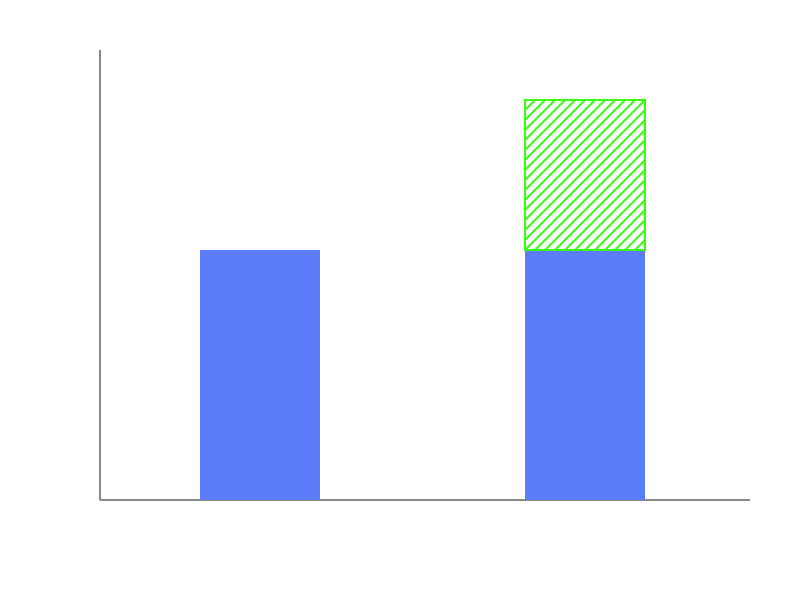
The IKEA effect walks a moral tightrope. On one hand, it can genuinely enhance value—customization does make products feel more personal. On the other, it’s a psychological hack that convinces us to pay more for the privilege of doing someone else’s work. The difference lies in transparency.
When companies let customers co-create meaningfully—like choosing shoe colors or meal ingredients—they’re adding real value. But when the effort feels like a gimmick (e.g., assembling furniture with confusing instructions), it’s just exploitation. The best businesses use the IKEA effect to empower, not manipulate.
They make customers feel skilled, not tricked. Because at its core, the IKEA effect isn’t about labor—it’s about meaning. And meaning, when genuine, is worth paying for.
Beyond Products: Effort and Meaning in Relationships and Identity
Why Parents Overvalue Their Kids: The IKEA Effect in Parenthood
Let’s talk about the most intense IKEA effect of all: parenthood. Dan Ariely, one of the researchers behind the original study, suggests this bias helps explain why parents become so singularly obsessed with their kids. In his lecture series, he jokes about sitting in a park, utterly convinced that every stranger should be as fascinated by his children as he is. The reason?
Parents invest massive amounts of time, energy, and emotional labor into raising their kids—so of course they’re going to overvalue the result. It’s not just love; it’s the IKEA effect on steroids. The more you pour into something, the more your brain insists it’s extraordinary, even if the rest of the world doesn’t see it.
But here’s the thing: this isn’t just about parental bias. It’s a fundamental part of how we construct meaning in relationships.
When we invest effort into someone—whether it’s a child, a partner, or even a friend—we don’t just value them more; we need to believe that investment was worth it. Cognitive dissonance kicks in: if we’ve spent years nurturing, teaching, and worrying, admitting our kid is average feels like admitting we wasted our lives.
So instead, we convince ourselves they’re exceptional. The IKEA effect doesn’t just apply to furniture; it’s woven into the fabric of human connection. 1
How to Get Kids to Eat Vegetables by Cooking with Them
If the IKEA effect makes us love what we build, why not use it to trick kids into eating their greens? Research shows that involving children in meal prep can make them more likely to enjoy—and actually eat—vegetables. A 2019 study found that kids who helped wash, chop, or mix ingredients developed a stronger preference for veggies and ate more of them. It’s not magic; it’s psychology.
When a child cracks an egg or stirs a pot, they’re not just helping—they’re creating. And just like adults with their wobbly IKEA bookshelves, kids overvalue what they’ve had a hand in making.
But there’s a catch: not all studies replicate this effect. A 2021 paper failed to find the same boost in veggie consumption when kids helped prepare snacks. So what gives?
The difference might lie in how meaningful the task feels. Cracking an egg for a meal feels like real contribution; assembling a pre-packaged snack might not.
The IKEA effect thrives on genuine effort, not just going through the motions. For parents, the takeaway is clear: if you want your kids to love broccoli, let them help cook it—but make sure they feel like they’re really cooking.
How to Leverage the IKEA Effect for Employee Training
The IKEA effect isn’t just for parents and picky eaters—it’s a powerful tool in the workplace. When employees help design their own training programs, they don’t just engage more; they own the process. A study found that workers who set their own learning goals and chose their development paths were far more invested in the outcomes.
It’s the same principle as assembling furniture: the effort makes the result feel more valuable. But there’s a dark side.
Companies often fall into the trap of overvaluing custom-built systems—whether it’s in-house software or bespoke training programs—simply because they’ve invested time in creating them. Even when off-the-shelf solutions are cheaper and more efficient, the IKEA effect makes leaders cling to their homegrown creations. The same bias that drives innovation can also blind us to better alternatives.
The key? Balance. Use the IKEA effect to foster engagement, but don’t let it lock you into inefficiency.
Mastering the Balance: When to Embrace and When to Question Our Investment
The Hidden Cost of Justifying Your Effort
The IKEA effect isn’t just about overvaluing our creations—it’s about how we justify our effort to ourselves. When we invest time and energy into something, our brains scramble to convince us it was worth it. This is effort justification, a flavor of cognitive dissonance that explains why we overvalue the fruits of our labor. Leon Festinger’s theory suggests that when our actions contradict our self-image as rational beings, we twist our perceptions to restore balance.
If we’ve spent hours struggling with IKEA instructions, admitting the result is mediocre would mean admitting we’re suckers. So instead, we decide our bookshelf is a masterpiece. This isn’t just about furniture. In a 1959 study, students who endured humiliating initiation rituals to join a discussion group later rated the group as more interesting and its members as more intelligent.
The more painful the process, the more they needed to believe the outcome was exceptional. It’s the same psychological trick that makes hazing rituals effective—enduring discomfort binds us to the group because we’ve convinced ourselves the suffering had meaning. The IKEA effect is just this principle applied to consumer behavior: we don’t just buy products, we buy the story that our effort made them special. But here’s the catch: this bias can create blind spots.
When we’re emotionally invested in something we’ve built—whether it’s a piece of furniture, a business strategy, or even a relationship—we lose the ability to evaluate it objectively. The more effort we’ve poured in, the harder it becomes to see its flaws. This is why startups often cling to their original product vision long after market feedback suggests a pivot is needed.
It’s why homeowners overestimate the value of their DIY renovations. The IKEA effect doesn’t just make us love what we build; it makes us need to believe in its value, even when evidence suggests otherwise.
Why Second Opinions Are Essential for Unbiased Judgment
The IKEA effect distorts our judgment by making us overvalue our own creations. But there’s a simple antidote: external perspectives. Norton’s experiments found that labor increases valuation not just for DIY enthusiasts, but for everyone—even those who don’t consider themselves “makers.” This means we’re all susceptible to this bias, whether we’re assembling furniture or designing a business strategy.

So how do we counteract it? The first step is recognizing when we’re too close to a project to judge it fairly. When we’ve invested significant effort, our brains become blind to flaws and overestimate value. The solution?
Get a second opinion. Ask someone unbiased to evaluate your work. This could be a colleague reviewing a project, a friend giving feedback on a home renovation, or even a professional appraiser assessing a DIY creation. The key is choosing someone who isn’t emotionally invested in the outcome.
Their detachment allows them to see what we can’t: the wobbly legs on our bookshelf, the impractical features in our business plan, or the design flaws in our custom-built software. Feedback isn’t just about catching mistakes—it’s about recalibrating our perception.
When we’ve worked hard on something, it’s nearly impossible to stay impartial. External perspectives help us step back and see our creations for what they truly are, not what our effort has convinced us they should be.
The Hidden Costs of DIY: Time, Frustration, and Opportunity Cost
The IKEA effect doesn’t just distort our perception of value—it distorts our understanding of cost. When we decide to build something ourselves, we often focus solely on the monetary savings while ignoring the hidden expenses: time, frustration, and opportunity costs. That DIY bookshelf might seem like a bargain compared to a pre-assembled one, but what about the three hours you spent deciphering instructions? The stress of realizing you’ve attached the wrong panel?
The weekend you could have spent relaxing instead of wrestling with an Allen key? These intangible costs add up. Research shows that people consistently underestimate how long tasks will take—a phenomenon known as the planning fallacy. When combined with the IKEA effect, this creates a perfect storm of self-deception.
We overvalue the final product while undervaluing the resources we’ve expended to create it. The result? We end up paying more—whether in time, money, or emotional energy—than if we’d simply bought the pre-made version. But there’s another layer: opportunity cost.
Every hour spent assembling furniture is an hour not spent on something else—something that might bring more value or joy. The IKEA effect tricks us into believing our effort is always worthwhile, but the truth is more nuanced. Sometimes, the smartest investment isn’t our labor—it’s our time.
Recognizing this requires a shift in perspective. Instead of asking, “Did I save money?” we should ask, “Was this the best use of my resources?” Only then can we truly calculate the cost of our creations.
Conclusion
So here we are, standing back to admire our wobbly bookshelves, our lopsided origami frogs, our carefully assembled lives—all slightly imperfect, all deeply valued because we had a hand in making them. The IKEA effect isn’t just a quirk of psychology; it’s a mirror reflecting how we construct meaning itself. We don’t just find value in the world; we build it through our effort, our struggle, our stubborn insistence that what we create matters.
This is where psychology and philosophy shake hands. Camus’ Sisyphus, pushing his boulder up the mountain only to watch it roll back down, isn’t just enduring futility—he’s embracing it. The absurd isn’t a problem to solve; it’s a condition to live with, to defy, to create within.
And isn’t that what we’re all doing? Whether it’s assembling furniture, raising kids, or grinding through another workday, we’re all Sisyphus in our own way, finding meaning not in the outcome, but in the act of pushing.
But here’s the catch: the same bias that makes us love our creations can also blind us. We overvalue our DIY projects, our homegrown business strategies, even our relationships, simply because we’ve invested in them. The trick is knowing when to lean into this tendency—when it fuels passion, creativity, and connection—and when to step back and ask, Is this really worth it? (Spoiler: Sometimes the answer is no, and that’s okay.)
So the next time you’re sweating over an Allen key or staring at a half-finished project, remember: the value isn’t just in the thing you’re building. It’s in the act of building itself. The meaning isn’t out there waiting to be found; it’s something you’re creating, one frustrating, rewarding, deeply human step at a time.


