


I used to believe my ambitions were entirely my own—until I realized how often I was just echoing the desires of others. We’re all mimetic creatures, copying what society tells us to want, whether it’s a prestigious career, a luxury car, or even the way we structure our lives. But here’s the uncomfortable truth: most of what we chase isn’t ours. It’s borrowed.
Naval Ravikant calls us “good little monkeys,” following scripts written by parents, peers, and cultural narratives. Dr. K warns that stripping away these influences doesn’t reveal some pure, authentic self—just silence. So how do we break free? By asking the hard questions: Do I really want this, or am I just performing for an audience that doesn’t care?
The answers might just set you free. But first, we must understand the hidden forces shaping those desires.
Understanding Mimetic Desire: Copying the Desires of Others
Why Your Desires Aren’t Your Own
We often believe our desires are uniquely ours, but René Girard’s theory of mimetic desire flips this script. It suggests we don’t just want things—we want what others want. Naval Ravikant puts it bluntly: we’re “good little monkeys” following societal scripts, whether it’s chasing law school, med school, or whatever the tribe deems valuable 1. These desires aren’t organic; they’re borrowed, absorbed from parents, peers, or cultural narratives.
Dr. K echoes this, noting how our motivational wiring is shaped by external feedback—good job, bad job—until we’re conditioned to crave validation like a reflex 2. The irony? We mistake these inherited wants for personal ambition. But here’s the kicker: emptying yourself of these influences doesn’t reveal some “true” desire.
As Dr. K warns, stripping away external conditioning leaves a void—no shoes, no girlfriend, no hair transplant—just silence. The “you” that wants is a product of the environment.
This isn’t defeatist; it’s liberating. Recognizing mimetic desire lets you interrogate: Do I really want this, or am I just echoing someone else’s script?
How Mimetic Desire Shapes Our Unconscious Choices
The scariest part? We’re often blind to the mimicry. Dr. K highlights how children’s brains are sponges, soaking up societal cues—study, clean, conform—until their motivation becomes a quest for approval. Teenagers, hyper-aware of judgment, morph into chameleons, chasing trends to fit in.
Ryan Holiday adds another layer: the modern world accelerates this by turning everything into a game. Fame, status, accolades—once earned through slow, natural selection—are now algorithmically handed out, bypassing the psychological resilience needed to handle them 3. The result? A generation chasing desires they never chose, like actors reading lines they didn’t write.
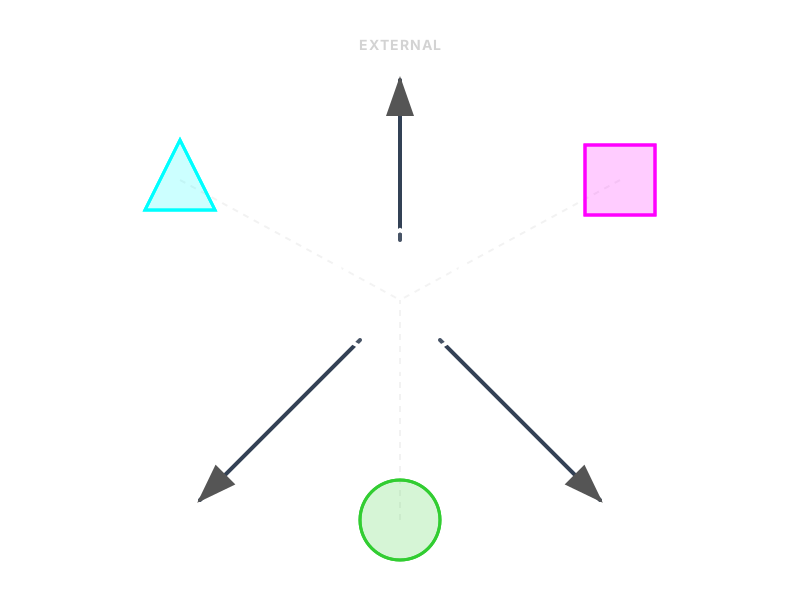
Even status symbols—cars, houses, titles—are often just proxies for admiration. As Morgan House admits, we buy things hoping others will stare, only to realize no one cares 4.
The desire isn’t for the object; it’s for the imagined gaze of approval. This is mimetic desire in action: a loop of wanting what we think others want us to want.
How to Break Free from Society’s Guilt Manipulation
Guilt is the puppet master. Naval calls it “society’s voice in your head,” a tool to keep you in line. It’s not just about breaking rules; it’s about the quiet shame of deviating from the path—whether it’s skipping grad school or rejecting a high-paying job. Morgan House’s question cuts deep: If nobody was watching, what would you do?.
Most of us would admit our choices are a mix of personal fulfillment and performative compliance. The guilt isn’t just external; it’s internalized, a shadow of societal expectations lurking in our decisions. Yet, awareness is the first step.
Recognizing these influences doesn’t mean rejecting all desires—it means choosing which ones to keep. As Morgan House notes, you can aspire for more while questioning the “expectations game”. The goal isn’t purity but clarity: separating the desires you’ve inherited from the ones you’ve truly claimed.
The Downside of Mimetic Desire: Inauthenticity and Unintended Destinations
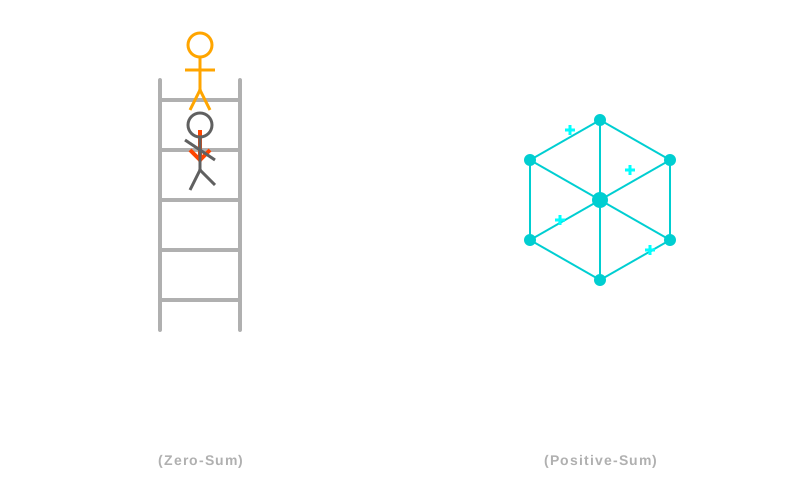
Status Games: A Zero-Sum Game You Can’t Win
Status games are seductive because they promise validation, but they’re inherently combative. Naval Ravikant nails it: status is a zero-sum game where someone’s rise requires another’s fall. Unlike wealth creation, which can expand infinitely, status is a finite ladder. You can’t exchange status at a bank—it’s fuzzy, subjective, and often leaves you emptier than when you started.
Ryan Holiday echoes this, citing Peter Thiel’s wisdom: competition is for losers. If your success depends on others losing, you’re playing the wrong game 3. The Stoic alternative? Run your own race.
Define success on your terms—whether it’s time with family, creative fulfillment, or personal growth—not by outshining someone else. The moment you tie your worth to external rankings, you’ve surrendered control. The irony? Even the wealthy fall into this trap.
Naval observes that once people accumulate wealth, they pivot to chasing status—because money alone doesn’t satisfy the deeper craving for meaning. But status is a mirage.
It’s not about what you’ve built; it’s about how others perceive you. And perceptions shift like sand.
Status Anxiety: Ancient Brains vs. Modern Life
We’re hardwired to crave status—it’s an evolutionary holdover. Morgan House puts it bluntly: our brains are forged at conception, and some of us are just wired to chase more. But here’s the catch: modern life offers opportunities our ancestors never had. Naval contrasts hunter-gatherer tribes, where status was earned by serving the group, with today’s world, where wealth creation can scale infinitely 1.
The problem? We’re still running ancient software in a digital age. Ryan Holiday warns that we default to observable metrics—job titles, salaries, social media likes—because they’re easy to compare.
But these metrics are proxies, not substance. The real win is in hidden metrics: quality of sleep, time with loved ones, creative freedom. The challenge is retraining our brains to value what’s invisible but meaningful.
The Peril of Pursuing Hollow Fame
Fame for fame’s sake is a trap. Naval distinguishes between earned fame—like scientists or artists who leave a legacy—and hollow fame, where visibility outpaces substance. The latter is fragile because it’s built on perception, not contribution. Ryan Holiday amplifies this, noting that social media has warped fame into a byproduct of algorithms, not merit 3.
The antidote? Focus on the work itself. If fame comes, let it be a byproduct of something meaningful.
Otherwise, you’re just performing for an audience that doesn’t care. The moment you prioritize visibility over substance, you’ve lost the plot.
Why We Ignore Obvious Wisdom
Naval’s “unteachable lessons” hit hard: we ignore obvious wisdom until we experience it firsthand. We know status games are empty, yet we play them. We know fame is fleeting, yet we chase it. Ryan Holiday’s Stoic rules remind us that the best insights are often the simplest—but simplicity is deceptive.
The solution? Stop waiting for a revelation.
The answers are already out there—we just refuse to listen until life forces us to. The real skill is humility: accepting that the clichés are true, and acting accordingly.
Desire Management: Choosing Your Own Path to Fulfillment
How to Align Your Desires with Your Values
True intelligence isn’t about memorizing facts or mastering jargon—it’s about wanting the right things. Naval Ravikant cuts through the noise: wisdom isn’t fluency; it’s understanding what’s worth wanting in the first place. We often confuse sophistication with insight, mistaking complexity for depth. But real wisdom is simpler: it’s the ability to discern which desires align with your values and which are just echoes of societal conditioning.
Dr. K adds a brutal twist: emptying yourself of external influences doesn’t reveal some pure, authentic desire. There’s no “true self” waiting beneath the layers of conditioning—just silence. The “you” that wants is a product of your environment. So how do you choose wisely?
By interrogating your wants. Why do you crave that promotion, that relationship, that lifestyle? Is it because it’s meaningful to you, or because it’s what you’ve been taught to want?
Morgan House offers a paradoxical solution: set goals, but hold them lightly. Chase them because they give you direction, but recognize their ultimate insignificance. The trick is to align your desires with values that outlast external validation—curiosity, growth, connection—not just the next rung on the ladder.
How to Find Work That Feels Like Play
Naval Ravikant’s advice is deceptively simple: find what feels like play to you but looks like work to others. When your work aligns with your intrinsic motivations, competition evaporates. You’re not grinding; you’re flowing. The world rewards those who don’t feel like they’re working because their energy is sustainable, their passion infectious.
This isn’t just about enjoyment—it’s about leverage. When you operate from authenticity, you escape the zero-sum game of status. You’re not competing for scraps of validation; you’re creating something uniquely yours. Morgan House’s observation that modern life offers infinite opportunities to pivot underscores this.
Unlike our ancestors, we’re not locked into a single path. We can experiment, iterate, and find what truly resonates. The catch?
You have to resist the temptation to force it. Obsessing over success often backfires.
As Naval notes, the less you fixate on outcomes, the more naturally your work unfolds. Authenticity isn’t a strategy; it’s a byproduct of doing what feels right.
How to Break Free From Social Scripts and Live Authentically
Dr. K’s insight is a gut punch: most of us are running on flawed scripts. We chase careers, relationships, and lifestyles not because they fulfill us, but because they fit a narrative we’ve absorbed. The quarter-life crisis hits when we realize we’ve been performing for an audience that doesn’t care. The antidote?
Listen to your internal calling, even if it’s messy or unconventional. Morgan House’s question—If nobody was watching, how would I live?—cuts to the core. Most of our desires are performative, shaped by the fear of judgment.
But the people who truly matter won’t judge you for the car you drive or the title you hold. Naval’s reminder that we live in a world of infinite opportunity is both liberating and terrifying. You can reinvent yourself, but only if you’re willing to let go of the scripts that no longer serve you.
How to Rewire Your Brain for Internal Motivation
Dr. K’s neuroscience-backed insight is game-changing: motivation isn’t a switch you flip—it’s a circuit you rewire. If you’re constantly chasing external validation, your brain stays locked in extrinsic mode. The solution? Mental distance.
You need to check out, create space, and let your internal drive resurface. This isn’t just about rest; it’s about reclaiming agency. The “lonely chapter” isn’t a bug—it’s a feature of growth. Without solitude, you can’t hear your own voice over the noise of societal expectations.
Naval’s observation that wealth and status are limbic holdovers reminds us that our brains are wired for ancient games. But modern life demands neocortical override—conscious choice over instinctive craving. The key is to step back, question your desires, and ask: Is this mine, or is it borrowed? The answer might just set you free.
Practical Strategies for Desire Management
Uncover Your True Desires Through Self-Reflection
We often operate on autopilot, chasing desires we’ve absorbed from others without questioning their origin. Naval Ravikant highlights how many people struggle to even identify their own wants after years of prioritizing external expectations. The constant “shoulds” and societal scripts drown out our authentic voice, leaving us feeling like puppets in someone else’s play. Morgan House’s “reverse obituary” exercise cuts through the noise by forcing us to confront what truly matters.
When you strip away status symbols and external validation, what remains? For most, it’s relationships, contribution, and personal growth—not the size of your house or the brand of your car.
This isn’t about moralizing; it’s about clarity. If you wouldn’t care about something on a deserted island, why does it dominate your energy now?
How to Observe Your Thoughts Without Judgment
Meditation isn’t just about relaxation—it’s a tool for creating distance between your thoughts and your identity. Naval describes how this gap allows you to evaluate desires like a third party, rather than reacting instinctively. Dr. K’s journey—walking away from a prestigious Harvard faculty position to stream on Twitch—illustrates this principle in action.
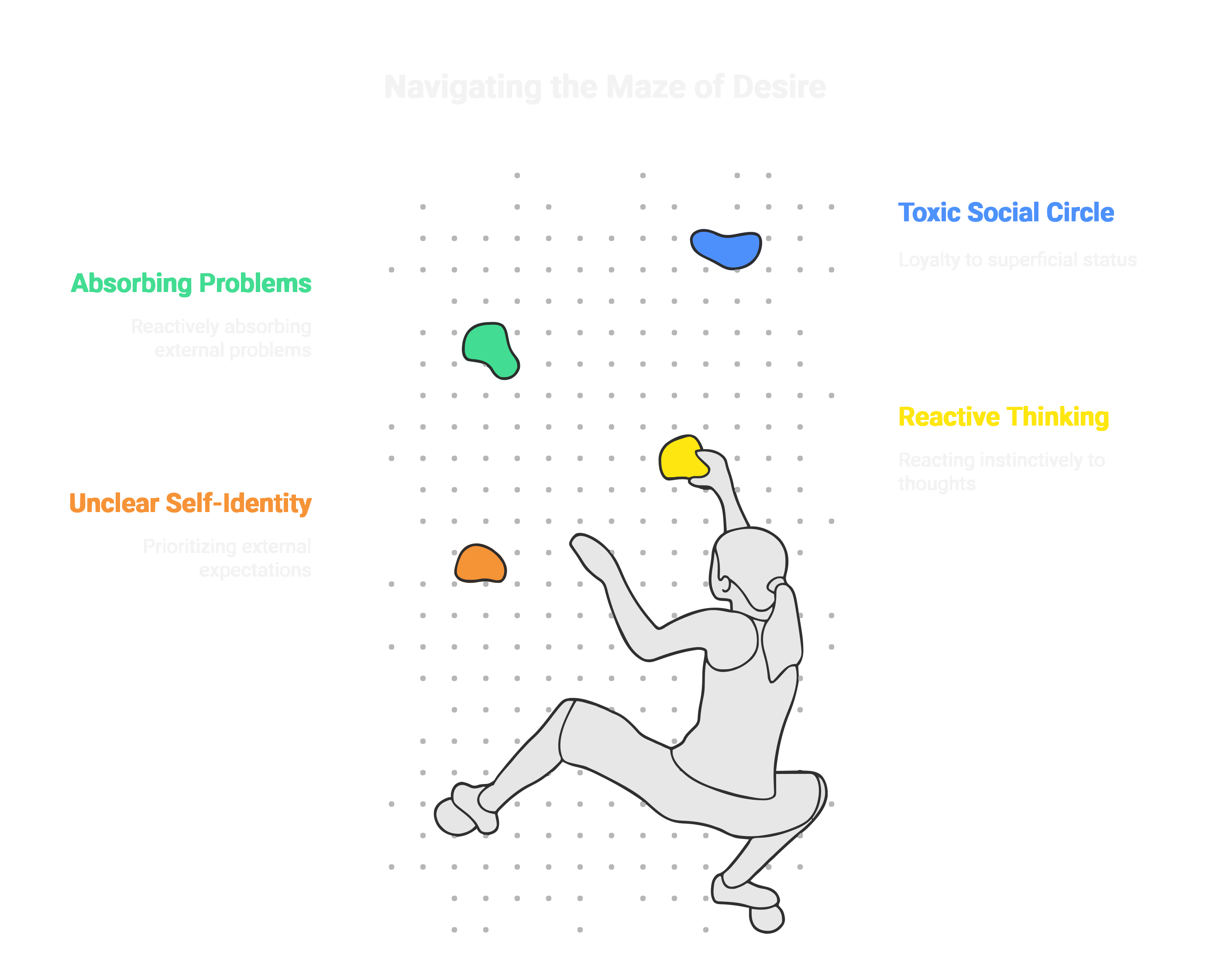
He didn’t just follow the script; he listened to his internal compass, even when it defied conventional wisdom. Ryan Holiday’s Stoic advice to “be quiet, work hard, and stay healthy” reinforces this: the best decisions come from clarity, not noise. The goal isn’t to eliminate all external influence but to develop the awareness to choose which influences to internalize.
How to Choose Which Problems Deserve Your Energy
Naval’s insight about “choosing your problems” is a game-changer. Most people reactively absorb problems—whether it’s workplace drama, societal expectations, or comparison traps—without realizing they have agency. Dr. K warns that ego-driven ambition is a bottomless pit; the goalposts keep moving, leaving you exhausted but unfulfilled 2. The alternative?
Direct your energy toward problems that align with your values. This isn’t about avoiding challenges but about selecting which ones deserve your attention.
Naval’s example of observing a triggering situation—like an accountant’s mistake—and consciously deciding whether to engage is a microcosm of this philosophy. Not every problem is yours to solve.
How to Curate Your Social Circle for Contentment
Morgan House’s observation about inflated aspirations hits hard. Social media and global connectivity have warped our reference points; a “successful” life now resembles a billionaire’s Instagram feed rather than a stable, fulfilling existence. But here’s the twist: loyalty to the wrong anchors—whether toxic workplaces or superficial status games—drains your energy. The solution?
Curate your environment. Surround yourself with people who deserve your loyalty, not those who exploit it. Contentment isn’t about settling; it’s about recognizing that the endless pursuit of “more” is a mirage.
As Morgan House notes, happiness is fleeting, but contentment is durable. The key is to define success on your terms, not society’s.
The Paradox of Striving: Finding Contentment Amid Ambition
The Human Drive for More: A Double-Edged Sword
We’re wired to want more—it’s not a bug, it’s a feature. Morgan House nails it: life is a competition, not in absolute terms, but relative to others. Our brains are hardwired to compare, to signal, to outdo. Social media amplifies this, turning every achievement into a public benchmark.
But here’s the paradox: this drive, while exhausting, is also what propels humanity forward. Bill Gates, Elon Musk—they didn’t stop at “enough.” Their relentless pursuit benefits us all, even if it leaves them (and us) perpetually restless 5. Ryan Holiday echoes this with Alexander the Great’s story—a man who conquered the known world only to realize, too late, that the hunger for more is insatiable.
Some learn this at 22; others at 82. The lesson isn’t to suppress ambition but to recognize its nature.
Morgan House puts it bluntly: society will always have a baseline of angst, but individually, we can choose to contextualize it. The game isn’t about winning—it’s about knowing you’re playing one.
Find Joy in the Process, Not the Outcome
Naval Ravikant’s insight flips the script: the journey is the destination. Studies show lottery winners and paraplegics return to baseline happiness within two years. The difference? Those who earn their success carry pride, confidence, and a sense of accomplishment that lingers.
The loop of desire-dopamine-fulfillment-unfulfillment is inevitable, but the key is to enjoy the climb. If 99% of life is spent on the journey, why make it miserable?
Dr. K’s “bad decisions” theory reinforces this. The best choices often feel like failures in the moment—quitting a prestigious job, pivoting careers, walking away from societal scripts. But these detours are where authenticity lives.
When you’re fixated on the next promotion, you’re aborting the train from where you truly want to go. The journey isn’t just the path to success; it’s the only thing that’s real. Success itself gets banked quickly, leaving you chasing the next high.
The antidote? Find joy in the process, not the outcome.
The Real Goal of Saving Money
Morgan House’s reframe is genius: every dollar saved is a unit of independence. It’s not about deprivation—it’s about ownership. $100 in the bank buys you flexibility; $10,000 buys you options. Independence isn’t binary; it’s a spectrum.
The freedom culture, however, has a dark side. Extreme independence—living alone in Montana, untethered from community—often leads to emptiness. Purpose thrives in interdependence: chosen relationships, shared goals, mutual reliance.
Morgan House’s formula—independence + purpose—is the sweet spot. You’re not free if no one relies on you, just as you’re not fulfilled if you rely on no one.
Why Early Retirement Isn’t the Dream You Think It Is
Early retirement sounds like a dream until you realize most who achieve it regret it within months. Morgan House’s observation cuts deep: purpose, not leisure, drives happiness. Many assume quitting work equals freedom, but without structure, without contribution, life loses meaning. The FIRE movement (Financial Independence, Retire Early) often misses this.
Wealth minus desire equals contentment, but desire isn’t just about money—it’s about why you wake up. Retiring early without a “what’s next” is like winning a race with no finish line.
The real win? Designing work that doesn’t feel like work, where purpose and freedom coexist.
Learning From the “Unteachable Lessons” of Life
Life’s Whispers and Screams: Are You Listening?
Life has a way of teaching us lessons, but it rarely starts with a scream. As Ryan Holiday puts it, life whispers first—through small setbacks, subtle discomforts, or nagging doubts. The question is, are we listening? Morgan House reminds us that our drive for “more” is hardwired, a fuel for progress but also a source of perpetual dissatisfaction.
Yet, this same drive can blind us to the warnings. We ignore the whispers because they’re inconvenient, because admitting we’re on the wrong path means admitting we’ve wasted time. But the whispers don’t stop—they escalate. Morgan House’s observation about signaling cuts deep: we often chase the wrong kind of validation, mistaking external markers of success for internal fulfillment.
The whispers might sound like a quiet dissatisfaction with a job that looks impressive but feels hollow, or a relationship that checks all the boxes but lacks depth. Ignore them, and life cranks up the volume. A health scare, a career implosion, a moment of existential dread—these are the screams.
Morgan House’s point about workaholics and minimalists both finding happiness suggests that the issue isn’t the path itself but whether we’re attuned to its costs. The whispers are there to recalibrate, not to shame.
Don’t Stub Your Toe Twice: Learning from Mistakes
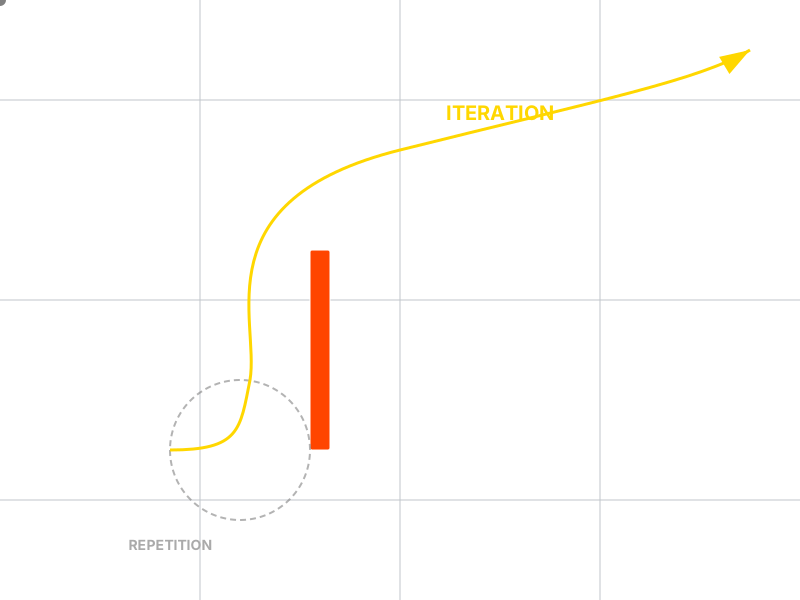
Naval Ravikant’s emphasis on iteration over repetition is a masterclass in learning from mistakes. The Romans had a saying: the fool isn’t the one who stubs their toe on a rock, but the one who stubs it on the same rock twice. Life’s unteachable lessons aren’t about avoiding failure—they’re about failing faster, learning quicker, and pivoting before the damage compounds. Naval’s insight that mastery comes from 10,000 iterations, not repetitions, is key 1.
Each mistake is a data point, but only if we adjust. Morgan House’s paradox—that society thrives on dissatisfaction—highlights why this is so hard. We’re conditioned to push through, to grind, to equate persistence with virtue. But sometimes, the wisest move is to bail early.
Ryan Holiday’s Stoic wisdom reinforces this: the goal isn’t to avoid mistakes but to extract their lessons before they escalate. The “rock bottom” moment doesn’t have to be catastrophic. It can be a DUI, a failed project, or a moment of quiet realization that you’re on autopilot.
The key is to treat these moments as feedback, not verdicts. Naval’s point about decisive action—leaving a doomed relationship the moment you know it’s over—isn’t about impulsivity; it’s about honoring your own awareness. The rock isn’t the enemy; repeating the same stumble is.
Why We Repeat Mistakes Despite Knowing Better
Naval’s “unteachable lessons” essay hits on a painful truth: we dismiss clichés because they’re familiar, not because they’re wrong. Morgan House’s take on status chasing—admitting he once used materialism to compensate for a lack of substance—is a cliché we’ve all heard, yet how many of us still fall into the same trap?. The paradox is that the most obvious wisdom is often the hardest to internalize. We know money doesn’t buy happiness, yet we chase it.
We know relationships matter more than titles, yet we prioritize the latter. The issue isn’t the advice; it’s our resistance to it. Morgan House’s nuance—that status signaling isn’t inherently bad, but its intent matters—is a cliché worth revisiting. A car bought to attract strangers is empty; one bought to share adventures with loved ones is meaningful.
The cliché isn’t the problem; our refusal to apply it is. Naval’s point about unteachable lessons isn’t a critique of human stubbornness—it’s a call to humility.
The answers are out there, whispered in songs, books, and the cautionary tales of those who came before us. The question is whether we’ll listen before life forces us to.
Conclusion
So here we are, at the end of this exploration, staring down the uncomfortable truth: most of what we want isn’t ours. It’s borrowed, mimicked, a script handed to us by parents, peers, and algorithms. But here’s the twist—this isn’t a tragedy. It’s an invitation.
Naval’s “good little monkeys” analogy isn’t a condemnation; it’s a wake-up call. If we’re all copying desires, the real power lies in choosing which desires to copy. Dr. K’s warning about the void beneath our conditioning isn’t nihilism—it’s freedom.
When you strip away the performative wants, you’re left with a blank slate. And blank slates? They’re terrifying, but they’re also where the good stuff happens.
The question isn’t How do I find my true desire?—because, as Dr. K reminds us, there’s no pure, untouched core waiting to be discovered. The question is Which desires will I choose to make mine? Will you chase the car because it’s a status symbol, or because it carries your family on road trips that become stories? Will you grind for the promotion because it’s the next rung on the ladder, or because it funds the life you actually want to live?
Ryan Holiday’s Stoic wisdom and Morgan House’s brutal honesty about status games both point to the same truth: the game isn’t about winning. It’s about knowing you’re playing one. The moment you recognize that your desires are mimetic, you gain the power to edit them. You can keep the ones that serve you and discard the ones that don’t—like curating a playlist instead of letting the radio dictate your mood.
And here’s the kicker: this isn’t about achieving some zen state of desirelessness. It’s about wanting better. Naval’s play-over-work philosophy, Morgan House’s independence-plus-purpose formula, Dr. K’s call to listen to your internal compass—they’re all roadmaps to the same place. A life where your wants feel like yours, not because they’re magically pure, but because you’ve claimed them.
So, what now? Maybe you start small. Next time you feel the pull of a desire—whether it’s a purchase, a career move, or a lifestyle change—pause. Ask yourself: Is this mine, or is it borrowed? (And if it’s borrowed, is that necessarily a bad thing?)
Maybe you’ll realize you don’t actually want the corner office—you just want the respect you think it’ll bring. Or maybe you’ll double down on that desire because, damn it, you’ve examined it and it’s yours.
The paradox of desire is that the more you chase fulfillment, the more it slips through your fingers. But the moment you stop treating life like a checklist and start treating it like a conversation—with yourself, with the people who matter, with the work that lights you up—fulfillment starts showing up in the in-between moments.
The drive to the office. The quiet Saturday morning. The way a well-worn book feels in your hands.
So go ahead, want things. Just want them well. Choose your influences. Edit your desires.
And remember: the best life isn’t the one with the most trophies. It’s the one where the trophies—whatever they are—feel like they’re actually yours.
(And if all else fails, ask yourself: If nobody was watching, what would I do? Then do that. Or at least take a step toward it.) Final thought: You are what you want—and what you want is up to you.


