


The people who plan their finances perfectly often fail spectacularly at planning their lives. They hit their number, walk away from their careers, and then stare into the void, wondering why freedom feels so empty.
The cruel irony? The same drive that built their wealth can sabotage their retirement. When your identity is tied to achievement, stepping away isn’t liberation—it’s an existential freefall. And the data doesn’t lie: without purpose, cognitive decline accelerates, verbal memory plummets, and days blur into a haze of unstructured time.
But here’s the hopeful part: this isn’t inevitable. The most successful retirees don’t just quit—they pivot. They replace the structure of work with something equally engaging, whether it’s mentoring, learning, or tackling new challenges.
The key isn’t to avoid retirement, but to reframe it. Because if you retire from something without retiring to something, you’re not retiring—you’re just waiting.
The Retirement Identity Crisis: Why Financial Success Isn’t Enough
Why High-Achievers Struggle with Retirement
There’s a cruel irony in retirement: the people who’ve spent decades climbing the ladder often find the view from the top profoundly unsettling. The University of Michigan’s Health and Retirement Study reveals that while many retirees experience a boost in purpose, this effect is conspicuously absent for high-achievers who derived deep meaning from their careers. For them, retirement doesn’t bring liberation—it triggers an identity crisis. When your self-worth is intertwined with your professional role, stepping away can feel like losing a limb.
The void isn’t just about missing the work; it’s about missing the version of yourself that the work sustained. This crisis isn’t just existential—it’s neurological. Research from the European Journal of Epidemiology suggests retirement can accelerate cognitive decline, particularly for those in complex occupations. The brain, like any muscle, atrophies without use.
But here’s the kicker: the decline isn’t inevitable. It’s often self-inflicted. Many retirees, especially those who’ve built their lives around achievement, struggle to replace the mental stimulation of their careers.
They trade spreadsheets for golf scores, assuming leisure alone will fulfill them. Spoiler: it won’t.
The formula isn’t just independence—it’s independence plus purpose. Without the latter, you’re left with a hollowed-out version of freedom. 1 2 3
How Retirement Affects Purpose: New Research Reveals the Truth
The data is counterintuitive but clear: retirement boosts purpose for those who hated their jobs, not those who loved them. The Health and Retirement Study found that retirees who escaped unfulfilling work often rediscover meaning in new pursuits. But for high-achievers, retirement can feel like a demotion. Their purpose was tied to their career, and without it, they’re adrift.
This isn’t just anecdotal—it’s a pattern. The study’s findings suggest that traditional retirement planning, obsessed with numbers, utterly fails to address the psychological transition. Financial advisors focus on withdrawal rates, not withdrawal purpose. The solution?
Intentionality. Retirees who thrive don’t stumble into fulfillment—they design it. Whether it’s volunteering, learning, or tackling new projects, they replace the structure of work with something equally engaging.
The first year of retirement isn’t about perfection; it’s about experimentation. And yes, that means accepting that some days will feel aimless. But as the research shows, the alternative—clinging to an old identity that no longer fits—is far worse.
Retiring From Something vs. Retiring To Something: A Case Study
Consider the case of the “exhausted retiree”—the high-earner who spent decades chasing financial independence, only to find that freedom feels like a prison. They saved diligently, maxed out their 401(k), and followed all the rules. But when the time came to enjoy their wealth, they froze. The identity of “saver” had become so ingrained that spending—even on experiences they’d dreamed of—felt like betrayal.
This isn’t just frugality; it’s addiction. Money, meant to be a tool, becomes the master. The antidote? Rewriting the script.
Retirement isn’t about stopping; it’s about redirecting. The most successful retirees don’t abandon structure—they reinvent it. They trade boardrooms for classrooms, client meetings for mentorship, and performance reviews for personal growth.
The key isn’t to avoid the void but to fill it with something new. Because if you retire from something without retiring to something, you’re not retiring—you’re just waiting. 4
The Cognitive Cost of Unplanned Retirement
Retirement’s Impact: Verbal Memory Declines Faster
The European Journal of Epidemiology study drops a bombshell: retirement doesn’t just coincide with cognitive decline—it accelerates it. Specifically, verbal memory takes a 38% faster nosedive post-retirement, independent of normal aging. That’s not a gentle slope; it’s a cliff. Before retirement, verbal memory scores dipped by 0.103 points annually.
After? A steeper 0.143-point drop. The math is brutal: retirement doesn’t just remove you from the game—it speeds up the clock. What’s fascinating—and terrifying—is how targeted this decline is.
Abstract reasoning, phonemic fluency, semantic fluency? They all erode with age, sure, but retirement doesn’t kick them into overdrive. Verbal memory, though? That’s the canary in the cognitive coal mine.
It’s the domain most sensitive to disengagement, the first to protest when the brain’s daily workout routine gets canceled. The study’s visualizations make this painfully clear: the trajectory isn’t a smooth curve but a bend, a sudden steepening after the retirement finish line. This isn’t just about forgetting names or misplacing keys. Verbal memory is the scaffolding of communication, the ability to encode, store, and retrieve language—the very stuff of social connection and self-expression.
When it declines faster, it’s not just cognition that suffers; it’s identity, confidence, the ease of being yourself in conversation. And here’s the kicker: this isn’t inevitable.
It’s a pattern observed in those who retire without replacing the mental demands of their careers. The brain, like any high-performance machine, doesn’t tolerate sudden idleness.
Retirement and Brain Health: Use It or Lose It
The “use it or lose it” hypothesis isn’t just a catchy phrase—it’s a neurological reality. Work, especially complex work, is cognitive cross-training. It forces the brain to juggle tasks, solve problems, adapt to new information, and engage in social navigation. Retirement, for many, replaces this dynamic environment with… well, not much.
The advice to retirees? “Stay engaged!” But what does that mean, really? Crossword puzzles? Bridge nights?
While better than nothing, these activities are the cognitive equivalent of a leisurely stroll after decades of marathon training. The research is clear: the brain thrives on novelty, challenge, and social interaction—precisely the elements that structured work often provides. The European Journal of Epidemiology study hints at this, but the broader literature shouts it. Salthouse’s processing-speed theory suggests that the brain’s decline isn’t just about age; it’s about the rate at which we challenge it.

When work disappears, so does the daily demand for mental agility. The result? A brain that, deprived of its usual gym, starts to atrophy. But here’s the hopeful part: this decline isn’t a one-way street.
The same studies that document the “mental retirement” effect also suggest that targeted, meaningful engagement can slow—or even reverse—it. The key isn’t just activity; it’s purposeful activity.
Learning a language, mentoring, volunteering in roles that demand problem-solving—these aren’t just hobbies. They’re cognitive resistance training.
The Risk of Cognitive Decline After High-Stress Careers
Here’s the cruel twist: the very jobs that protect cognition during your career become a liability in retirement. High-complexity roles—think executives, surgeons, engineers—demand mental gymnastics that keep the brain sharp. But when those roles vanish, the cognitive shield they provided vanishes with them. The European Journal of Epidemiology study found that while higher-grade employees started with better cognitive function, their decline post-retirement was steeper than those in less demanding roles.
It’s like removing the weights from a bodybuilder’s barbell mid-lift: the muscles, unused to the sudden lightness, falter. This isn’t just about the loss of mental stimulation. It’s about the loss of identity and structure. High-achievers in complex roles don’t just do their jobs; they are their jobs.
The transition isn’t just about filling time—it’s about rewiring a sense of self that was intertwined with problem-solving, decision-making, and influence. Without a replacement for that structure, the brain doesn’t just slow down; it loses its compass. The data suggests that the cognitive reserve built by decades in high-demand roles isn’t a permanent buffer.
It’s more like a savings account: if you stop making deposits, the balance dwindles faster than you’d think. The solution?
Retirees from complex jobs need to replicate the cognitive demands of their careers, not just replace the hours. Consulting, teaching, or even tackling complex hobbies like mastering an instrument or learning to code aren’t just pastimes—they’re cognitive survival strategies. 3
Early Retirement: A Cause of Cognitive Decline
Rohwedder and Willis’s research drives the point home: early retirement isn’t just correlated with cognitive decline—it causes it. Using cross-country data, they found that nations with lower retirement ages showed steeper cognitive drops in their early-60s populations compared to their early-50s counterparts. This isn’t about individual choices; it’s about policy. When people retire earlier, their brains decline faster.
The mechanism? The “mental retirement” effect—a withdrawal from the cognitive demands that keep the mind sharp. The study’s instrumental variable analysis is particularly damning. It isolates retirement as the causal factor, controlling for the usual suspects like health, education, and socioeconomic status.
The result? A clear, negative impact of early retirement on fluid intelligence—the kind of on-the-spot problem-solving and adaptability that work constantly demands. The longer you’re retired, the more pronounced the effect. It’s not a short-term blip; it’s a long-term trajectory shift.
This research flips the script on retirement planning. It’s not just about when you retire; it’s about how. The countries with higher retirement ages aren’t just keeping people in the workforce longer—they’re keeping their populations cognitively younger.
The lesson? If you’re going to retire early, you’d better have a plan to replace the mental workout your job provided. Otherwise, you’re not just leaving your career—you’re leaving your cognitive edge behind.
Redefining Retirement: The ‘Retiring TO’ vs ‘Retiring FROM’ Framework
Retire to Purpose, Not Just From Work
There’s a quiet epidemic among early retirees: regret. The dream of escaping the 9-to-5 often curdles into a reality of aimless days and gnawing dissatisfaction. Research and anecdotes alike reveal a pattern—people who retire early, expecting bliss, often find themselves bored, isolated, and yearning for structure. The problem isn’t freedom itself; it’s what they’re running from instead of what they’re running to.
Consider the client who retired with a healthy portfolio but found himself exhausted and lost. He’d spent decades focused on escaping work’s stresses, but never asked: What’s next? This isn’t just a personal failing—it’s a systemic one. Traditional retirement planning fixates on financial independence while ignoring the psychological vacuum left behind.
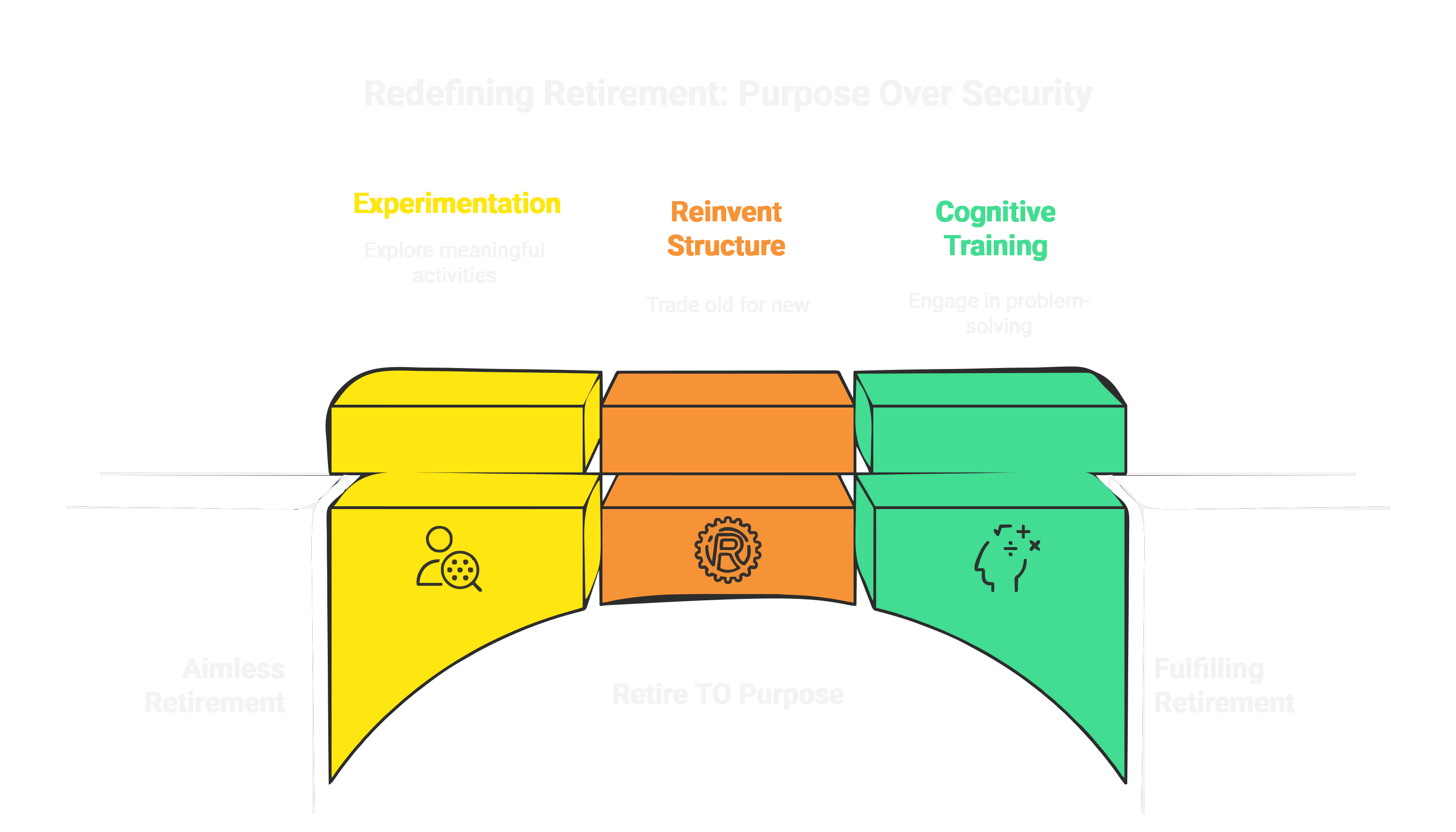
The data backs this up: studies show that retirees who lack purpose experience steeper cognitive decline, particularly in verbal memory, a key marker of mental agility. The brain, deprived of its daily workout, doesn’t just slow down—it atrophies. The solution isn’t to avoid retirement, but to reframe it.
Instead of retiring from stress, retire to something meaningful—whether it’s mentoring, learning, or deepening relationships. The first year of retirement should be an experiment, not a final destination.
And yes, some days will feel aimless. But as the research shows, the alternative—clinging to an old identity that no longer fits—is far worse.
Why Financial Independence Needs Purpose
Financial independence alone is a hollow victory. The formula for fulfillment isn’t just independence—it’s independence plus purpose. Without the latter, you’re left with a hollowed-out version of freedom. This isn’t just philosophical; it’s neurological.
The European Journal of Epidemiology study found that retirement accelerates cognitive decline, particularly in verbal memory, because the brain loses its daily mental workout. But here’s the hopeful part: this decline isn’t inevitable. The same studies that document the “mental retirement” effect also suggest that targeted, meaningful engagement can slow—or even reverse—it. The key isn’t just activity; it’s purposeful activity.
Learning a language, mentoring, or volunteering in roles that demand problem-solving aren’t just hobbies. They’re cognitive resistance training. The spectrum of financial independence isn’t binary—it’s a continuum.
Every dollar saved isn’t just a number; it’s a piece of your future that you own. But independence without purpose is like having a car without a destination.
The most successful retirees don’t abandon structure—they reinvent it. They trade boardrooms for classrooms, client meetings for mentorship, and performance reviews for personal growth.
Your Savings Buy Freedom, Not Just Security
Savings isn’t about deprivation—it’s about buying freedom. Every dollar saved is a piece of your future that you control. This isn’t just a metaphor; it’s a neurological reality. The brain thrives on novelty, challenge, and social interaction—precisely the elements that structured work often provides.
When work disappears, so does the daily demand for mental agility. The result? A brain that, deprived of its usual gym, starts to atrophy. But here’s the hopeful part: this decline isn’t a one-way street.
The same studies that document the “mental retirement” effect also suggest that targeted, meaningful engagement can slow—or even reverse—it. The key isn’t just activity; it’s purposeful activity. Learning a language, mentoring, or volunteering in roles that demand problem-solving aren’t just hobbies. They’re cognitive resistance training.
The spectrum of financial independence isn’t binary—it’s a continuum. Every dollar saved isn’t just a number; it’s a piece of your future that you own. But independence without purpose is like having a car without a destination.
The most successful retirees don’t abandon structure—they reinvent it. They trade boardrooms for classrooms, client meetings for mentorship, and performance reviews for personal growth. 2
Why Early Retirement Often Leads to Regret
The Hidden Downside of Early Retirement: Boredom and Loss of Purpose
The FIRE (Financial Independence, Retire Early) movement sells a seductive fantasy: save aggressively, quit your job young, and live a life of perpetual leisure. But the reality often hits like a cold shower. Many early retirees—especially those who retire in their 30s or 40s—find themselves bored, isolated, and questioning their choices within months. The problem isn’t just that they’re unprepared for the mental shift; it’s that they’ve misunderstood the equation entirely.
Financial independence alone doesn’t guarantee fulfillment. As one retiree put it, “I thought freedom would feel like victory, but it just feels like an empty calendar.” The issue isn’t the absence of work—it’s the absence of meaning. When your career provided structure, social interaction, and a sense of progress, retiring without a replacement plan leaves a void.
Golf on Tuesday afternoons loses its charm when your friends are still at work, and Netflix binges don’t fill the gap left by professional purpose. The cognitive decline research backs this up: without mental stimulation, the brain doesn’t just stagnate—it regresses. Early retirees often return to work, not because they need the money, but because they need the reason to get up in the morning.
True Wealth Is About Managing Desires, Not Just Accumulating More
Here’s the uncomfortable truth: wealth isn’t just about what you accumulate—it’s about what you don’t desire. The formula is simple: Wealth = What you have – What you want. A retiree living on $1,800 a month can feel richer than a billionaire chasing their next billion if they’ve mastered contentment. The FIRE movement often fixates on the first half of the equation (saving, investing, passive income) while ignoring the second (managing expectations).

The real challenge isn’t just building a nest egg—it’s rewiring your relationship with money. Many early retirees assume financial freedom will automatically bring happiness, only to realize they’ve swapped one form of dissatisfaction (work stress) for another (existential drift).
The key isn’t just to retire from something but to retire to something—whether that’s creative projects, community work, or lifelong learning. Without that shift, you’re not retiring; you’re just waiting for the next thing to fill the void. 4
The Hidden Cost of Early Retirement: Avoiding Isolation and Finding Purpose
Early retirees often face a brutal mismatch between expectation and reality. They imagine endless freedom, only to find themselves isolated and unmoored. The problem isn’t just boredom—it’s the collapse of social structures. Work isn’t just a paycheck; it’s a built-in community, a source of identity, and a rhythm to life.
When that disappears, retirees are left adrift. The data is clear: early retirement accelerates cognitive decline because it removes the mental and social scaffolding that keeps people sharp. The solution isn’t to avoid retirement but to redesign it.
The most successful retirees don’t just quit—they pivot. They replace work’s structure with new challenges, whether that’s mentoring, volunteering, or starting passion projects.
The goal isn’t to escape work but to escape meaningless work. Without that pivot, early retirement isn’t freedom—it’s just a slower, lonelier version of the rat race. 4
Designing Your Purpose-Driven Retirement
Plan Your Purposeful Retirement in Advance
Retirement isn’t a finish line—it’s a blank canvas. The difference between a fulfilling retirement and a hollow one often comes down to intentionality. Successful retirees don’t just stop working; they design what comes next. Traditional retirement planning starts with numbers—withdrawal rates, portfolio allocations, tax strategies—but holistic planning begins with a deeper question: What truly matters to you?
What drives you? What brings you joy? What legacy do you want to create? These aren’t just philosophical musings; they’re the foundation of a meaningful retirement lifestyle.
Many high-achievers struggle in retirement because their careers provided more than just income—they provided structure, purpose, and identity. Without work, days can feel aimless. There are only so many rounds of golf you can play or trips you can take before you start to wonder, What’s the point? The void isn’t just about missing the work; it’s about missing the version of yourself that the work sustained.
This isn’t just existential—it’s neurological. Research from the European Journal of Epidemiology suggests retirement can accelerate cognitive decline, particularly for those in complex occupations. The brain, like any muscle, atrophies without use. But here’s the kicker: the decline isn’t inevitable.
It’s often self-inflicted. Many retirees, especially those who’ve built their lives around achievement, struggle to replace the mental stimulation of their careers. They trade spreadsheets for golf scores, assuming leisure alone will fulfill them.
Spoiler: it won’t. The formula isn’t just independence—it’s independence plus purpose. Without the latter, you’re left with a hollowed-out version of freedom.
How to Create Purposeful Structure in Retirement
You don’t need to adopt a rigid schedule or submit to the stress of professional commitments to give purpose to your schedule. It can mean regular volunteer commitments that provide purpose, ongoing learning through courses or workshops, scheduled time for relationships and self-care, or projects that challenge and engage you intellectually. Retirement transition planning isn’t instantaneous. Give yourself permission to explore and experiment.
The first year of retirement is often about discovering what doesn’t work as much as what does. This exploration is part of the journey, not a detour from it.
The research is clear: those who enter retirement with a sense of purpose and direction report higher life satisfaction, better health outcomes, and stronger relationships. This isn’t just about feeling good—it’s about living well. 1
Why Your First Year of Retirement Should Be About Experimentation
The first year of retirement isn’t about perfection; it’s about experimentation. And yes, that means accepting that some days will feel aimless. But as the research shows, the alternative—clinging to an old identity that no longer fits—is far worse. The data is counterintuitive but clear: retirement boosts purpose for those who hated their jobs, not those who loved them.
The Health and Retirement Study found that retirees who escaped unfulfilling work often rediscover meaning in new pursuits. But for high-achievers, retirement can feel like a demotion. Their purpose was tied to their career, and without it, they’re adrift. This isn’t just anecdotal—it’s a pattern.
The study’s findings suggest that traditional retirement planning, obsessed with numbers, utterly fails to address the psychological transition. Financial advisors focus on withdrawal rates, not withdrawal purpose. The solution?
Intentionality. Retirees who thrive don’t stumble into fulfillment—they design it. Whether it’s volunteering, learning, or tackling new projects, they replace the structure of work with something equally engaging.
How to Design a Purposeful Retirement Plan
This is exactly why working with a fiduciary financial advisor who understands values-first planning makes such a difference. In planning meetings, we don’t just talk about withdrawal rates and investment allocations. We help you design a life that your money can support.
Unlike people who try to figure out their purpose after they retire, you can build meaning into your retirement plan before you need it. That’s the difference between reactive retirement and intentional retirement.
The research is clear: those who enter retirement with a sense of purpose and direction report higher life satisfaction, better health outcomes, and stronger relationships. This isn’t just about feeling good—it’s about living well.
Your Retirement Planning Roadmap: Key Questions to Answer Now
What Work Brains Need to Thrive
Let’s start with a brutal truth: most of us don’t actually know what we love about our jobs until we’re forced to live without it. The European Journal of Epidemiology study didn’t just measure cognitive decline—it dissected the conditions that accelerate it. And buried in the data is a revelation: the jobs that protect our brains during our careers are often the ones that leave us most vulnerable in retirement. Consider the metrics they tracked: job demands, decision latitude, employment grade.
These aren’t just HR buzzwords—they’re the cognitive scaffolding of your daily life. That “very fast” pace you complain about? It’s keeping your verbal memory sharp. The autonomy to decide how you do your work?

That’s your brain’s resistance training. Even the stress of high-stakes decisions is, in a twisted way, a mental preservative. The study’s findings are damning for those in high-complexity roles. Administrative-grade workers start with higher cognitive function, but their decline post-retirement is steeper.
Why? Because their jobs weren’t just doing—they were being. The identity, the structure, the daily mental calisthenics—when that vanishes, the brain doesn’t just slow down. It loses its compass.
Here’s the uncomfortable question: If you stripped away the paycheck, the title, and the external validation, what parts of your work would you choose to keep? The problem-solving? The mentorship?
The creative challenges? Those aren’t incidental—they’re the nutrients your brain thrives on.
And if you’re not intentional about replacing them, retirement isn’t freedom. It’s starvation.
Rediscover Deferred Dreams in Retirement
There’s a quiet tragedy in how we talk about retirement: we frame it as an escape, not an arrival. But the most fulfilling retirements aren’t about what you’re leaving—they’re about what you’re finally claiming. The dreams you shelved, the passions you postponed, the versions of yourself you never had time to explore. The data is clear: retirees who thrive don’t just fill time—they redirect energy.
The Health and Retirement Study found that those who escaped unfulfilling work often rediscovered purpose in new pursuits. But here’s the catch: they had to know what those pursuits were before they quit. You can’t stumble into fulfillment. You have to design it.
This isn’t about grand gestures. It’s about the small, consistent commitments: the weekly volunteer shift, the language class, the mentorship role. These aren’t just hobbies—they’re cognitive lifelines. The European Journal of Epidemiology study suggests that without them, verbal memory declines 38% faster.
That’s not just forgetting names—that’s losing the scaffolding of your identity. The first year of retirement isn’t about perfection—it’s about experimentation.
And yes, some days will feel aimless. But the alternative—clinging to an old identity that no longer fits—is far worse.
Why Purposeful Activity Is the Key to Retiring Well
The “use it or lose it” hypothesis isn’t just a catchy phrase—it’s a neurological reality. Work, especially complex work, is cognitive cross-training. It forces the brain to juggle tasks, solve problems, adapt to new information, and engage in social navigation. Retirement, for many, replaces this dynamic environment with… well, not much.
The advice to retirees? “Stay engaged!” But what does that mean, really? Crossword puzzles? Bridge nights?
While better than nothing, these activities are the cognitive equivalent of a leisurely stroll after decades of marathon training. The research is clear: the brain thrives on novelty, challenge, and social interaction—precisely the elements that structured work often provides. The solution isn’t just activity; it’s purposeful activity.
Learning a language, mentoring, or volunteering in roles that demand problem-solving aren’t just hobbies. They’re cognitive resistance training.
The key is to replicate the mental demands of your career, not just replace the hours. Without that, retirement isn’t freedom—it’s just a slower, lonelier version of the rat race.
How to Create Lasting Impact Beyond Your Career
Here’s the uncomfortable truth: retirement isn’t just about you. The most fulfilling retirements are about contribution. The data is clear: retirees who focus solely on leisure report lower life satisfaction than those who engage in meaningful activities. Whether it’s mentoring, volunteering, or creative projects, the key is to create something beyond yourself.
The European Journal of Epidemiology study found that retirees who lack purpose experience steeper cognitive decline. But the solution isn’t just about keeping busy—it’s about creating impact. The most successful retirees don’t just fill time—they redirect energy.
They trade boardrooms for classrooms, client meetings for mentorship, and performance reviews for personal growth. The first year of retirement isn’t about perfection—it’s about experimentation.
And yes, some days will feel aimless. But the alternative—clinging to an old identity that no longer fits—is far worse. 1
Conclusion
So here we are, at the end of this conversation about retirement, and the truth is staring us in the face: the finish line isn’t where the race ends—it’s where the real work begins. You can’t just walk away from something and expect the void to fill itself. That’s not retirement; that’s a pause button with no play in sight.
The research doesn’t lie, but it also doesn’t condemn. Yes, retirement can accelerate cognitive decline if you let it. But here’s the flip side: it can also be the most creatively fertile, intellectually vibrant chapter of your life—if you treat it like a pivot, not an exit.
The high-achievers who struggle aren’t failing at retirement; they’re failing at reimagination. They’ve spent decades climbing a ladder, only to realize they never asked what they’d do once they reached the top.
But here’s the good news: you don’t have to have it all figured out on day one. The first year of retirement isn’t about perfection—it’s about permission. Permission to experiment, to stumble, to try on new identities like coats in a thrift store until one fits.
Maybe you’ll mentor. Maybe you’ll paint. Maybe you’ll finally write that book or learn to play the cello or teach kids to code. The point isn’t what you choose; it’s that you choose something.
Because here’s the thing about purpose: it’s not something you find. It’s something you build, brick by brick, out of the raw materials of your time, your curiosity, and your willingness to stay engaged. The brain doesn’t care if you’re solving a corporate merger or mastering a new language—it just cares that you’re solving. The heart doesn’t care if your title is CEO or Volunteer Coordinator—it just cares that you’re contributing.
So as you think about your own retirement—whether it’s next year or thirty years from now—ask yourself this: What’s worth waking up for when the alarm clock is optional? Because if you can answer that, you’re not just retiring from work. You’re retiring to a life that’s finally, fully yours.
(And if you can’t answer it yet? That’s fine. Just start asking the question. The answer will come.)
Footnotes
-
Purposeful Retirement: Are You Retiring FROM Something or TO Something? ↩ ↩2 ↩3
-
Rohwedder, Susann, and Robert J. Willis. “Mental retirement.” Journal of economic perspectives 24.1 (2010): 119-138. ↩ ↩2
-
Xue, Baowen, et al. “Effect of retirement on cognitive function: the Whitehall II cohort study.” European journal of epidemiology 33.10 (2018): 989-1001. ↩ ↩2
-
The Savings Expert: Passive Income Is A Scam! Post-Traumatic Broke Syndrome Is Controlling Millions! ↩ ↩2 ↩3


