


I’ve been haunted by a single question lately: What if the thing we fear most—being forgotten—is exactly what we should stop caring about? We’re told that legacy is the ultimate currency. That if we don’t leave a mark, we’ve failed. That the only way to matter is to be remembered.
Coco paints this beautifully—an afterlife where souls flicker out when the last memory of them fades. It’s poetic. It’s terrifying. And I think it’s wrong.
Because here’s the brutal truth: the obsession with legacy isn’t about meaning. It’s about fear. A fear so primal, so all-consuming, that we’ve built entire civilizations to outrun it. We chase fame, we carve our names into history, we turn our lives into “immortality projects”—all to avoid the one thing we can’t escape: oblivion.
But what if the real tragedy isn’t being forgotten? What if it’s wasting the life we have right now, chasing a ghost? Seneca called it the “preoccupied man’s” curse—spending your days so fixated on the future that you never actually live.
Heidegger warned that modernity has turned existence into a spectacle, where being seen matters more than being alive. And Becker? He cut deepest: our grandest monuments, our most enduring legacies, are just elaborate distractions from the fact that we’re mortal.
I’m not saying we should stop creating, stop striving. I’m saying we should stop doing it for the wrong reasons. Because the most meaningful lives aren’t the ones that echo through history. They’re the ones that burn brightly, right now, in the quiet, unremembered moments where we’re truly alive.
The ‘Coco’ Philosophy: When Existence Depends on Memory
What Is the ‘Second Death’ in Mexican Tradition and “Coco”?
The ‘final death’ in Coco isn’t just a narrative device—it’s a cultural truth rooted in Mexican tradition. The film introduces us to a world where the dead thrive only as long as they’re remembered. This isn’t just Pixar’s invention; it’s drawn from the indigenous belief in the “three deaths.” The first is physical, the second is the body’s return to nature, and the third—the most terrifying—is when the last memory of you vanishes.
Día de Muertos isn’t just about remembrance; it’s a defiance of this final death, a ritual to keep souls alive in the collective consciousness. Director Lee Unkrich’s pivot from a grief-focused narrative to one of cultural obligation underscores this: forgetting isn’t just sad—it’s an existential erasure. 1 This concept clashes with Western fears of death. While Celts and Romans dreaded oblivion—burning crops or erasing names to avoid it—Mexican traditions treat death as a transition.
The Land of the Dead in Coco isn’t a punishment but a continuation, a place where souls visit the living annually. It’s a radical reframing: death isn’t an end but a phase, and memory isn’t just nostalgia—it’s survival. 2
How ‘Coco’ Reveals the Dark Side of Fame and Legacy
Coco’s afterlife is a stark hierarchy. The famous—like Miguel’s idol, Ernesto de la Cruz—live in opulence, their names echoing through generations. Meanwhile, the forgotten fade into nothingness, their existence contingent on fragile human memory. This mirrors our obsession with legacy: the more you’re remembered, the more you ‘matter.’ It’s a memory economy, where value is tied to visibility.
The film critiques this subtly—Ernesto’s fame is built on lies, yet he thrives, while Miguel’s humble family, though kind, risks fading. It’s a dark reflection of our world, where fame is conflated with worth. This framework isn’t just cinematic; it’s philosophical.

Heidegger’s critique of celebrity culture aligns here: fame is presence, and presence is power. But Coco exposes the absurdity—why should a quiet life of kindness be ‘lesser’ than a famous entertainer’s?
The film’s emotional core lies in Miguel’s realization that true legacy isn’t about grandeur but connection. Yet the system still privileges the loud, the visible, the remembered. 3 1
Why “Coco” Promotes a Flawed View of Legacy and Fame
The ‘memory economy’ in Coco is seductive but morally flawed. It validates the idea that a life of quiet kindness—like Miguel’s shoemaker family—is inferior to the spectacle of fame. This mirrors Becker’s ‘immortality projects,’ where we chase symbolic permanence to outrun death. But why should a musician’s legacy outweigh a teacher’s?
The film’s afterlife rewards visibility, not virtue. It’s a celebrity-culture distortion of meaning, where the ‘heroic’ are those who dominate memory, not those who nurture lives. This hierarchy is ethically absurd. If meaning depends on being remembered, then the most selfless lives—those of caregivers, activists, or everyday kind souls—are undervalued.
Coco’s emotional climax, where Miguel sings to his forgotten ancestor, hints at this truth: the most profound legacies aren’t in statues but in love. Yet the system still privileges the loud. It’s a paradox the film doesn’t fully resolve—because our culture hasn’t either.
The Psychology Behind Our Obsession: Ernest Becker’s ‘Immortality Projects’
How Civilization Denies Our Mortality
Ernest Becker’s The Denial of Death presents a radical idea: civilization is a collective illusion, a grand defense mechanism against the terror of mortality. We build cities, create art, and erect monuments not just for practicality or beauty, but to distract ourselves from the fact that we are, at our core, mortal animals. Becker argues that human culture is a “hero system,” a way to convince ourselves that we matter beyond our brief, fragile lives. This isn’t just about personal legacy—it’s about the entire structure of society.
From religions promising afterlives to nations glorifying martyrs, we’ve constructed a world where death is denied, not just individually, but collectively. The irony is that this denial is both necessary and destructive. Without it, Becker suggests, we’d be paralyzed by existential dread. But in clinging to these symbolic constructs, we often lose touch with the reality of our lives.
We become so focused on the “immortality projects” we’ve built—our careers, our reputations, our contributions—that we forget to actually live. It’s a paradox: the very things we create to outrun death can end up making us feel less alive.
What Are Becker’s Immortality Projects?
Becker’s “immortality projects” are the ways we try to cheat death by embedding ourselves in something larger. These projects can take many forms: a parent raising children, an artist creating a masterpiece, a scientist making a discovery, or even a social media influencer chasing virality.
The common thread is the belief that by leaving a mark—whether through progeny, art, or fame—we can transcend our physical limitations. Becker calls this the causa sui project, where we become the authors of our own significance, crafting a narrative that outlasts us. But here’s the catch: these projects are culturally constructed.
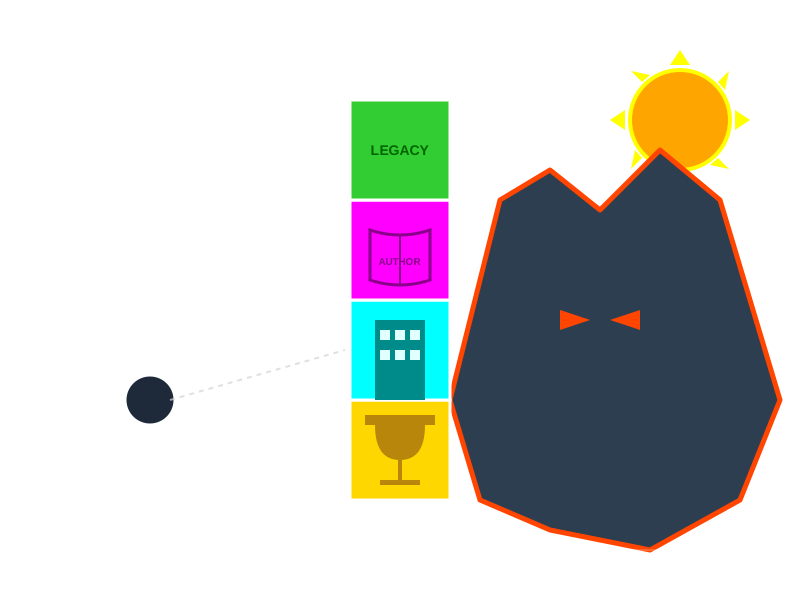
What counts as “heroic” or “meaningful” is defined by the society we live in. A warrior in one culture might be a criminal in another; a CEO’s legacy might be celebrated in one era and vilified in the next.
The problem isn’t the desire for meaning—it’s the illusion that any of these symbols can truly save us from oblivion. We’re not just building legacies; we’re building prisons of our own making.
Why Our Legacy Obsession Traps Us From Living Fully
Becker’s critique cuts deep: our immortality projects don’t just distract us from death—they distract us from life. When we’re obsessed with how we’ll be remembered, we stop experiencing the present. The musician chasing fame forgets the joy of playing music; the entrepreneur building a dynasty neglects the relationships that give life texture.
Seneca echoes this in his critique of the “preoccupied man,” who spends his life chasing approval, wealth, or status, only to realize too late that he never truly lived. 4 The trap is that these projects promise permanence but deliver emptiness. We think we’re securing our place in history, but we’re really just feeding a system that thrives on our insecurity.
The more we chase legacy, the more we lose ourselves in the chase. Becker’s insight is a wake-up call: the only way to truly defy death isn’t by leaving a mark, but by living fully in the moments we have.
Ancient Wisdom Against Legacy: Seneca and the Stoics
Why Preoccupied People Never Truly Live
Seneca’s critique of the “preoccupied man” is a brutal indictment of modern life. These are the people who fill their days with distractions—endless work, social validation, or the next dopamine hit—yet never truly live. They’re the ones who, even on vacation, can’t escape the gnawing question: How long will this last? Their minds are always elsewhere, counting down to the next event, the next achievement, the next fleeting moment of approval.
They’re not living; they’re just killing time, waiting for life to begin. The tragedy is that they mistake busyness for meaning. Seneca’s words cut deep: “Living is the least important activity of the preoccupied man.”
They’re consumed by insecurities, by the need to prove themselves, by the endless cycle of chasing what doesn’t matter. Even the wealthy aren’t spared—Seneca notes that prosperity brings its own anxieties.
The more you have, the more you fear losing. The preoccupied are trapped in a paradox: they long for leisure but never enjoy it because their minds are always elsewhere. 3
How to Live Fully in the Present Moment
Seneca draws a sharp line between the preoccupied and the “leisured”—those who live with intention. The leisured don’t measure life by its length but by its depth. A long life spent in distraction is no life at all. “He has not lived long, just existed long.”
The leisured understand that meaning isn’t found in posthumous fame or external validation but in the present moment. This isn’t about laziness; it’s about presence. The leisured engage fully with their experiences, whether in work or rest.
They don’t rush through life, counting days until retirement or the next big achievement. They don’t fill their minds with useless knowledge or petty arguments. Instead, they focus on what truly matters: connection, wisdom, and the quiet joy of being alive.
Why Legacy Is Meaningless According to Marcus Aurelius
Marcus Aurelius takes this further in Meditations, arguing that even if you’re remembered, it’s meaningless. Those who remember you will die, and their memories will fade too. It’s a chain of oblivion. “Soon you will be ashes, or bones, a name at most—and even that is just a sound, an echo.”
The pursuit of legacy is a fool’s errand because time erases everything. The Stoics remind us that the only thing we truly possess is the present. The preoccupied waste their lives chasing what they can’t keep.
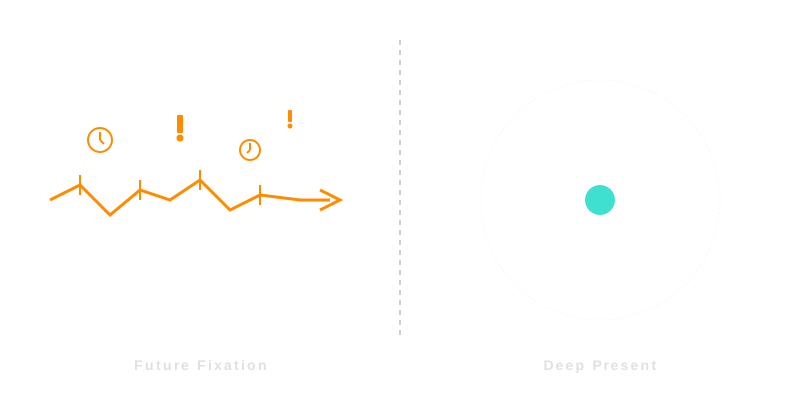
The leisured, however, find meaning in the here and now. They don’t need monuments or fame—they have something far more valuable: a life well-lived.
The Modern Distortion: Heidegger on ‘Constant Presence’ vs. Historical Completion
Heidegger: Ancient Completion vs. Modern Constant Presence
Heidegger’s critique of modernity hinges on a profound shift in how we understand existence. Ancient cultures sought to “enter history” by completing a meaningful life—achieving something worthy of remembrance, then gracefully exiting the stage. Think of a Greek hero whose deeds were sung by poets or a Roman statesman whose name endured in marble. Their legacy was tied to a finished life, a narrative arc with a clear beginning, middle, and end.
But modernity flips this script. Today, we don’t just want to be remembered; we want to never leave. We crave constant presence, an unending visibility that defies the finality of death.
This obsession isn’t just about fame—it’s about being itself. Heidegger argues that in the modern era, “being” is measured by how present something is.
The more visible, the more enduring, the more constant the presence, the more “real” it seems. 3 This is why we scroll endlessly, why we refresh feeds, why we panic at the thought of fading into obscurity. We’ve replaced the ancient ideal of a life well-lived with a desperate need to always be seen.
How Celebrity Culture Reflects Our Obsession with Perpetual Visibility
Celebrity culture is the ultimate expression of this modern distortion. It’s not enough to achieve something great—you must remain great, or at least visible, indefinitely. Social media amplifies this: every post, every like, every share is a tiny rebellion against oblivion. The algorithm doesn’t reward completion; it rewards persistence.
A viral moment isn’t enough—you need a brand, a persona, a constant stream of content to stay relevant. Even death isn’t an exit; it’s just another phase of the spectacle. (Think of how quickly tributes turn into memes, how grief becomes content.)
This isn’t just about vanity—it’s existential. In a world where “being” is tied to presence, fading from view feels like ceasing to exist. The modern celebrity isn’t just famous; they’re ontologically privileged.
Their face on a screen, their name in headlines, their voice in our ears—these aren’t just symbols of success. They’re proof of being.
How Fame Distorts Our Sense of Being
Heidegger’s “onto-theology” cuts to the heart of this hierarchy. In this framework, existence isn’t binary—you don’t just are or aren’t. Instead, “being” exists on a spectrum, and the measure of that spectrum is presence. The more present something is—whether through fame, influence, or sheer visibility—the more “being” it possesses.
This isn’t just philosophy; it’s the unspoken logic of modern life. Consider how we talk about celebrities: “They’re larger than life.” “They own the room.” “They dominate the conversation.”
These aren’t just metaphors. They’re ontological claims. A celebrity isn’t just a person with more followers; they’re a person with more being.
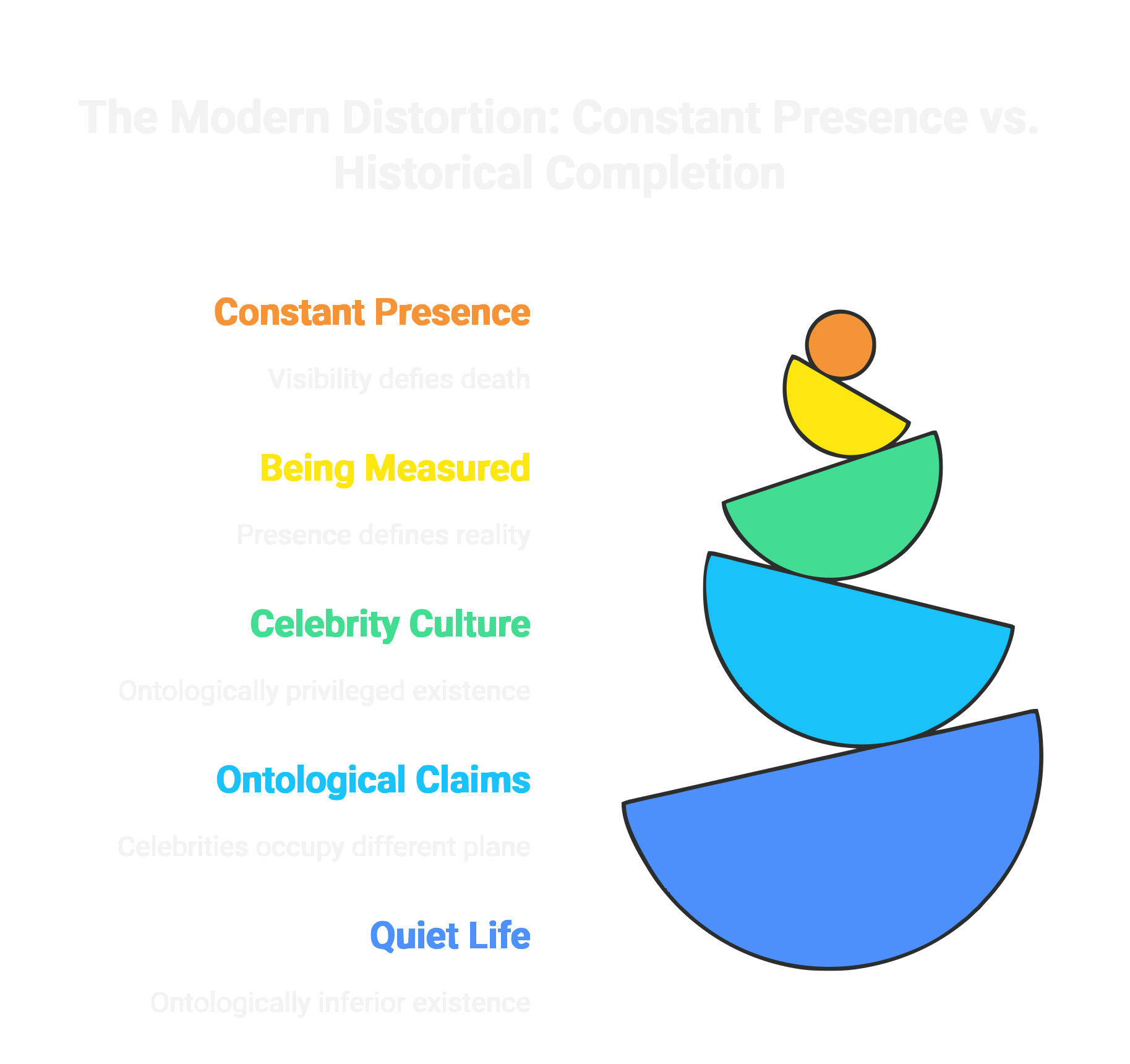
Their presence is so constant, so inescapable, that they seem to occupy a different plane of existence. Meanwhile, the rest of us?
We’re just background noise. This hierarchy is brutal. It means that a quiet life—a life of kindness, of unseen labor, of simple joys—isn’t just undervalued.
It’s ontologically inferior. And that’s the real tragedy of the legacy trap: it doesn’t just distort how we live. It distorts how we are.
The Alternative: Finding Meaning in the Present
Finding Meaning in the Present: Relationships, Growth, and Creative Expression
What if the meaning of life isn’t something we leave behind, but something we live right now? The obsession with legacy assumes that value is tied to permanence—yet the most profound experiences are inherently fleeting. A deep conversation with a friend, the quiet satisfaction of mastering a skill, the raw joy of creating something new—these moments don’t need to last forever to matter.
They matter because they’re lived. Philosophy Now’s exploration of Heidegger’s “constant presence” reveals how modernity equates being with visibility, but the essence of humanity isn’t in how long we’re remembered—it’s in how deeply we engage with existence. The Stoics understood this: virtue isn’t a monument; it’s a practice.
Creative expression isn’t about posthumous fame; it’s about the act of creation itself. Even Coco, for all its focus on memory, ultimately celebrates Miguel’s love for music—not because it will make him famous, but because it makes him alive.
How to Live Longer Through Wisdom and Reading
Seneca’s antidote to the legacy trap is deceptively simple: mingle with the wise. Not to network, not to build a brand, but to live more fully. As he puts it, “None of them will exhaust your years, but each will contribute his years to yours.” This isn’t about surrounding yourself with celebrities or influencers—it’s about seeking those who challenge you, who expand your mind, who make you feel alive in their presence.
Reading, too, is a form of immortality—not because it ensures you’ll be remembered, but because it lets you live multiple lives. Every book is a distillation of someone else’s years, their struggles, their insights.
When you read, you’re not just gaining knowledge; you’re borrowing time. The leisured life isn’t about idleness; it’s about presence—whether in conversation or in the pages of a book. 2
Value the Creative Process, Not Posthumous Fame
Becker’s Denial of Death notes that creative individuals, like schizophrenics, reject culturally endorsed immortality projects—but unlike the latter, they create realities others can appreciate. The key isn’t the legacy; it’s the act. A painter doesn’t paint to be remembered; they paint because the brushstrokes matter now. A writer doesn’t write for future acclaim; they write because the words burn inside them.
The irony? When we focus on the process—on the joy of making, the connection it fosters, the way it transforms us—we often create something far more lasting than if we’d chased fame. But that’s a side effect, not the goal.
The goal is to live, not to be remembered. And in that living, we find meaning that no monument could ever capture.
Escaping the Legacy Trap: Practical Steps
Use Mortality Awareness to Live Fully Now
A week ago, I had a nightmare so vivid it felt like a premonition. The same dark, disorienting scene repeated itself, noises blasting from all corners. I’d wake up, only to realize I was still trapped in the dream. After several false awakenings, I finally jolted awake—dizzy, faint, barely able to stand.
I’d nearly died in that dream. That nightmare wasn’t just a bad dream; it was a wake-up call. You don’t know if you’ll wake up tomorrow. You’re not even in control of your heart rate.
You could stop breathing at any moment. So why wait? Life isn’t tomorrow, not when you get that promotion, not when you get that degree. Life is right now.
This isn’t just about fear; it’s about clarity. Mortality awareness isn’t a curse—it’s a gift. It strips away the illusion that we have endless time to chase immortality projects. Becker’s causa sui projects—our desperate attempts to embed ourselves in something eternal—are just distractions from the fact that we’re mortal animals.
But what if, instead of fearing that, we used it as fuel? What if the finitude of life is what makes it precious? The nightmare didn’t just scare me; it focused me.
It made me realize that every moment I spend chasing future recognition is a moment I’m not actually living. The leisured life Seneca describes isn’t about idleness; it’s about presence. It’s about waking up and choosing to live, not because you’re guaranteed another day, but because this one is all you’ve got. 4
Create Work That Serves Others Now
The obsession with legacy is a trap because it flips the script: it makes the recognition more important than the act. But what if we focused on contribution instead? What if the value of our work wasn’t measured by how long we’re remembered, but by how deeply it serves others now? Seneca’s idea of the leisured life isn’t about laziness; it’s about immersion in what matters.
The leisured are those who seek the company of great friends, who engage with wise minds in books and in real life. They’re the ones who understand that reading isn’t just about soaking up knowledge—it’s about converting the author’s years of experience into your own. It’s about building a life full of lives, as Seneca puts it: “None of them will exhaust your years, but each will contribute his years to yours.”
This isn’t about abandoning creative work; it’s about reorienting it. Becker’s Denial of Death notes that creative individuals reject culturally endorsed immortality projects, but they don’t stop creating.
They create because the act itself is meaningful. A painter paints because the brushstrokes matter now. A writer writes because the words burn inside them. The irony?
When we focus on the process—on the joy of making, the connection it fosters, the way it transforms us—we often create something far more lasting than if we’d chased fame. But that’s a side effect, not the goal.
The goal is to live, not to be remembered. And in that living, we find meaning that no monument could ever capture.
Choose Your Own Path: Embrace Internal Values Over External Validation

The preoccupied man is trapped in a cycle of external validation. He chases promotions, likes, and approval, but he never truly lives. Seneca’s leisured life is the antidote: a life directed by internal values, not external metrics. It’s about autonomy—choosing how to spend your time, who to spend it with, and what to focus on.
The leisured don’t waste their lives on boasting, shaming, or gossiping. They seek out the “infected”—those who drain their energy—and replace them with people who add value. They read not for status, but for wisdom.
They create not for fame, but for the sake of creation itself. This isn’t about rejecting legacy entirely.
Seneca himself acknowledges that philosophers live on through their books. But the key is in the motivation. If you create because you love the process, because it serves others, because it makes you feel alive—then any legacy that follows is a bonus, not the goal.
The leisured life is about being, not being remembered. It’s about living so fully that the question of legacy becomes irrelevant. Because in the end, the only thing that truly matters is how you lived—not how you’re remembered.
Conclusion
So here we are, at the end of this conversation—yet the question lingers: What if the thing we fear most is exactly what we should stop caring about? We’ve chased legacy like it’s the antidote to oblivion, but the truth is far simpler, far more liberating. The pursuit of being remembered isn’t just futile; it’s a distraction from the only thing that’s ever truly mattered: being alive.
Think about it. The most meaningful moments in your life—the laughter with friends, the quiet satisfaction of a job well done, the fleeting beauty of a sunset—none of these require an audience. They don’t need to be memorialized. They matter because they’re lived, not because they’re remembered.
Seneca’s “leisured life” isn’t about idleness; it’s about presence. It’s about waking up and choosing to engage with the world, not because you’re guaranteed another day, but because this one is all you’ve got.
And yet, we’ve built entire systems—cultural, economic, even philosophical—to convince ourselves that permanence is the goal. Coco’s afterlife, with its hierarchy of fame, mirrors our own world’s obsession with visibility. But the film’s emotional core lies in Miguel’s realization: the most profound legacies aren’t in statues or songs, but in love. In the quiet, unremembered moments where we’re truly alive.
Heidegger’s critique of modernity cuts deep here. We’ve replaced the ancient ideal of a life well-lived with a desperate need to always be seen. But what if the real tragedy isn’t being forgotten? What if it’s wasting the life we have right now, chasing a ghost?
The Stoics understood this. Marcus Aurelius reminded himself that even those who remember you will soon be forgotten. The only life you can be certain of is the one you’re living today.
Becker’s Denial of Death reveals that our grandest monuments, our most enduring legacies, are just elaborate distractions from the fact that we’re mortal. But what if, instead of fearing that, we used it as fuel? What if the finitude of life is what makes it precious?
So here’s the question I leave you with: What if the meaning of life isn’t something we leave behind, but something we live right now? What if the most profound experiences are inherently fleeting, and that’s exactly what makes them meaningful? The obsession with legacy assumes that value is tied to permanence—yet the most profound experiences are inherently fleeting. A deep conversation with a friend, the quiet satisfaction of mastering a skill, the raw joy of creating something new—these moments don’t need to last forever to matter. They matter because they’re lived.
And in that living, we find meaning that no monument could ever capture. After all, as the Stoics remind us, the only thing we truly possess is the present. The preoccupied waste their lives chasing what they can’t keep.
The leisured, however, find meaning in the here and now. They don’t need monuments or fame—they have something far more valuable: a life well-lived.
So let’s stop chasing the ghost of legacy. Let’s stop measuring our worth by how long we’ll be remembered. Because in the end, the only thing that truly matters is how we lived—not how we’re remembered. And that, perhaps, is the most liberating truth of all.


