


If you have never paced a dark hallway at three in the morning, weeping out of sheer physical frustration, consider yourself profoundly lucky. For years, my nights were hijacked by an invisible, crawling torment inside my lower legs that no amount of willpower could soothe. It is a disorder that transforms the simple biological imperative of sleep into a private physical purgatory. Willis-Ekbom Disease, which our medical system still minimizes with the trivial-sounding name Restless Legs Syndrome, is one of the most misunderstood neurological conditions on the planet.
When you live with this long enough, you realize that modern medicine often fails people whose agony cannot be captured on a routine blood panel. Roughly seven percent of the global population—hundreds of millions of people—are quietly fighting this exact same nocturnal battle. Yet, because our symptoms sound bizarre when spoken aloud, we are routinely dismissed as anxious, hysterical, or merely dramatic. I spent years navigating the medical gaslighting, toxic prescription cascades, and endless sleepless nights before I finally understood the biology of what was happening to my body.
This is the guide I desperately wish someone had handed me a decade ago. It is an honest breakdown of the neuroscience, the dangerous medication traps you must avoid, and the practical interventions that actually saved my sanity—including the one mechanical tool that gave me my life back.
The Agony and the Diagnostic Void
Living Through the Midnight Agony of Willis Ekbom Disease
Describing the sensation of RLS to someone who has never felt it is nearly impossible. It is not an itch, nor is it a simple muscle cramp or a case of nervous fidgeting. It feels like an electric, carbonated fizzing deep inside the marrow of your bones, accompanied by an irresistible compulsion to move. The moment you lie still and surrender to exhaustion, the creeping agony strikes, forcing you to kick, stretch, and pace the floor just to buy three seconds of fleeting relief.
The temporal rhythm of this condition is its cruelest feature. You can feel relatively normal all afternoon, but the second your body’s circadian clock signals that it is time to rest, the neurological storm erupts. For the majority of us, the resulting sleep disruption isn’t just an inconvenience; it is a form of prolonged physical torture. You end up navigating your days in a thick fog of chronic cognitive exhaustion, fighting mood swings and brain fog while the rest of the world wonders why you look so tired.
The Absurd World of Medical Misdiagnosis and Gaslighting
My journey to an actual diagnosis felt like a tour through clinical incompetence. Less than a third of people with frequent, severe symptoms ever receive an accurate diagnosis from their primary care doctor. Instead, we are handed prescriptions for antidepressants, told we have generic insomnia, or informed that we simply have tight calf muscles. I have heard of patients being misdiagnosed with everything from arthritis and calcium deficiencies to actual intestinal worms.
The root of this diagnostic failure is that Willis-Ekbom Disease is an entirely clinical diagnosis without a single definitive imaging scan or blood biomarker. When doctors cannot point to a clean red flag on a computer screen, their training often encourages them to retreat into cynical skepticism. To be properly identified, a patient must meet strict clinical criteria: an irresistible urge to move accompanied by uncomfortable sensations, worsening during rest, temporary relief with movement, and a predominant nocturnal worsening. If your physician does not immediately recognize that exact quartet of symptoms, find a new doctor immediately.
The Neuroscience of the Restless Brain
Understanding the Brain Iron and Dopamine Connection
For years, I assumed my legs were the problem, but the real culprit was hiding deep inside my midbrain. Groundbreaking neuroimaging and autopsy studies have conclusively shown that RLS is driven by a localized, regional deficiency of brain iron. This is the critical paradox: you can have completely normal blood tests, yet the iron stores in your substantia nigra and putamen can be dangerously depleted.
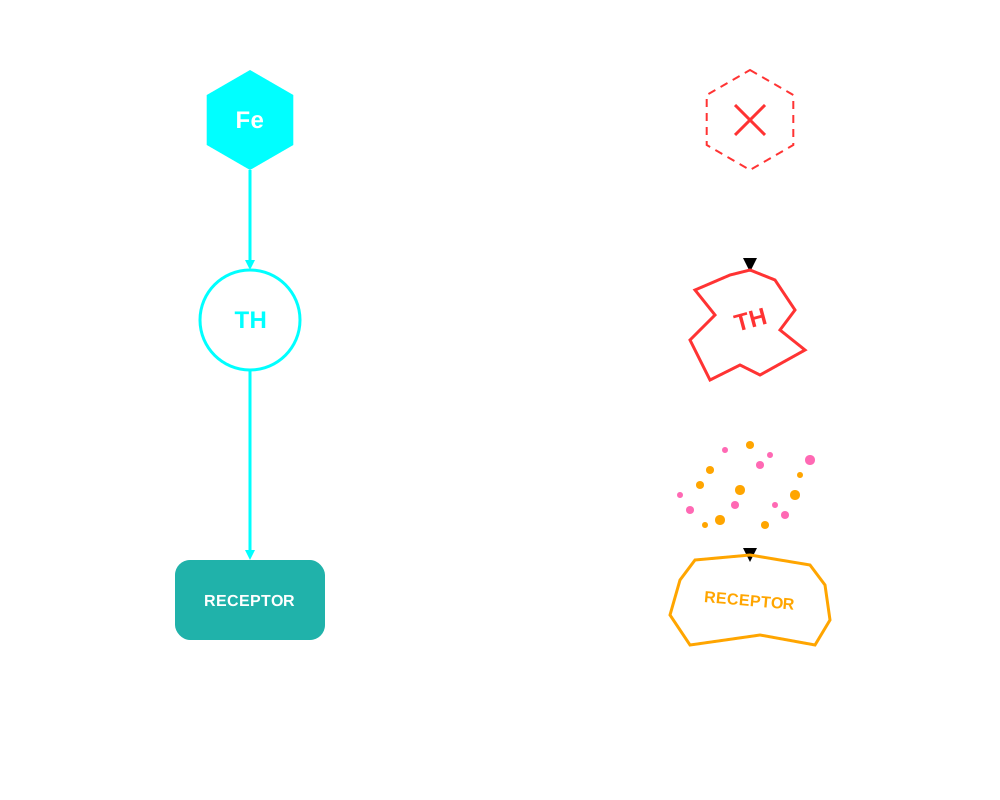
Iron is the mandatory chemical cofactor for tyrosine hydroxylase, the primary enzyme responsible for manufacturing dopamine in the central nervous system. When the midbrain is starved of iron, the entire dopamine regulatory system short-circuits, creating a chaotic, paradoxical hyperdopaminergic state. This erratic chemical signaling disrupts the basal ganglia’s motor control pathways, interpreting normal physical stillness as an urgent somatic crisis.
Demanding the Proper Bloodwork and Ferritin Protocols
If you suspect you have RLS, the very first thing you must demand from your doctor is a full iron panel, specifically measuring serum ferritin. Standard lab ranges will tell you that a ferritin level of 20 or 30 mcg/L is “normal,” but for a restless brain, that level represents an absolute biological emergency. Neurological consensus guidelines clearly state that anyone battling this condition should aim for a serum ferritin level above 100 mcg/L.
If your numbers are low, aggressive oral or intravenous replenishment can radically decrease the intensity of your symptoms. When taking oral iron supplements, you have to follow strict biochemical rules to ensure proper absorption:
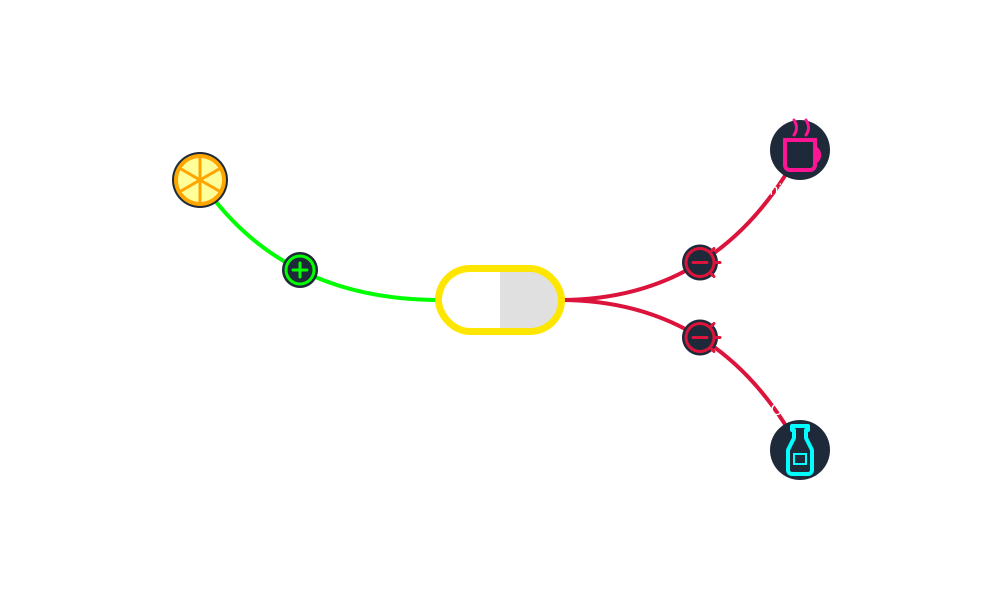
- Take 60 to 65 milligrams of elemental iron paired directly with vitamin C to maximize intestinal uptake.
- Never take your dose alongside calcium, coffee, or tea, which chemically bind to iron and render it entirely useless.
- If oral pills upset your stomach or fail to raise your ferritin levels, fight for an intravenous iron infusion to bypass the gut entirely.
The Medication Traps and Better Paths
The Terrifying Reality of Dopamine Agonist Augmentation
The darkest chapter of my RLS journey involved the very medications doctors hand out like candy: dopamine agonists such as pramipexole and ropinirole. At first, these drugs feel like an absolute miracle because they silence the symptoms within hours. But for nearly half of all long-term users, these medications eventually trigger a living hell known as neurological symptom augmentation.
Augmentation is not simple drug tolerance; it is an iatrogenic disaster where the medication actively makes the underlying disease exponentially worse. Your symptoms begin striking earlier in the afternoon, the physical intensity becomes unbearably violent, and the restlessness spreads from your calves into your thighs, arms, and torso. Weaning off these drugs was one of the hardest physical battles of my life, and I strongly urge anyone dealing with this condition to treat dopamine agonists as an absolute last resort.
Smarter Pharmacological Options and Restorative Sleep
Thankfully, enlightened sleep specialists are transitioning away from dopamine agonists and prioritizing alpha-2-delta ligands as first-line defenses. Medications like gabapentin and pregabalin work by modulating overactive calcium channels in the nervous system rather than forcibly flooding dopamine receptors. They provide steady, sustainable relief without the terrifying risk of augmentation, while simultaneously restoring deep slow-wave sleep.
In stubborn or refractory cases, doctors sometimes carefully introduce atypical agents like trazodone to patch together shattered sleep architecture. The goal of any pharmacological intervention should never be to numb your body into oblivion, but rather to quiet the erratic central nervous system firing just enough for your brain to naturally drift off. Medication, however, is only one piece of the puzzle; mechanical and physical interventions are what truly anchored my recovery.
What Actually Worked: Mechanical Relief
Rewiring the Nervous System Through Structured Movement
When you are exhausted, the last thing you want to do is exercise, but targeted physical movement is genuinely potent medicine. A structured routine of moderate aerobic exercise combined with lower-body resistance training has been shown to drastically reduce overall symptom severity. Working your legs forces oxygen-rich blood flow into the deep tissues while naturally releasing endogenous beta-endorphins that quiet chaotic nerve pathways.
The key is moderation; if you exhaust yourself with brutal high-intensity workouts late in the evening, you will trigger an aggressive inflammatory flare-up that makes the night miserable. I found that performing squats, calf raises, and light cycling earlier in the day created a steady, grounding neuromuscular fatigue. But even with proper workouts and optimal iron levels, acute nighttime attacks still happen, which brings me to the single most effective tool in my arsenal.

Why a Massage Gun Became My Greatest Weapon
If I were stranded on a desert island and could only bring one object to survive the night, it would be a high-powered, percussive massage gun. When an acute attack strikes at 2:00 AM, stretching is useless and pacing only works for as long as you stay on your feet. The only thing that consistently breaks the neurological feedback loop is applying a heavy percussive massage gun directly to my calves.
The mechanical logic behind this comes down to the gate control theory of pain and sensory processing. By delivering intense, rapid mechanical vibrations deep into the gastrocnemius and soleus muscles, you effectively flood the spinal cord with overwhelming sensory input. This massive wave of mechanical stimulus successfully jams the erratic, crawling signals trying to reach your brain, providing an immediate neurological reset. Whenever the creeping sensations begin to simmer, I follow a strict three-step physical intervention:
- I sit on the edge of the bed and run the massage gun along the lateral and medial heads of both calves on high power for three to five minutes.
- I focus heavily on the tight connective tissue near the Achilles tendon and the upper calf right behind the knee.
- I follow the percussive therapy with a deep, static wall-stretch to lengthen the newly relaxed muscle fibers before immediately getting under the covers.
Reclaiming the Night
Living with Restless Legs Syndrome is an exhausting, lonely endeavor that forces you to become your own doctor, researcher, and advocate. We have to stop accepting the dismissive narrative that our suffering is just an inevitable, untreatable annoyance that we must quietly endure. By aggressively restoring our brain’s iron reserves, fiercely avoiding the dangerous trap of dopamine agonists, and utilizing targeted mechanical relief, we can finally take control of our nights.
If you are reading this while pacing your kitchen floor in the dead of night, please know that your pain is real, your biology is not broken beyond repair, and relief is genuinely possible. You do not have to live as a hostage to your own nervous system. True rest is not a luxury; it is a fundamental biological right that you must fight to reclaim.


